

6 min readNew DelhiApr 29, 2026 10:53 AM IST
Supreme Court news: Flagging the danger of innocent persons being “crucified” by flawed prosecutions, the Supreme Court has acquitted 12 convicts in a 2008 Assam murder case, ruling that a “scripted enquiry”, delayed FIR and glaring investigative lapses had fatally vitiated the trial.
A bench of Justices Sanjay Kumar and K Vinod Chandran set aside the conviction of the accused, observing that the manner in which the investigation was conducted raised serious doubts about the credibility of the prosecution’s case.

“An inept investigation or a scripted enquiry, both are fatal to criminal prosecution; but the latter has lethal consequences when there is a possibility of totally innocent persons being crucified,” the bench said on April 28.
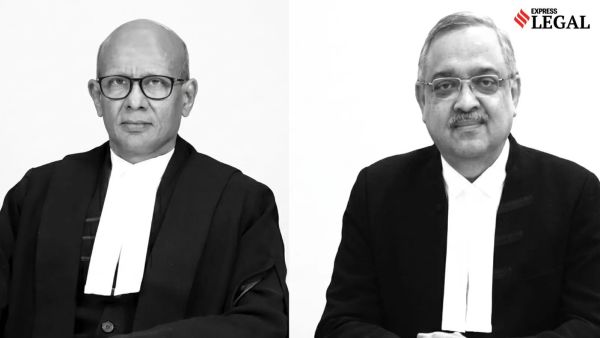 Justices Sanjay Kumar and K Vinod Chandran pronounced the order on April 28.
SC points out lapses
It is unfortunate that the police officer who reached the spot immediately after the incident, on the basis of telephonic information, failed to follow due procedure to put the criminal investigation in motion as per the Code of Criminal Procedure, 1973, the Supreme Court noted.
Be it ignorance, inefficiency or malicious motivation, the crime is left unresolved and considerable time and money have been spent in the prosecution of 16 persons, some of whom died during the trial, while the others suffered incarceration for long periods.
The state and its Home Department would do well to better equip their officers in investigating crimes and educating them of due procedure, the top court stated.
The weapons seized were neither sent for forensic analysis, nor were they used to confront the eyewitnesses or presented before the doctor who conducted the postmortem.
Story continues below this ad
Though the seizure list of the motorbikes, doubtful in its genesis, indicates the ownership of the bikes, no documents were shown to prove the ownership, the court noted.
Gruesome killing in 2008
- The case stemmed from a brutal attack on July 8, 2008, in Assam’s Goalpara district.
- The victim, travelling with others on motorbikes, was ambushed on a rural road using a steel wire stretched across the path.
- According to the prosecution, the deceased was returning from Karbala Bazar, along with five others, on four motorbikes when they were ambushed on the Gobindapur–Rabhapara PWD road near the house of one of the accused.
- The attackers then launched a coordinated assault. The deceased was first blinded by throwing chilli powder into his eyes and then brutally assaulted, suffering multiple grievous injuries, including deep cuts, fractures and the severing of his left hand, which led to his death.
- The post-mortem revealed severe injuries, including fractures, deep cuts, and the severing of the victim’s left hand.
- The accompanying persons were cited as eyewitnesses, some of whom were also claimed to have been injured in the incident.
12 convicted
- The FIR named 13 individuals, all residents of the same village, and also referred to 10-12 other unidentified persons who were allegedly involved and could be identified on sight.
- According to the prosecution, a total of 16 persons were chargesheeted.
- During the course of the trial, one accused died, while 12 others were convicted by the trial court for life for murder and various other provisions of the Indian Penal Code (IPC), including unlawful assembly, rioting, attempt to murder and murder.
- The Gauhati High Court upheld these convictions before the matter reached the Supreme Court.
- While the Supreme Court accepted that the death was homicidal and brutal, it emphasised that the conviction must rest on reliable evidence.
Delay in FIR raises suspicion
A key factor in the acquittal was the unexplained delay in registering the First Information Report (FIR). Based on a General Diary (GD) entry, the police reached the scene on the night of the incident on July 8, 2010, but the FIR was lodged only on July 10, naming multiple accused.
The Supreme Court rejected the Gauhati High Court’s view that the GD entry could be treated as the FIR, noting that critical witnesses linked to the entry were never examined.
The delay, coupled with the naming of several accused after deliberation, cast a shadow on the prosecution’s version.
Story continues below this ad
Eyewitness testimony unreliable
The prosecution relied heavily on eyewitnesses, many of whom were close relatives of the deceased. However, the Supreme Court found inconsistencies in their accounts and questioned their presence at the scene.
Crucially, claims that some eyewitnesses were injured during the attack were not supported by medical evidence. “The failure to prove such injuries ‘makes doubtful their very presence’ at the place of occurrence,” the Supreme Court held.
Serious investigative lapses
The judgment catalogued multiple lapses in the investigation:
- No immediate FIR was registered despite the alleged eyewitness presence.
- Failure to record witness statements promptly.
- Seized weapons were not sent for forensic analysis.
- No collection of blood samples from the crime scene.
- The ownership of material objects, including motorcycles, was not properly proved in court.
- These shortcomings, the Supreme Court said, created “grave suspicion” about the prosecution’s case.
All convicts acquitted
Allowing the appeals, the Supreme Court acquitted all the convicts, some of whom had already spent years in custody during the course of the trial. Bail bonds of those on bail were cancelled.
Story continues below this ad
The ruling reinforces a core criminal law principle: that even in cases involving heinous crimes, convictions must be based on credible evidence and a fair, lawful investigation, not on suspicion, delayed narratives, or flawed procedures.

© IE Online Media Services Pvt Ltd

