

3 min readBengaluruApr 29, 2026 10:53 AM IST
Written by Neysa Mary

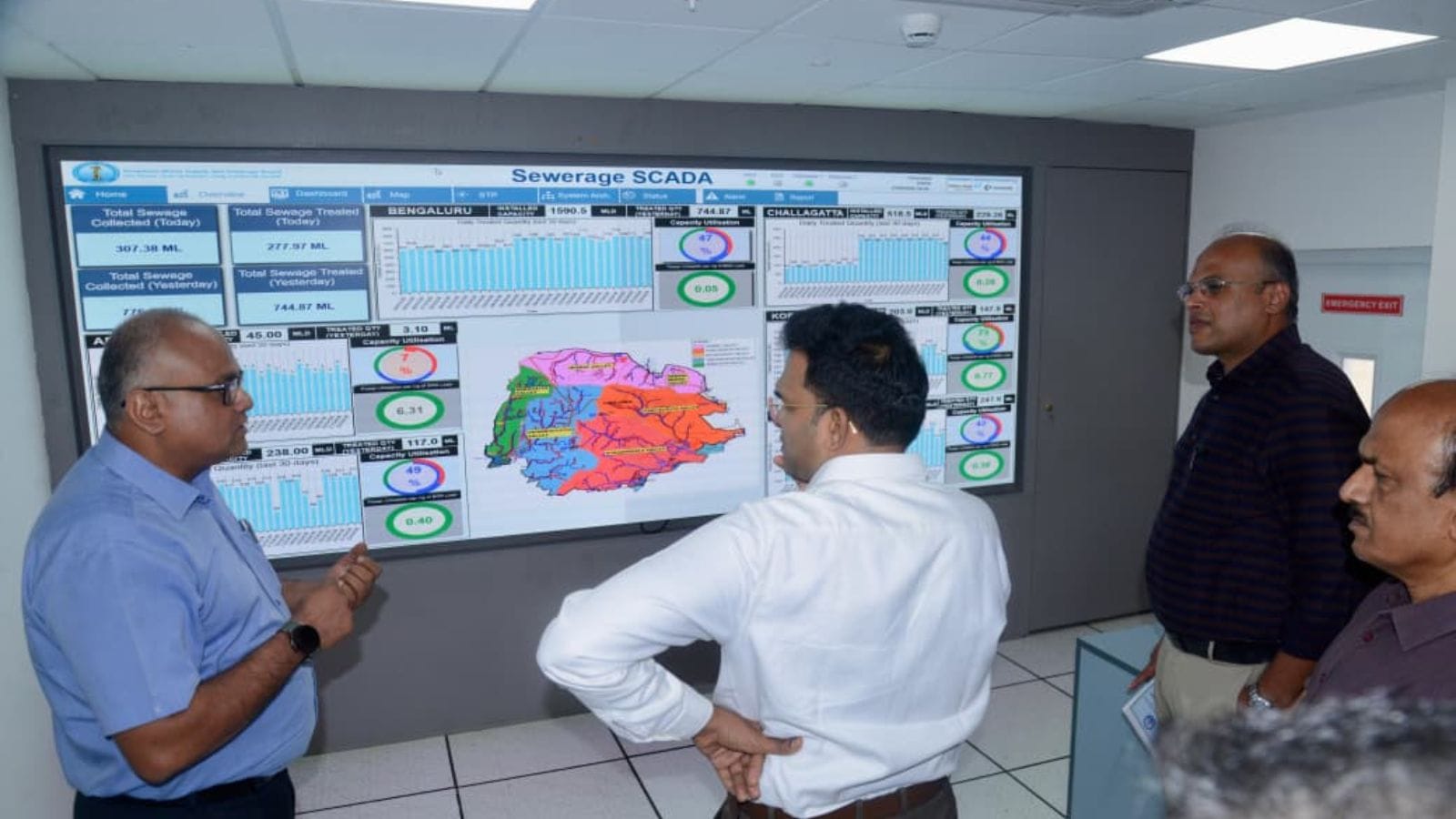
The Bengaluru Water Supply and Sewerage Board (BWSSB) is all set to introduce one of Asia’s largest integrated command centres for water and sewage management, powered by Artificial Intelligence, to help detect and prevent water leaks in the city’s pipelines.
BWSSB chairman Ram Prasath Manohar this week said that the Integrated Intelligent Water and Sewerage Management Centre (SCADA) will monitor and manage Bengaluru’s drinking water and sewerage systems in real time. It will play a key role in overseeing the 775 MLD water supply under Cauvery Stage 5, which serves nearly 110 villages, while also integrating the city’s broader water distribution and wastewater networks.
A major feature of the system is its use of AI to estimate water demand across different parts of the city. The platform will also detect leakages in pipelines instantly, helping reduce water losses, often referred to as Unaccounted-for Water (UFW) or Non-Revenue Water (NRW). Officers say this will be a key step towards creating a digital replica of Bengaluru’s entire water network.
Bengaluru loses about 28 per cent of its water supply either to leakage or theft.
SCADA has been developed with the financial assistance of the Japan International Cooperation Agency (JICA). The facility is located at Shimsha Bhavan in Jayanagar and is expected to be inaugurated soon by Deputy Chief Minister D K Shivakumar.
The centre is interconnected with major water treatment plants at T K Halli, Harohalli, and Tataguni, along with ground-level tanks across the city. It continuously tracks key water quality parameters such as chlorine levels, pH, total dissolved solids (TDS), and turbidity. In case of contamination, alerts are generated live, enabling quick action to be taken.
Story continues below this ad
In addition to drinking water systems, all sewage treatment plants in the city are connected to the SCADA platform. The system checks if it adheres to National Green Tribunal (NGT) standards and tracks biogas generation from these facilities.
The project also includes predictive maintenance through the integration of public borewells, GIS mapping, and smart meters using IoT technology. This enables early warnings for potential equipment failures, which is expected to reduce operational costs and energy consumption.
BWSSB says the initiative reflects a shift towards a data-driven administration in urban water management. The centre is expected to improve transparency, improve efficiency, and strengthen service delivery in a city that has a continuously growing water demand and infrastructure challenges.
Describing the project as a milestone, BWSSB chairman Manohar said, “The SCADA centre would bring a new phase in how Bengaluru manages its water and wastewater systems, combining scale with advanced technology”.
(Neysa Mary is an intern with The Indian Express)

