
Close Menu
  • Home
  • Education
  • Health
  • National News
  • Politics
  • Relationship & Wellness
  • World News
What's Hot

NEET UG admit card 2026: NTA assures quick fix as re-NEET hall ticket download problems continue

June 15, 2026

From the Opinions Editor | Beyond mental health: SC report’s urgent message on student suicides

June 15, 2026

Watch: Stanford students boo Sundar Pichai, walk out during Google CEO's commencement speech

June 15, 2026
Facebook X (Twitter) Instagram
Facebook X (Twitter) Instagram YouTube
Global News Bulletin
SUBSCRIBE
  • Home
  • Education
  • Health
  • National News
  • Politics
  • Relationship & Wellness
  • World News
Global News Bulletin
Home»National News»Foot overbridge, staircase, pathway: How NCRTC is connecting Delhi’s biggest transport hub at Sarai Kale Khan
National News

Foot overbridge, staircase, pathway: How NCRTC is connecting Delhi’s biggest transport hub at Sarai Kale Khan

editorialBy editorialJune 15, 2026No Comments5 Mins Read
Facebook Twitter Pinterest LinkedIn Tumblr Email Telegram Copy Link
Foot overbridge, staircase, pathway: How NCRTC is connecting Delhi’s biggest transport hub at Sarai Kale Khan
Share
Facebook Twitter LinkedIn Pinterest Email Copy Link

4 min readNew DelhiUpdated: Jun 14, 2026 02:21 PM IST

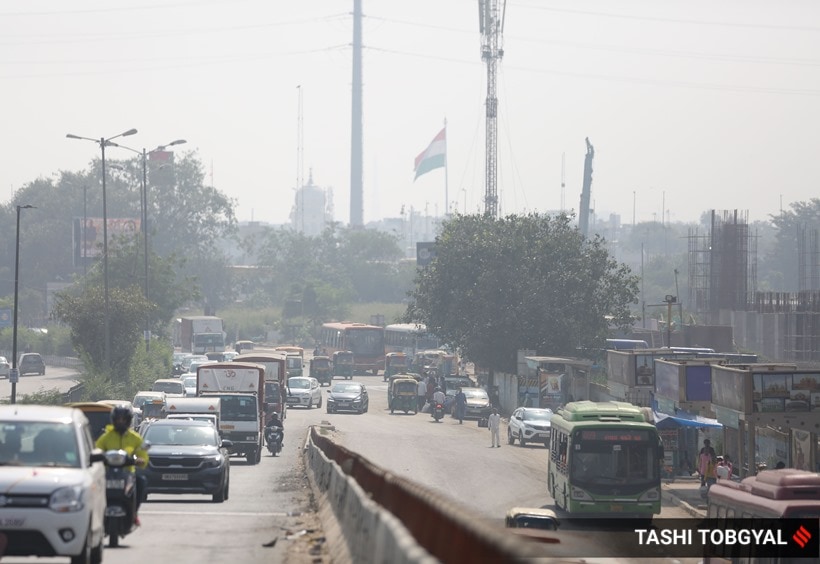
Sarai Kale Khan is one of Delhi’s biggest transport hubs, where Hazrat Nizamuddin Railway Station, Delhi Metro’s Pink Line, the Veer Haqiqat Rai Interstate Bus Terminal (ISBT), city bus services and the Delhi-Meerut Namo Bharat corridor converge within a relatively small area.

Over the past months, the National Capital Region Transport Corporation (NCRTC) has been working on a series of projects: a foot overbridge, pedestrian pathways and a proposed staircase link, aimed at making transfers between these transport systems easier.

The effort appears to be yielding results. According to NCRTC officials, ridership at the Sarai Kale Khan Namo Bharat station has increased by around 30 per cent since the commissioning of a foot overbridge connecting the station with Hazrat Nizamuddin Railway Station. The station is now handling around 7,000-8,000 passengers daily.

Importance of integration

Transport planners often argue that public transport works best when passengers can move easily between different systems. A commuter may be willing to take a train to Delhi and then switch to Metro or Namo Bharat services, but only if the transfer is convenient, safe and does not involve walking on broken footpaths or dodging oncoming rickshaws. If not, they might escape the public transport system and use private transport.

At Sarai Kale Khan, the concentration of multiple transport facilities has historically led to pedestrians and vehicles competing for limited road space. Passengers moving between the railway station, Metro station, bus terminal, and surrounding roads often had to cross heavy traffic while carrying luggage or accompanying family members.

FOB linking Namo Bharat and railway station

Last month, the 280-metre-long foot overbridge connecting the Sarai Kale Khan Namo Bharat station with Hazrat Nizamuddin Railway Station became operational.

The bridge is equipped with six automatic travelators, escalators and lifts. Hundreds of trains make their way through Hazrat Nizamuddin Railway Station, with lakhs of commuters boarding and de-boarding from this station.

Story continues below this ad

A large percentage of these commuters take the metro or Namo Bharat for their journey further in the city. Earlier, passengers travelling to and from the railway station were often compelled to cross busy roads and navigate through heavy traffic while carrying luggage and accompanying family members, officials said, adding that “apart from causing inconvenience, this frequently contributed to congestion and crowding outside the transit facilities. The commissioning of the FOB has addressed these challenges”.

Other infrastructure

NCRTC has also developed a covered pedestrian pathway linking the Namo Bharat station with Delhi Metro’s Hazrat Nizamuddin station on the Pink Line. The pathway is intended to provide a dedicated walking route between the two systems, allowing passengers travelling from Delhi, Ghaziabad, Modinagar and Meerut to switch between Metro and Namo Bharat services without relying on surrounding roads.

The next stage of integration is expected to be a direct connection between the operational FOB and the Metro station.

According to NCRTC officials, a tender has already been floated for the construction of a staircase and installation of escalators that would connect the Metro station with the existing FOB. Once completed, passengers would be able to move between the railway station, Metro station and Namo Bharat station through a more continuous interchange system.

Story continues below this ad

Beyond pedestrian movement

The integration effort is not limited to pedestrian infrastructure. NCRTC officials said the station’s entry and exit points were designed through service roads rather than directly from the main carriageway. Dedicated pick-up and drop-off areas have also been created within the station premises to reduce roadside vehicle stops.

Officials said similar multimodal integration measures are also being implemented at Anand Vihar and Ghaziabad stations as part of the Delhi-Ghaziabad-Meerut Namo Bharat corridor.

Devansh Mittal


twitter

Devansh Mittal is a Correspondent at The Indian Express, based in the New Delhi City bureau. He reports on urban policy, civic governance, and infrastructure in the National Capital Region, with a growing focus on housing, land policy, transport, and the disruption economy and its social implications.

Professional Background

Education: He studied Political Science at Ashoka University.

Core Beats: His reporting focuses on policy and governance in the National Capital Region, one of the largest urban agglomerations in the world. He covers housing and land policy, municipal governance, urban transport, and the interface between infrastructure, regulation, and everyday life in the city.

Recent Notable Work

His recent reporting includes in-depth examinations of urban policy and its on-ground consequences:

An investigation into subvention-linked home loans that documented how homebuyers were drawn into under-construction projects through a “builder–bank” nexus, often leaving them financially exposed when delivery stalled.

A detailed report on why Delhi’s land-pooling policy has remained stalled since 2007, tracing how fragmented land ownership, policy design flaws, and mistrust among stakeholders have kept one of the capital’s flagship urban reforms in limbo.

A reported piece examining the collapse of an electric mobility startup and what it meant for women drivers dependent on the platform for livelihoods.

Reporting Approach

Devansh’s work combines on-ground reporting with analysis of government data, court records, and academic research. He regularly reports from neighbourhoods, government offices, and courtrooms to explain how decisions on housing, transport, and the disruption economy shape everyday life in the city.

Contact

X (Twitter): @devanshmittal_
Email: devansh.mittal@expressindia.com … Read More

Stay updated with the latest – Click here to follow us on Instagram

Follow on Google News Follow on Flipboard
Share. Facebook Twitter Pinterest LinkedIn Tumblr Email
Previous ArticleTMC MP Abhishek Banerjee appears before the ED in Kolkata for questioning in the school jobs scam
Next Article Watch: Stanford students boo Sundar Pichai, walk out during Google CEO's commencement speech
editorial
  • Website

Related Posts

From the Opinions Editor | Beyond mental health: SC report’s urgent message on student suicides

June 15, 2026

UPSC notifies over 400 vacancies under direct recruitment scheme, check list of posts

June 15, 2026

Kerala man loses way in Bengal, language barrier cost him his life

June 15, 2026

Inside XERF: The viral skin tightening treatment Priyanka Chopra swears by

June 15, 2026

UPSC Ethics Simplified | How can India’s civil services and governance rebuild Gen Z’s trust?

June 15, 2026

International Yoga Day: PM Modi expected to lead 30,000 at Red Road event

June 15, 2026
Add A Comment
Leave A Reply Cancel Reply

Economy News

NEET UG admit card 2026: NTA assures quick fix as re-NEET hall ticket download problems continue

By editorialJune 15, 2026

NEET UG 2026 Admit Card Portal Faces Technical Glitches As Candidates Report Access Issues NEET…

From the Opinions Editor | Beyond mental health: SC report’s urgent message on student suicides

June 15, 2026

Watch: Stanford students boo Sundar Pichai, walk out during Google CEO's commencement speech

June 15, 2026
Top Trending

NEET UG admit card 2026: NTA assures quick fix as re-NEET hall ticket download problems continue

By editorialJune 15, 2026

NEET UG 2026 Admit Card Portal Faces Technical Glitches As Candidates Report…

From the Opinions Editor | Beyond mental health: SC report’s urgent message on student suicides

By editorialJune 15, 2026

Last week, an interim report of a Supreme Court-appointed panel engaged with…

Watch: Stanford students boo Sundar Pichai, walk out during Google CEO's commencement speech

By editorialJune 15, 2026

Several students at Stanford University staged a walkout during Google CEO Sundar…

Subscribe to News

Get the latest sports news from NewsSite about world, sports and politics.

Facebook X (Twitter) Instagram YouTube

News

  • Education
  • Health
  • National News
  • Relationship & Wellness
  • World News
  • Politics

Company

  • Information
  • Advertising
  • Classified Ads
  • Contact Info
  • Do Not Sell Data
  • GDPR Policy
  • Media Kits

Services

  • Subscriptions
  • Customer Support
  • Bulk Packages
  • Newsletters
  • Sponsored News
  • Work With Us

Subscribe to Updates

Get the latest creative news from FooBar about art, design and business.

© Copyright Global News Bulletin.
  • Privacy Policy
  • Terms
  • Accessibility
  • Website Developed by Plenary Media Solution

Type above and press Enter to search. Press Esc to cancel.