

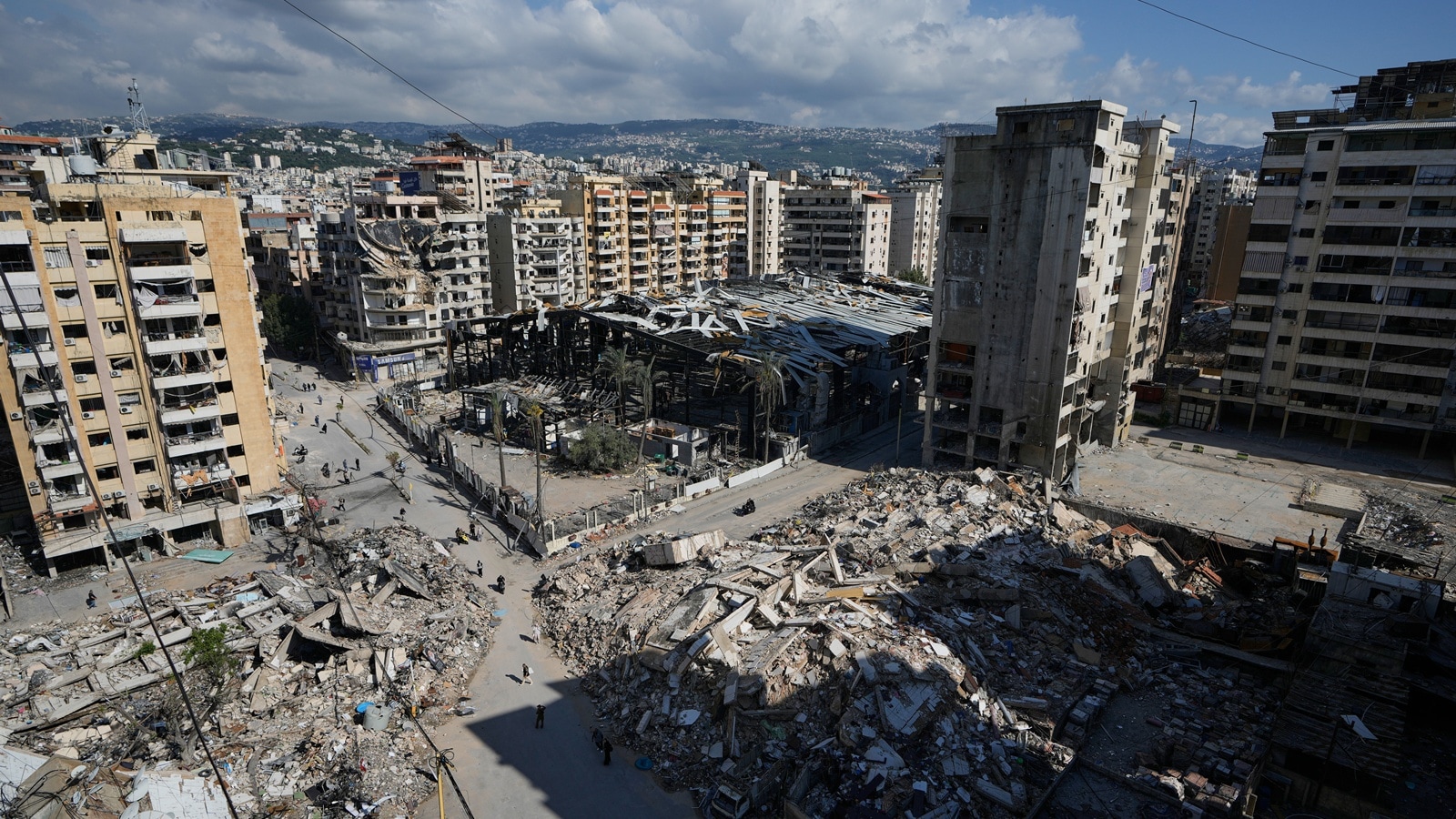
Iranian airstrikes have destroyed more US military sites than the US government acknowledged during the US-Iran war, according to an investigation by The Washington Post.
At least 228 structures across 15 military sites were damaged, with seven soldiers confirmed dead and more than 400 injured. Additionally, the US Navy’s 5th Fleet headquarters was reportedly relocated to the United States after being targeted in an Iranian drone strike.
The Iranian state media released over 100 satellite images of reported damage to the US bases by the Iranian strikes. The Washington Post verified the images and found that there were no signs of any Iranian strike having missed its target.
The verified sites included major hubs of US defence architecture in Kuwait, Bahrain, Qatar, Saudi Arabia, Jordan, and the UAE. The damaged infrastructure included barracks, aircraft hangars, fuel depots, radar systems, Patriot missile batteries, and a command aircraft in Saudi Arabia.
The US 5th Fleet’s headquarters in Bahrain- a major regional command centre- suffered such extensive damage that it was permanently relocated to Tampa, Florida.
What do experts say?
Military analysts told The Washington Post that the scale of the damage reveals serious failures in US preparedness.
Defence expert Mark Cancian noted the precision of Iranian targeting, pointing to the absence of random craters or missed strikes.
Story continues below this ad
Researcher Kelly Grieco argued that the US underestimated the depth of Iran’s intelligence on American base locations.
Analyst Maximilian Bremer summed up the situation bluntly, saying the US military is “definitely playing defence.”
Experts also highlighted the failure to adapt to one-way attack drones- a lesson already evident from the ongoing war in Ukraine. Air defence systems, while effective, were depleted rapidly, with more than half of THAAD and Patriot interceptors reportedly consumed.
Why is the true scale still hidden?
The US government has restricted access to commercial satellite imagery of the Middle East. Two of the largest providers, Vantor and Planet, are withholding images at the government’s request.
Story continues below this ad
This has made it nearly impossible for the public to verify the damage independently. Iran, by contrast, has been releasing high-resolution images of damaged US bases on social media throughout the conflict- images that The Post was able to verify using European satellite systems.
The Emerging Deal
A short-term memo, not a comprehensive peace deal
The US and Iran are working toward a limited, temporary memorandum to halt their war. The framework unfolds in three stages: formally ending the war, resolving the Strait of Hormuz crisis, then a 30-day window for broader negotiations. Deep divisions persist, making a sweeping deal impossible for now.
Feb 28, 2026
War begins. US-Israeli strikes on Iran trigger full-scale conflict.
Mar 2, 2026
Hezbollah opens fire in support of Iran, triggering a second front in Lebanon.
Apr 7, 2026
Full-scale fighting paused by a ceasefire announcement.
May 6, 2026
Trump pauses a two-day naval mission to reopen the Strait, citing progress in talks.
May 7, 2026 — Now
Deal framework surfaces. 3-stage plan confirmed: end the war, resolve Hormuz, then 30-day talks window.
The Gaps
One-page memo omits Washington’s central demands
The draft memorandum leaves unresolved issues that the US has insisted on in the past — and that Iran has rejected. Iran’s parliament speaker mocked reports of a breakthrough, calling it “Operation Trust Me Bro.”
☢
400+ kg of near-weapons-grade uranium
Iran’s existing stockpile of highly enriched uranium — one of Washington’s central concerns — is not addressed in the memo.
☢
Iran’s ballistic missile programme
Limits on Iran’s missile capabilities — a key US demand — are absent from the current framework.
☢
Support for proxy militias
Iran’s backing of Hezbollah and other proxy militias in the Middle East is not mentioned in the proposed deal.
☢
Strait of Hormuz still blocked
Reopening the strait is a second-stage goal, not an immediate condition — leaving energy supply disruptions in place.
“More of an American wish-list than a reality.”
— Ebrahim Rezaei, Iranian lawmaker, May 7, 2026
Negotiations
Witkoff and Kushner lead for the US; Pakistan mediates
Trump’s envoy Steve Witkoff and son-in-law Jared Kushner are leading US negotiations. Pakistan has emerged as the key mediator, pushing for a permanent end to the war before other issues are resolved. Pakistan’s foreign ministry said it expects “an agreement sooner rather than later.”
🇺🇸 US Position
Nuclear suspension + open the Strait first
🇮🇷 Iran Position
Formal end to war + halt Israeli strikes in Lebanon first
“They want to make a deal… it’s very possible. It’ll be over quickly.”
— US President Donald Trump, White House, May 6, 2026
Markets
Oil tumbles, stocks near record highs on deal hopes
Even an incomplete deal framework has moved markets sharply. Hopes for a partial agreement and eventual reopening of the Strait pushed Brent crude steeply lower while global equities approached record highs.
Sources: Reuters (Ariba Shahid, Steve Holland, Nayera Abdallah) · May 7, 2026
Background
The United States launched the critical “Operation Epic Fury” in February this year, targeting Iran’s military and leadership. This was followed by a blockade of the Strait of Hormuz, a critical chokepoint for global oil trade, and a retaliatory counter-blockade by the US.
In response, Iran attacked military bases across West Asia and Gulf nations, including Israel, Kuwait, and Saudi Arabia. A ceasefire was reached on April 8, but tensions remained high, with Iranian and Israeli strikes continuing.
According to a statement by US Secretary of State Marco Rubio on May 6, Operation Epic Fury has concluded and been replaced by a peace effort led by US President Donald Trump, “Operation Freedom,” launched on May 4.
Story continues below this ad
(Written by Nityanjali Bulsu, who is an intern at The Indian Express)

