

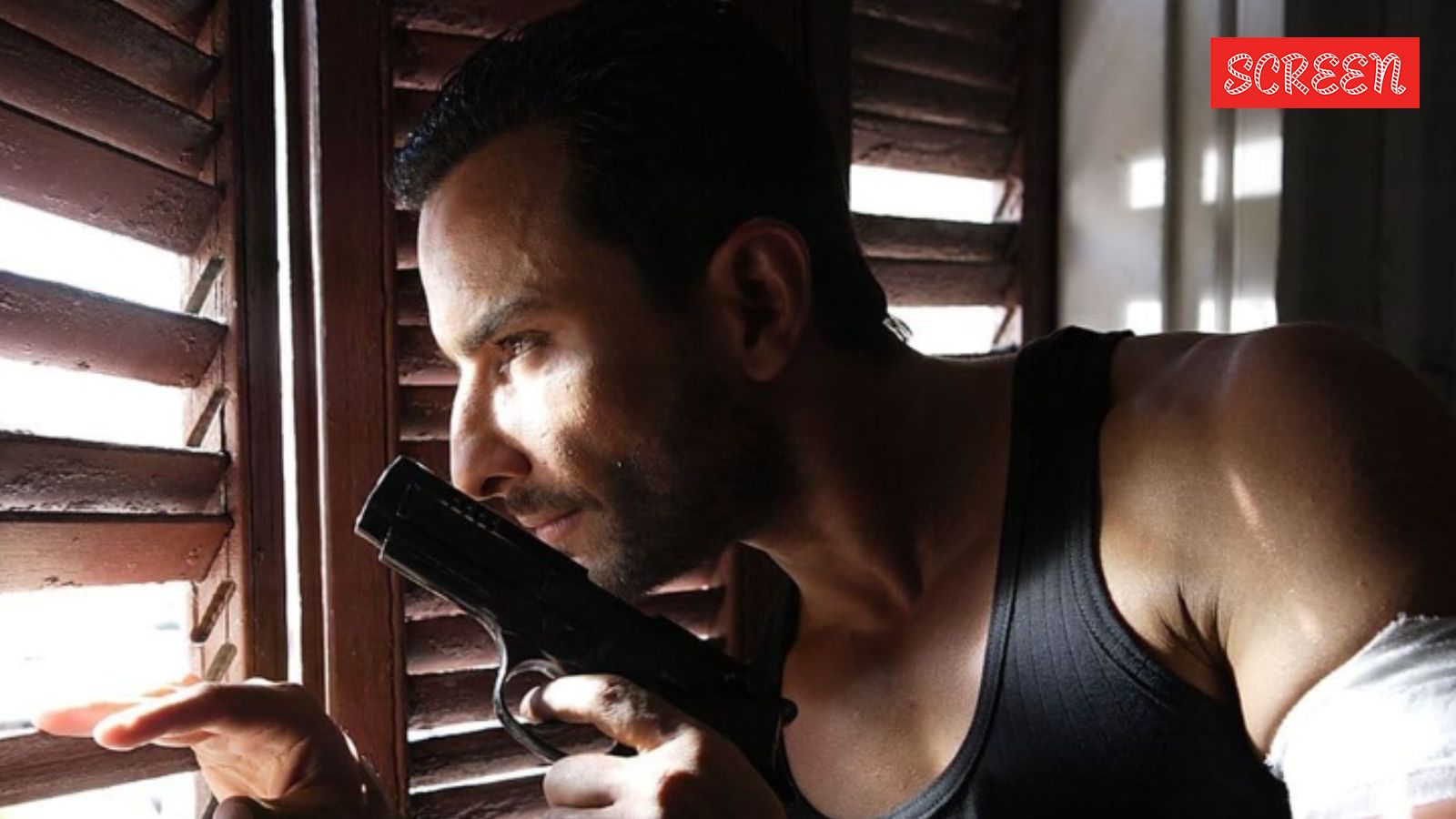
6 min readMumbaiUpdated: Jun 22, 2026 11:08 AM IST
Manmohan Desai, Mahendra Sandhu, Godard, Prem Chopra, Iftekhar, Tarantino, Danny, Vijay Anand, Ajit, Hitchcock, Shahbaz Khan, Michael Bay, Sergio Leone, Prem Chopra, and an explosive four-minute-long take over Pritam’s Raabta. What’s not to love? Your mind would make you want to think of James Bond’s Dr. No, but somewhere along the way, you’re convinced that Sriram Raghavan is equally enthralled by Jeetendra’s 1967 spy actioner Farz. Similarly, your mind would make you want to think that Raghavan’s busy plot doesn’t have any time for serious song picturisation, but then, somewhere along the way, you see a mujra-in-the-villain’s-den thrown into the mix. The constant feeling that you get is that Agent Vinod is stranded between two traditions, making you strand yourself between the heart and the mind. But if you watch closely enough, and repeatedly, just like I have, in all these years, you would perhaps realise that Raghavan just wants to have some fun with the genre. Is that too much to ask for?
Well, surely for a lot of moviegoers, it was. The film, released to much hurray in 2012, fizzled out over its opening weekend. It became one of those massive misfires in an auteur’s career. But misfires have their own peculiar charm. The more you return to them, the more you realise they were perhaps never misfires to begin with. The more you watch, the more you want to rewatch. You begin to notice the colourful gallery of villains that Raghavan has assembled. A cigar-smoking Ram Kapoor. A melancholic Prem Chopra. Of course, they are tropey, more cartoons than characters. But that is where Raghavan, along with his co-writer Arijit Biswas, finds his poetry. He grants each of them a fleeting moment to step out of the silhouette of a trope. Take Shahbaz Khan’s no-nonsense henchman who, even with a gun pointed at him, calmly declares, “Agar main bach gaya toh tujhe fursat se maarunga.” Or Gulshan Grover, who briefly stops being Gulshan Grover altogether when he learns that his fellow Pakistani colleagues are planning yet another attack on Indian soil and asks, with equal parts frustration and disbelief, “Bore nahi hote tum? Bore hogaya main.”

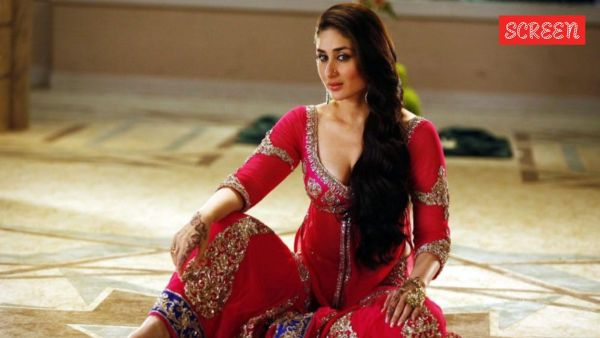 Through the character of Iram Bilal (Kareena Kapoor), it extends a measure of humanity to a Pakistani spy, resisting the binary logic that so often governs the genre.
What is worth paying attention to is that Grover plays Tehmur Pasha, a most-wanted terrorist hiding in a neighbouring country. Now imagine a mainstream Bollywood spy actioner granting such a character a moment of weary self-awareness. What is also worth paying attention to is a film in which names like “Abu Sayed Nazer” are invoked so frequently that the audience is almost conditioned to arrive at a familiar set of associations, only for the film to flip the script as it attempts to erase those very associations and rid Islam of the terror tag. It has little interest in assigning blame to Pakistan nor does it indulge in jingoistic shenanigans for India. What it wants to show instead is a larger picture, towards a transnational machinery of violence, a global cartel that funds, sustains and profits from conflict irrespective of borders. And, moreover, through the character of Iram Bilal (Kareena Kapoor), it extends a measure of humanity to a Pakistani spy, resisting the binary logic that so often governs the genre.
Also Read | In a post-Dhurandhar world, Sriram Raghavan stages an anti-war rebellion with Ikkis
What emerges, then, is a spy thriller that is far more politically curious than it is often given credit for. Of course, saying that makes the film sound far more serious than it actually is. Because, as mentioned earlier, Raghavan is as interested in dismantling the genre as much as he is in playing with it. For every subversion he sneaks in, there is an equal measure of affection for the traditions that make the spy film such an enduringly entertaining form. It reminds you of Tom Gunning’s idea of the “cinema of attractions.” So you get a film that hops across borders with the impatience of a seasoned traveller. It begins in Kandahar, rushes off to Siberia, pauses briefly in Morocco, takes a detour through Riga and Somalia, and eventually finds its way from Karachi to New Delhi. The plot is, of course, little more than a glorified MacGuffin. An excuse to keep the pieces moving and the set-pieces coming.
And what set-pieces they are. Ingenious, eccentric, and often delightfully absurd. The best of the lot arrives when a terrorist, desperately trying to transport a bomb to its destination, commandeers an auto-rickshaw, only for two unsuspecting women to mistake him for the driver and hop in, asking to be dropped off. What follows is perhaps the most Sriram Raghavan sequence imaginable: a ticking bomb, a terrorist, two chatty passengers, and a hilariously tense chase unfolding simultaneously. It is ridiculously suspenseful. However, what comes at the altar of all this fun is perhaps the film’s biggest limitation: it struggles to lend any real interiority to its titular character. You look at Vinod and wonder, what is his real self like? What does he make of the world around him? What ghosts from the past does he carry, and what hopes does he harbour for the future?
For most of the film, he remains an enigma, a man constantly in motion, slipping through the cracks of his own story. And yet, just when you have resigned yourself to that fact, there comes a moment right before the glorious Raabta sequence. Vinod and Iram sit down and talk about their pasts. It reveals very little, but somehow tells you everything. In another film, in another universe, these two would probably have had a happily-ever-after. You begin to imagine a different Raabta altogether, one where the song doesn’t accompany a shootout, but two people sharing a slow dance in some high-end restaurant in Italy. That is why, when the film finally ends, your heart breaks not because the mission fails, but because a union has been cursed. Somewhere along the way, without you noticing it, this pulpy, no-nonsense spy actioner transforms into the love story of two damaged souls trying to find a moment of peace in a world that won’t allow it. Just Raghavan things.

Click here to follow Screen Digital on YouTube and stay updated with the latest from the world of cinema.

