

5 min readJul 21, 2026 08:58 PM IST
First published on: Jul 21, 2026 at 12:37 PM IST
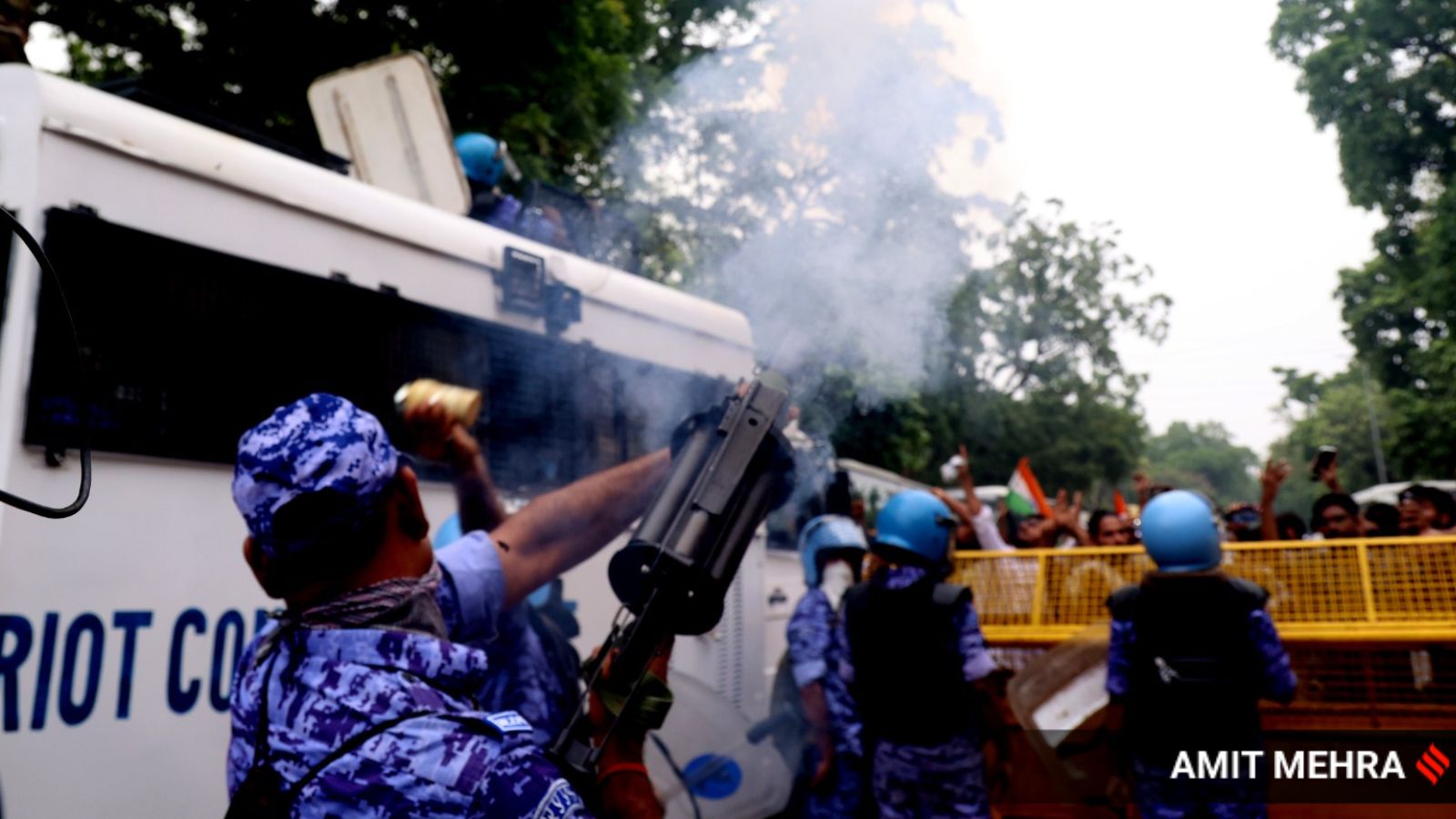
As I lay crouched below a broken yellow barricade, shielding my head with one hand and holding a damp handkerchief to my nose with the other, I thanked the Instagram video I had watched months ago about reporting from war zones. Watching it hadn’t been a waste of time, I thought. But I wasn’t in an area you would usually consider a war zone.
Just a moment ago, Delhi Police had fired a tear gas shell. Then another. And another.

This happened outside the posh Le Meridien hotel, on a lane that houses the National Media Centre, the Youth Congress office and leads towards the Press Club, not far from Parliament.
I was out in Delhi covering the Jantar Mantar protest for this newspaper, one of many such professionals from media houses or the creator economy, besides the countless others who had turned up to “hold the government accountable”.
Earlier in the day, I met a group of women from Haryana’s Jhajjar who sat on the green grounds behind Sardar Vallabhbhai Patel’s statue near the Niti Aayog Bhawan. “We are here for the future of our children,” they told me, adjusting the embroidered chunder over their head, and confirming that they were ready to stay for as long as it took. A group of young professionals from Rajasthan’s Jodhpur told me they would discuss the Delhi protest over the alleged NEET paper leak during the lunch break and any other “free time”. “Sab aa nahi sakte na isliye hamara chautha dost office mein hain, hum teenon aaye hain,” (All of us couldn’t take leave from work so the three of us came while our fourth friend stayed back).
And there was another young man, who confided in me his belief that the authorities were trying to wear out the protesters. It seemed logical. There were rows of yellow barricades, taller than your usual traffic stops, drilled together both on the side and to each other. There were blue Delhi Police vehicles, SUVs with red/blue beacons, and riot control vehicles, the security personnel’s hand at the ready over the tear gas launcher. Protesters stood chanting on either side.
Divide, delay and exhaust seemed like the strategy of the police as those inside Jantar Mantar couldn’t walk out to join the protest while those trying to reach the protest ground were stopped by the police bandobast.
Then the script changed, and reports poured in of a lathi charge. Soon, there were tear gas shells being fired in the background as I reported on all that had happened in a matter of a few hours. I ran for cover along with my team. Just a kilometre away, the Prime Minister had begun his media address at the start of Parliament’s Monsoon Session, with no acknowledgement of the protest.
Amid all this, I worried more about the clueless protester. Many I spoke to while crossing roads and sheltering from the rain felt as if they had been left to fend for themselves. They had come all this way, from Hyderabad and from Munirka, alone or in groups, but no one knew what came next. No message from the Cockroach Janta Party leadership reached them as there was a blanket internet shutdown in large parts of areas around Jantar Mantar and Parliament. There was no WhatsApp, no Instagram, not even Google Maps. I had to call up a work colleague and ask them to check their native messaging app for my updates from the ground, an app mostly used to deliver OTPs.
Whether it was the CJP’s ineptitude or inexperience, failing to anticipate an internet shutdown — despite the network connectivity reportedly being patchy for the last few days at the Jantar Mantar protest site — left the thousands who had turned up vulnerable and directionless. Should they leave fellow protesters stranded behind barricades and march towards Parliament, or wait for instructions that never came? What should they do when tear gas shells landed around them and no leader from the stage was nearby? No one seemed to have the answers.
Postscript: There was another lesson, for those who believe only capitalism can make this world run. While the Le Meridien hotel staff shooed us away from behind closed doors, those escaping police laathis found refuge in Gurdwara Bangla Sahib.
The writer is copy editor, Indian Express Online

