

UPSC Essentialsbrings to you its initiative for the practice ofMains answer writing.It covers essential topics of static and dynamic parts of the UPSC Civil Services syllabus covered under various GS papers. This answer-writing practice is designed to help you as a value addition to your UPSC CSE Mains. Attempt today’s answer writing on questions related to topics ofGS-2to check your progress.
Gear up forUPSC Prelims 2026—Practice smarter, revise faster, and succeed with ourSpecial Quiz Magazine. (Click Here)
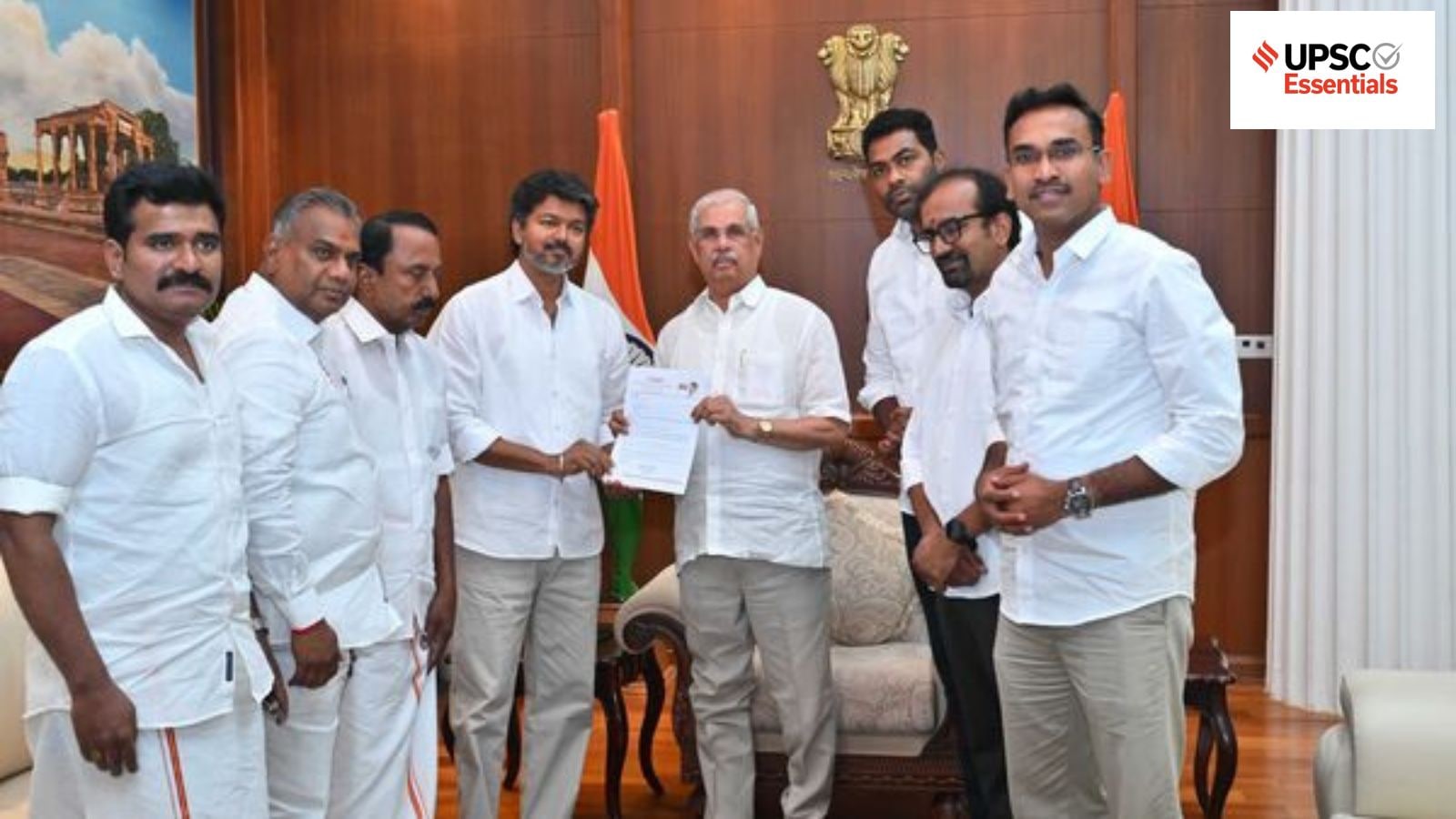
Discuss the constitutional provisions governing the formation of a state government after Assembly elections. In this context, examine the role of the Governor in inviting a party or coalition to form the government.
QUESTION 2
“The evolution of India’s electric vehicle ecosystem reflects a shift from subsidy-driven adoption to market-based sustainability.” Discuss in the context of recent state EV policies.
QUESTION 1: Discuss the constitutional provisions governing the formation of a state government after Assembly elections. In this context, examine the role of the Governor in inviting a party or coalition to form the government.
Relevance: The question is important for GS 2 Polity as it covers constitutional governance, discretionary powers of the Governor, and conventions related to government formation in states. It is relevant amid recurring debates over coalition politics, hung assemblies, floor tests, and allegations of partisan use of gubernatorial office.
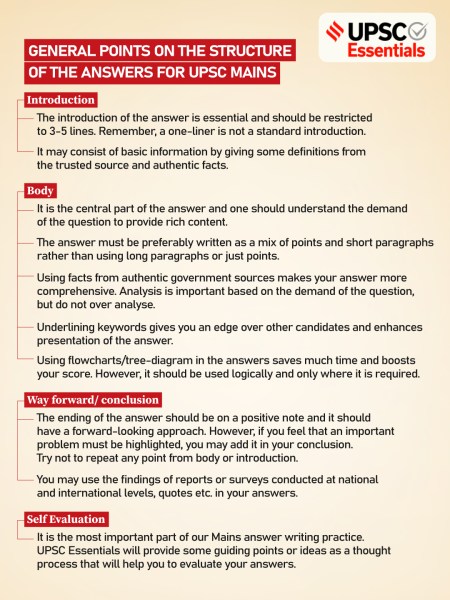
Note: This is not a model UPSC answer. It only provides you with a thought process which you may incorporate into the answers.
Introduction:
Story continues below this ad
— Following assembly elections, Article 164 of the Indian Constitution governs the establishment of a state government, with the Governor appointing the Chief Minister (CM) and other ministries.
— The Governor acts on the advice of the Council of Ministers, except in cases where discretionary powers are required.
Body:
You may incorporate some of the following points in your answer:
— In the period between the declaration of election results and the end of the existing Assembly’s tenure, the winning party or coalition stakes claim to form the government, and the Governor invites it to prove majority in the House. A pro-tem speaker is appointed, usually the senior-most legislator among the elected, to administer the oath to the MLAs and conduct a floor test.
Story continues below this ad
— In case of a hung Assembly, the Governor has a greater role in deciding whom to invite, but eventually, the party or the coalition has to prove it has the support of more than half the winning candidates.
— In the extreme scenario that a government cannot be formed for various reasons, the state is put under President’s Rule, under Article 356. About this scenario, Article 172 states, “Provided that the said period may, while a Proclamation of Emergency is in operation, be extended by Parliament by law for a period not exceeding one year at a time and not extending in any case beyond a period of six months after the Proclamation has ceased to operate.”
(Source: Congress yet to decide Kerala CM: How long can it take under the Constitution, In Tamil Nadu, Vijay’s swearing-in delayed: What is the Governor’s role in a hung Assembly)
Points to Ponder
How should the Governor determine majority support in cases of a hung assembly?
Story continues below this ad
What reforms are needed to ensure political neutrality and federal balance in gubernatorial functioning?
Related Previous Year Question
Discuss the essential conditions for exercise of the legislative powers by the Governor. Discuss the legality of re-promulgation of ordinances by the Governor without placing them before the Legislature. (2022)
QUESTION 2: “The evolution of India’s electric vehicle ecosystem reflects a shift from subsidy-driven adoption to market-based sustainability.” Discuss in the context of recent state EV policies.
Relevance: The question is relevant for GS 2 Governance as it highlights the role of public policy, cooperative federalism, and state-led policy innovation in promoting sustainable mobility. It can also be useful for linking governance with India’s climate commitments, energy transition goals, and initiatives like NITI Aayog mobility strategies and the FAME Scheme.
Story continues below this ad
Note: This is not a model UPSC answer. It only provides you with a thought process which you may incorporate into the answers.
Introduction:
— India’s move to clean mobility has reached a critical point. Within a week, two major policy events occurred. The Delhi government produced a draft EV Policy 2.0 for public feedback, and the Bureau of Energy Efficiency (BEE) distributed a revised draft of the CAFE-3 norms to industry partners.
— The most significant aspect of the policy is the anticipated phase-out of internal combustion engine cars in key segments. The decision to ban new registrations of ICE three-wheelers in January 2027 and two-wheelers in April 2027 is a bold and strategic move, as the segment accounts for about three-quarters of motor vehicle sales in Delhi. It goes beyond incentives to build a clear regulatory framework.
Body:
You may incorporate some of the following points in your answer:
Story continues below this ad
— So far, subsidies have played a significant role in India’s EV development. While these have contributed significantly to market creation, they have not achieved size on their own.
— Jurisdictions that have seen quick EV adoption have done so by combining incentives with specific phase-out dates. India has been wary about embracing this method. Delhi’s draft policy is a departure from that caution.
— At the national level, the amended CAFE-3 draft is just as crucial. Passenger cars are a weak link in India’s electrification story, with EV adoption of only about 4%. CAFE standards are the primary regulatory weapon available for influencing this industry.
— The latest draft reflects some positive changes. The earlier provisions that disproportionately favoured small petrol vehicles have been tightened. The introduction of mechanisms such as credit pooling and the option to purchase compliance credits introduces flexibility while ensuring accountability. These are pragmatic features that can ease the transition for manufacturers while maintaining pressure to improve efficiency.
— However, important concerns remain. The continued use of super-credit multipliers for hybrid technologies is one such issue. Strong hybrids, plug-in hybrids, and flex-fuel vehicles are not zero-emission solutions. While they may serve as transitional technologies, offering them generous compliance credits risks diluting the signal to invest in full electrification.
— If the objective is to accelerate the shift to zero-emission vehicles, the regulatory framework must reflect that priority clearly and consistently.
Conclusion:
— India’s existing framework for heavy-duty vehicles is based on model-specific fuel efficiency standards. While this represents a starting point, it does not create the kind of systemic pressure needed to drive transformation. There is no fleet-average mechanism and no meaningful incentive for manufacturers to introduce zero-emission trucks. As a result, the regulatory signal to invest in electric or hydrogen-based freight solutions remains weak. What is needed is a more comprehensive approach, a framework similar in spirit to CAFE but tailored to the realities of the commercial vehicle sector.
— The BEE also needs to function more decisively as a regulator rather than a consultative agency. It has spent more than three years on CAFE and fuel efficiency regulations for medium- and heavy-duty trucks. This must come to an end. BEE must finalise CAFE-3, and set an ambitious EV trajectory for passenger cars. It must then move urgently on a fleet-average framework for trucks through fuel efficiency regulations.
(Source: EVs in India have moved on subsidies. Delhi policy shows clearer path)
Points to Ponder
Why were subsidies initially necessary for promoting electric vehicles in India?
What role do charging infrastructure, battery supply chains, and policy certainty play in EV expansion?
Related Previous Year Question
National Education Policy 2020 is in conformity with the Sustainable Development Goal-4 (2030). It intends to restructure and reorient education system in India. Critically examine the statement. (2020)
🚨Click Hereto read the UPSC Essentials magazine forApril 2026.Share your views and suggestions in the comment box or at manas.srivastava@indianexpress.com🚨
Previous Mains Answer Practice
UPSC Essentials: Mains answer practice — GS 3 (Week 154)
UPSC Essentials: Mains answer practice — GS 3 (Week 153)
UPSC Essentials: Mains answer practice — GS 2 (Week 152)
UPSC Essentials: Mains answer practice — GS 2 (Week 153)
UPSC Essentials: Mains answer practice — GS 1 (Week 152)
UPSC Essentials: Mains answer practice — GS 1 (Week 153)
Subscribeto ourUPSC newsletterand stay updated with the news cues from the past week.
Stay updatedwith the latestUPSC articlesby joining ourTelegram channel–IndianExpressUPSC Hub, and follow us onInstagramandX.

