

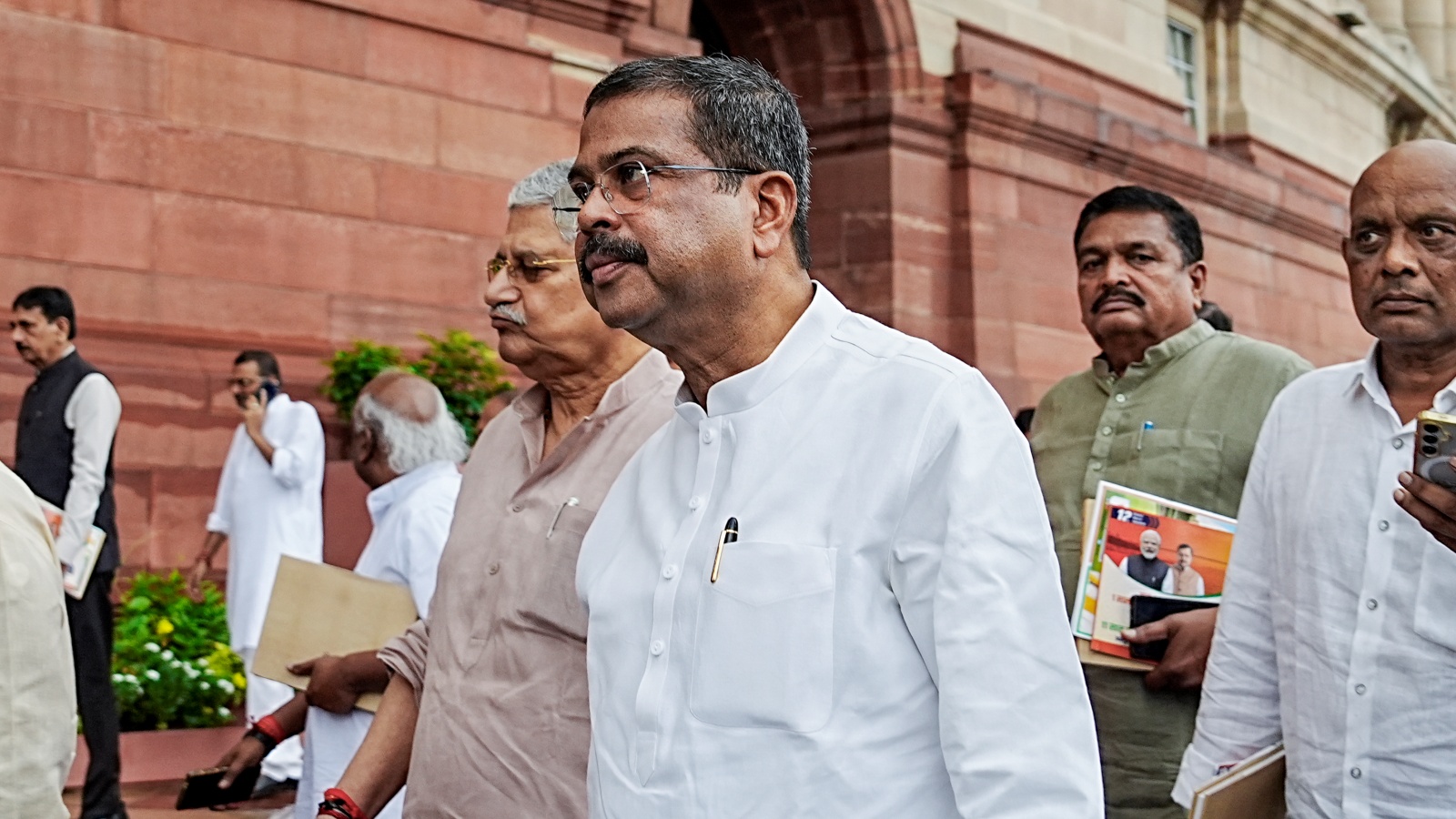
JUST 48 hours before Dharmendra Pradhan quit, his resignation was not in the government’s mind, top BJP and government sources said.
But the assessment on three specific aspects seem to have prompted the action. One, the protests gained further momentum in Delhi despite police action, and spread across many cities. Two, concerns that a prolonged confrontation could wash out the entire Monsoon Session of Parliament, jeopardising the political capital spent on building support for the contentious delimitation and the women’s reservation bills. Three, the government’s actions — fast track courts, shifting of higher education secretary, a Bill with harsh measures to prevent paper leaks, and sacking of 47 NTA officials — did not cut ice with protesters.

At the beginning of the week on Monday, a day after activist Sonam Wangchuk was removed from Jantar Mantar and admitted to a hospital, the assessment within the government was that protests would eventually lose steam. NEET as well as other major entrance examinations were after all over, and the academic calendar was largely on track.
While the government closely monitored the agitation, there was little indication Pradhan’s resignation was under consideration. Senior Education Ministry officials met the Prime Minister’s Office and the Ministry of Home Affairs on July 22-23 to assess the situation, sources said. Pradhan continued with his official engagements, chairing meetings with states on school education on both days.
By Thursday evening, however, the government’s calculations had begun to shift. The Prime Minister has been in direct control, signalling his intent to address every concern of the youth, and his personal appeals were continuously gauged to see if they resonated among students, a BJP MP said.
During this period too, not only did the crowds at Jantar Mantar continue to swell, smaller protests broke out across many state capitals and other big cities. In Mumbai, for instance, despite prohibitory orders and FIRs naming nearly 300 protesters, the turnout at each successive demonstration grew larger.
All measures to contain the fallout including the harsh Bill cleared by Cabinet on Friday to punish those indulging in paper leaks, did not seem to ease the protests, sources in the government said. The government first offered a discussion in Parliament, then transferred Higher Education Secretary Vineet Joshi, and later announced the removal of five NTA officials while promising a wider overhaul of the examination body.
None of these steps eased the protests, and the government concluded that a bigger political signal was needed. “It seemed the sentiment with regard to the Education Minister was not turning positive even after the draft of the new proposed law was cleared by the Cabinet. There were not many choices,” a senior BJP source said.
Adding to the concerns was Congress leader Rahul Gandhi’s sit-in just outside the Prime Minister’s residence, which, sources said, reinforced the perception within the ruling leadership it was losing control of the political narrative. This heightened fears the Monsoon Session could be washed out, an outcome the government was keen to avoid given the Bills lined up for passage, particularly on delimitation and women’s reservation, for which it had worked hard for months.
The speed with which the decision was taken, sources said, was reflected in Pradhan’s own schedule. As late as Friday evening, he attended a briefing to prepare for Parliament questions relating to his ministry. “If he knew he was no longer going to be the minister, would he have sat through a detailed briefing on answering questions?” said a source familiar with the meeting. There was “absolutely no indication” at the time that a resignation was imminent, the source said.
In public, the party and the government argued throughout that the demand for Pradhan’s resignation was political. Party leaders were apprehensive it would come across as a moral victory for the Opposition, especially Rahul Gandhi.
But the mood within the party was shifting. At least two Cabinet ministers The Indian Express spoke with said Pradhan may have to forego the education portfolio. Some state leaders called his continuation “untenable”. “Both the government and the BJP could not afford to antagonise the youth and women,” a senior party leader said.
With the Cockroach Janta Party threatening a larger national protest if its demands were not met, there were concerns things could go out of hand. “Many opposition parties, especially the Congress, the Aam Aadmi Party and the Samajwadi Party, had sent their members to the protest on one pretext or another. Had protests continued, it had the potential of becoming larger and more complex with the aid of experienced political hands. That has been nipped now,” another senior BJP source said.
Highly placed BJP sources said the decision to seek Pradhan’s resignation would help shift the focus back to Parliament from Monday. “The central leadership of the BJP was keen to end the stalemate to get Parliament working. With important Bills on women, delimitation and education, they believed business in Parliament would help them recover the loss of face and consolidate themselves through their passage,” the source said.

