

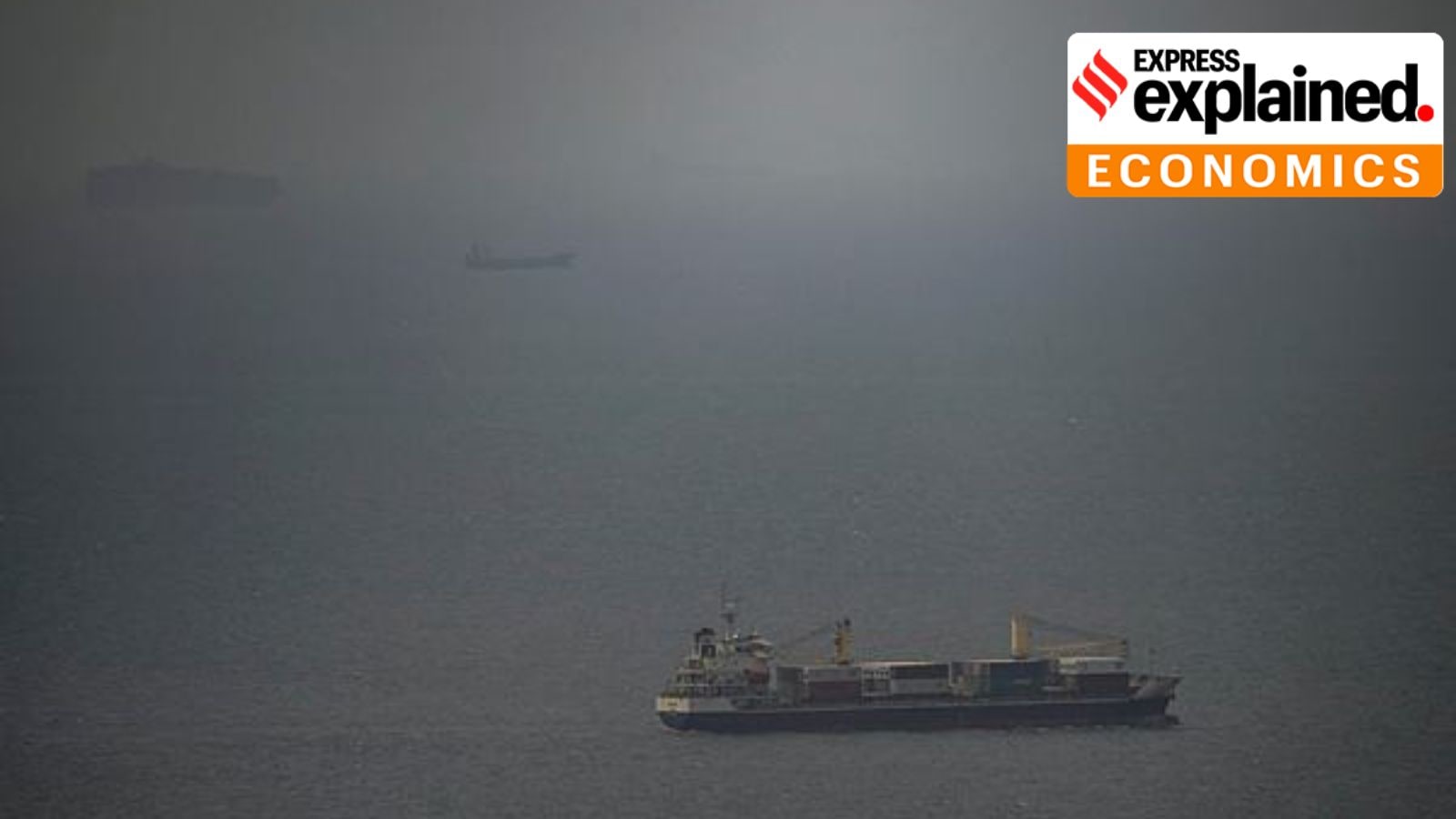
The West Asia war has driven oil prices into a highly volatile phase due to the effective halt in vessel movements through the Strait of Hormuz, one of the most critical maritime chokepoints for global energy flows. While the conflict and the resultant blockade of the crucial waterway is significant, this price surge appears far muted compared to the surge in oil benchmarks triggered by the Russia-Ukraine war in 2022. But that’s not the complete and true picture by any count.
Since the war began, the highest Brent crude—one of the oil benchmarks—has traded at about $119 per barrel. It ended last week at about $105 per barrel. But in reality, refiners in various parts of the world have likely been paying a lot more for the oil they need to keep their refineries operational in the immediate future. Reports suggest that barrels have changed hands at even $150 per barrel, significantly higher than the exchange-traded benchmarks.

Now, the oil price levels generally quoted in reports, seen on television news tickers, and available on commodity exchanges can be significantly different from the actual price that refiners pay for the barrels, particularly during supply crises. And that is because, like other commodity markets, the oil market comprises not one but two markets—a paper market and a physical market.
A tale of two markets
The difference between the paper market and the physical market is largely defined by the timing of delivery and the actual intent to actually buy and use the oil. The paper market consists of financial front-month futures contracts, which are essentially promises to buy oil at a future date. These contracts usually for about one-two months hence. And these are the prices quoted most often as benchmark prices.
But are these the prices at which refiners are striking deals today to get oil to feed their refineries over the next few weeks? Absolutely not. The price they actually pay is based on the supply situation in the physical market, where oil is actually bought and sold for refinery operations, not just for trading.
In effect, the two markets price different things—paper market prices the future expectation, while the physical market prices the immediate demand-supply realities. When all’s well with oil supplies globally, the prices in the two markets are usually well-aligned. But in times of supply crises—like the unprecedented closure of the Strait of Hormuz—the divergence can be yawning.
The Strait’s effective closure has taken millions of barrels of oil a day off the market, marking the largest supply disruption in the history of the global oil market, according to the International Energy Agency (IEA). The Strait of Hormuz accounted for about a fifth of global oil and liquefied natural gas (LNG) flows. Refiners cannot rely on the paper market, and in times of supply disruptions, move to procure oil even at exorbitant prices as supply security takes precedence over price considerations.
A barrel in hand versus one in bush
Story continues below this ad
Amid the current supply disruption, the paper market appears to belie the truth somewhat, given that the physical market is really stretched. The dissonance here is somewhat similar to the stock market optimism globally, with the S&P 500 inching back to its pre-war levels despite there being no sign of the conflict achieving resolution.
Much of this optimism in the American stock markets could be on account of the AI buildout, even as the oil sector does not have a similar parallel to justify the hope that prices would come down. The paper market evidently believes that the supply situation is expected to ease significantly in a couple of months, even as the physical market is currently grappling with supply scarcity. Focusing only on paper market prices can result in complacency about the demand-supply dynamics of oil flows.
The lower price of paper barrels for future delivery than physical barrels for immediate supply is referred to as ‘backwardation’, which is a market structure in which the commodity’s immediate availability is worth a lot more than its availability a few months down the road. Put simply, it means that the market—currently facing supply tightness—doesn’t expect the supply disruption and high prices to last too long.
“…the Dated-to-Frontline (DFL) Brent benchmark has reached levels of $25 per barrel. The DFL represents the premium that Brent physical barrels (Dated Brent) for immediate loading (typically 10-30 days ahead, current May) command over the Brent Futures front month (now pricing June). The explosion from a couple of dollars to an average $21 per barrel in the first week of April highlights the time value of ‘ASAP’ (as soon as possible) barrels over future-delivery barrels,” Rystad Energy said in an April 20 note.
Story continues below this ad
Notably, when the war began, it was the paper market that got spooked first, with futures surging, while physical market prices remained stable as there was no immediate impact on oil flows in an oversupplied market. But as the war progressed, with vessel movements through the Strait of Hormuz reduced to a trickle, the supply tightness became a reality, making immediate barrels much more valuable than futures contracts.
The road ahead for oil prices
The Strait of Hormuz has been closed for nearly two months now and the fuel shortages are only expected to get worse in the days and weeks ahead. And this is not just in Asia—the most impacted so far—but could hit Europe, and potentially the US if this goes on for long. That appears likely since the talks don’t seem to be headed anywhere.
Since the physical market is about the current and actual demand-supply scenario, geography plays a key role in real prices paid by refiners, apart from the quality of oil. With supplies to Asia hit the hardest, Asian oil importers are facing the real scarcity and scrambling for barrels, and consequently paying higher prices than their peers in some other parts of the world. But as they increasingly compete with the rest of the globe to secure energy supplies, prices elsewhere would also rise further.
While analysts expect some level of backwardation to continue, futures prices could rise significantly if the market stops pricing in a resolution of the war, or at least opening of the Strait of Hormuz, in the near term. If that indeed happens, the delta between prices in the physical market and the paper market would contract. Else, the gap between physical and paper barrels will continue to be at supernormal levels.
Story continues below this ad
“Iran is blocking basically all of the traffic passing through, while letting through some of their own tankers and a few others. But now the US has set up this blockade as well, which is stopping the Iranian tankers leaving too. And so we’re essentially at a stalemate here… My hunch is that if these talks do not reach a breakthrough of some sort in the next couple of weeks, this could be a long-drawn affair. That’s when reality will hit home. Prices are going to surge and this difference between the spot and futures price will narrow suddenly,” an oil industry veteran with experience in the shipping sector told The Indian Express.
Even if there’s a breakthrough, there are impediments, such as mines that Iran has laid along the Strait. The US military says it could take six months to make sure no mines are left in the Strait of Hormuz. Even if the Strait is reopened and there are still some mines lingering, one incident of a ship suffering damage due a mine could again severely cripple vessel flows through the waterway.

