

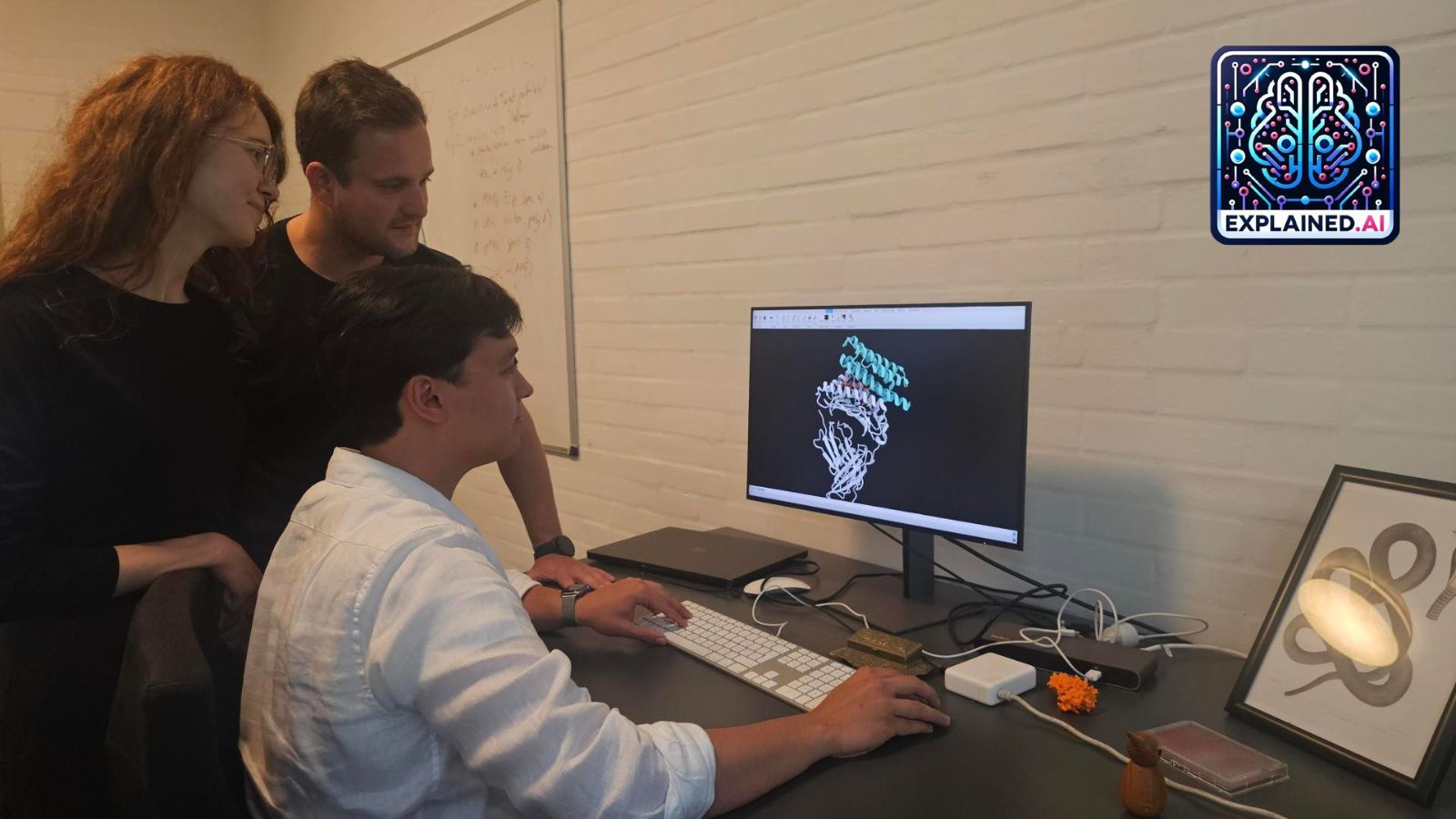
Could the next breakthrough in cancer treatment come from combining artificial intelligence (AI) with quantum computing? Researchers at the Technical University of Denmark (DTU) have taken an early step by using a photonic quantum computer to improve how an AI model designs peptides, which help the immune system recognise diseased or infected cells.
A quantum computer differs from a normal or classical computer mainly in the way it is built and operates. While the latter uses bits (basic unit of classical information) that are either 0 or 1, a quantum computer uses qubits (fundamental unit of quantum information) that can be both at the same time. A photonic quantum computer uses individual light particles, or photons, as qubits to encode and process information.

The DTU’s proof-of-concept study (real-world feasibility test), which is awaiting peer review, confirmed through laboratory tests that the AI-designed peptides could successfully bind to human leukocyte antigen (HLA) molecules present on a cell’s surface — a critical first step in triggering an immune response.
Timothy Patrick Jenkins, corresponding author of the study, told The Indian Express that while the technology is still far from clinical use, it could eventually help scientists develop more personalised cancer vaccines and other immune-based therapies.
What are peptides, and why is designing them hard?
Peptides are short chains of amino acids, the building blocks of proteins. In immunology, they matter because cells display peptides on their surface, allowing your immune system to inspect them and decide what is healthy and what is foreign. Many vaccines work by showing the immune system the right peptide and training it to respond.
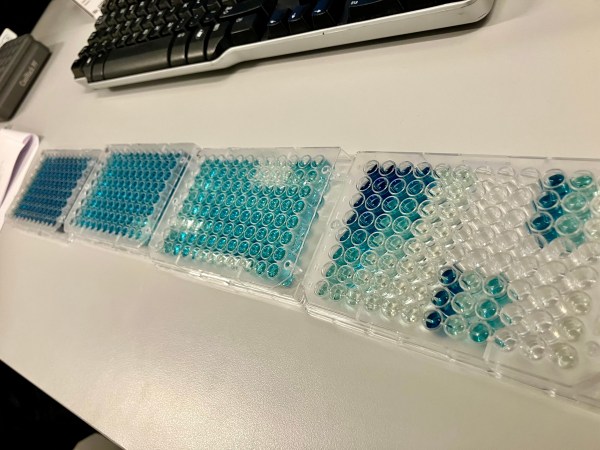 Laboratory assay showing peptide-HLA binding (Special arrangement)
The human leukocyte antigen (HLA) proteins, sitting on the surface of almost all your cells, are the immune molecules. They act like a display shelf, grabbing short peptides from inside the cell and holding them up on the surface so patrolling immune cells can inspect them. A peptide only gets shown to the immune system if it can bind and sit stably in the groove of an HLA molecule. So binding is the entry ticket: no binding, no display, no immune recognition. Designing a peptide that binds a particular HLA is the first step in developing such vaccines or immune therapies.
The difficulty then is the sheer size of the search space. Even for a short peptide, there are hundreds of billions of possible sequences, and only a tiny fraction binds well to any given person’s HLA molecules. Finding those needles in that haystack, especially for immune types that are poorly represented in existing data, is the hard part.
Story continues below this ad
What did AI do, and what did the quantum computer add?
The AI, a generative adversarial network, does the actual design work: it learns the patterns of real immune-binding peptides and proposes new ones. Every such model needs a random starting point for each new design. Normally, that’s a simple, standard distribution from a classical computer.
We replaced it with samples from a photonic quantum processor, which produces a fundamentally different, more richly correlated kind of randomness that is hard to reproduce on a classical machine.
An ordinary computer’s randomness resembles a row of musicians each playing a note independently, resulting in an even, uncoordinated spread of sound. By contrast, our photonic processor works by letting particles of light interfere with one another, much as instruments in an orchestra blend into a single chord, resulting in a structured, correlated pattern that no set of independent players could produce. That interference is a genuine quantum effect, giving the randomness a built-in structure that is difficult to recreate classically.
Story continues below this ad
 Orca Computing’s PT-2 quantum computer (Special arrangement)
So the quantum computer didn’t replace the AI; it changed the raw material the AI starts from. Handing the model these structured, correlated starting points rather than plain uncorrelated noise appears to push it to explore a wider, less obvious range of designs, rather than converging on familiar designs. That breadth seems to matter most for the harder, understudied immune types where there is little data to guide it.
Why do the gains for data-poor HLA types matter?
HLA genes are among the most variable in the human genome. There are thousands of versions, and you inherit your particular set from your parents. That determines your HLA type. Versions may differ between individuals and between populations, so two people can display quite different peptides from the very same virus. This partly explains why a given infection or vaccine can provoke a stronger response in some people than others. It’s also why some HLA types are well-studied and data-rich while others, often those more common in underrepresented populations, have far less data.
Current tools work well for common HLA types because there’s a lot of data to learn from, and less well for rarer ones. That means people with less-studied immune profiles are often less well served by AI-driven design.
In our work, the quantum-derived starting distribution performed best for these rarer HLA types. If that pattern holds, it could improve peptide design for underrepresented populations and personalised applications, such as personalised cancer vaccines or neoantigen vaccines.
Story continues below this ad
What does “not quantum advantage” mean, and could a better classical model catch up?
Quantum advantage means a quantum computer doing something no realistic classical computer could do in a sensible amount of time. We are explicitly not claiming that. The systems we used here are small enough that a classical computer can still simulate them, so this is not a case of the quantum machine doing the impossible.
Our claim is narrower: this particular kind of quantum-generated randomness is a useful ingredient that becomes increasingly difficult to reproduce classically as systems scale.
In principle, a more advanced classical model, or a cleverly chosen classical distribution, might achieve similar results. Finding the best classical alternative is itself a hard problem, and the appeal of the quantum approach is that it gives you this rich, structured randomness directly. Having said that, these results also point to the possibility of a genuine quantum advantage as the hardware scales further, while highlighting an exciting way to combine cutting-edge classical and quantum computing.
Why was lab validation important?
Story continues below this ad
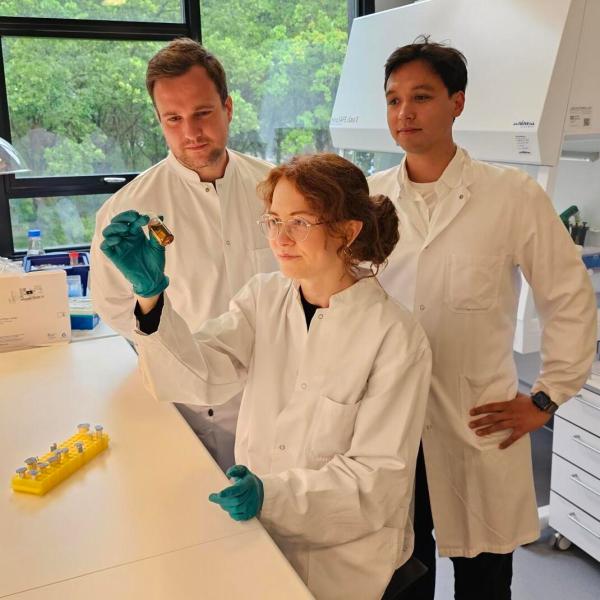 Researchers Timothy P Jenkins, Emilie Sofie Engdal and Jonathan Funk (Special arrangement)
Prediction tools are least reliable for the rare immune types we cared about most, so a purely computational result would not have been convincing. We synthesised the top quantum-designed peptides and tested whether they actually stabilise the immune complex in the laboratory.
The HLA molecule is stable only when a peptide is sitting in its binding groove, and tends to fall apart without a peptide. So when we say a peptide stabilises the complex, we mean it binds the HLA molecule well enough to hold it together in a properly folded, stable form. Our lab assay measures exactly that: how much intact, peptide-bound HLA complex is present after we add the designed peptide. A more stable complex means the peptide is binding well.
Across all three HLA types tested, the peptides bound their targets, with nearly all succeeding for two HLA types and about three-quarters for the most difficult one, whose unusual chemistry makes it challenging for existing predictors. Validation is what separates a real demonstration from an interesting simulation.
What needs to happen next, and where are the opportunities in five years?
Story continues below this ad
Several things need to happen. First, scale. The real value of quantum hardware emerges once systems grow beyond what classical computers can simulate. So the next step is larger models and larger quantum processors.
Second, pairing quantum inputs with more advanced AI models. We deliberately used a simple model to isolate the quantum effect.
Third, binding is only the first step. A peptide must trigger an immune response, not just bind to HLA molecules. Bridging from “binds in a dish” to “works as a vaccine or therapy” is a long road with many steps.
Over the next five years, I think the most realistic opportunity is using quantum-derived randomness to help AI explore data-poor biological problems, including personalised targets and difficult protein families, rather than expecting quantum computers to take over the whole pipeline. Useful and targeted, rather than sweeping.

