

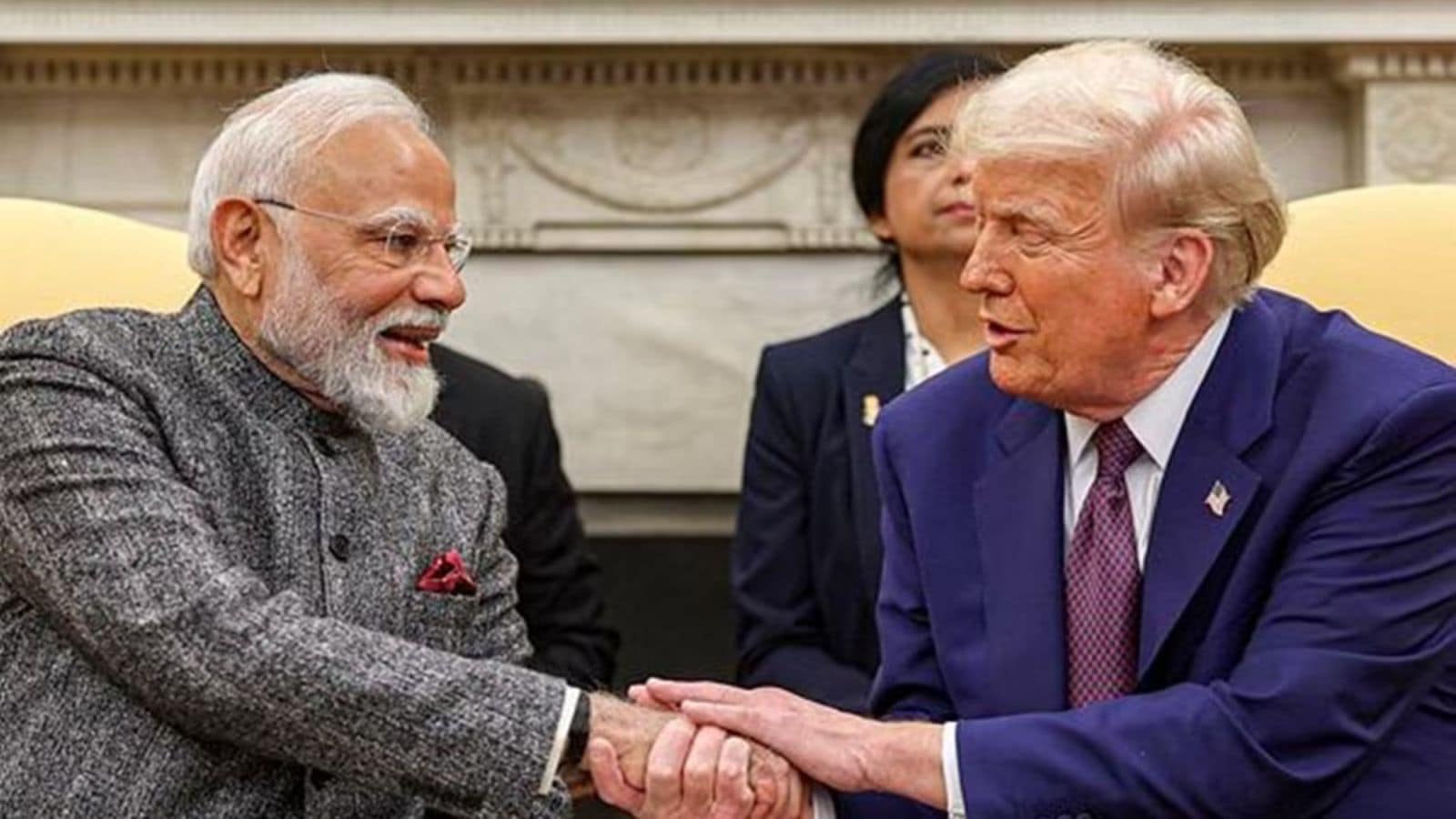
As negotiators from India and the US begin what seems like the final round of talks before formally signing a bilateral trade agreement, Commerce and Industry Ministry officials Monday said New Delhi is seeking an edge over Asian competitors under the new set of Section 301 tariffs Washington is expected to announce before July end.
The US had earlier said it would use Section 301, which gives it powers to slap higher import duty on countries hurting its industry, after the President Donald Trump administration lost the case on reciprocal tariffs in the US Supreme Court. Immediately after this loss, the US had imposed 10% global tariffs under Section 122. This lapses on July 24, which creates the urgency for New Delhi to sign a trade deal within the next 5-7 weeks.

The framework for the US-India bilateral trade agreement was agreed upon in February when the US said it would bring down tariffs to 18% from an effective tariff of 50% (25% reciprocal and 25% penalty for buying Russian oil).
“Now the fight is about Section 301, which is the only statute available to the administration given by the US Congress. The rates do not matter in this case; preferential market access is what matters,” a Commerce and Industry Ministry official said.
“We are not willing to lower duties unless our goods get preferential market access in the US compared with our competitors in Southeast Asian countries. The duty imposed by the US on the European Union or other developed countries does not affect us because our goods are not competing with them,” the official said.
At a media conference on Monday to announce the operationalisation of the FTA with Oman, Commerce Minister Piyush Goyal said the negotiations are more or less complete and that India and the US have already agreed upon the first tranche of the framework agreement. “Talks will continue for a broader bilateral trade agreement,” he said, adding he expected to meet USTR Jamieson Greer later this month.
However, experts pointed out that Section 301 tariffs could be worse than IEEPA (International Emergency Economic Powers Act) tariffs that the Trump administration used to pressurise trade partners into accepting steep demands under trade deals. India was on the receiving end of the steepest 50% tariffs last year after trade talks broke down in the face of demands made by the US that were perceived as unreasonable by New Delhi.
Story continues below this ad
Section 301 tariffs are stricter than IEEPA
After the Trump administration lost the authority to impose tariffs under IEEPA in February following a legal challenge, the administration in Washington DC opened a new Section 301 investigation within a month over excess manufacturing capacity against 16 countries, including India, China, the European Union, Singapore, Indonesia, Malaysia, Cambodia, Thailand, Korea, Vietnam, Taiwan, and Bangladesh, among others. Just a day after, the USTR initiated a second investigation on forced labour, probing 60 countries, including India.
According to Singapore based-Hinrich Foundation, Section 301 is far more potent than the overturned use of the IEEPA because it comes with greater legal certainty for the executive branch.
“Under the rules, USTR is authorised to impose duties or other import restrictions, withdraw or suspend trade agreement concessions, enter into binding agreements with the foreign government to eliminate the conduct or unburden US commerce, or compensate the US with satisfactory trade benefits. Because Section 301 need not apply only to goods, other retaliatory actions are allowed, such as restricting the terms or conditions or denying the issuance of any ‘service sector access authorisation’,” the Foundation said.
While Section 301 cases are meant to terminate automatically in four years, this period can be extended or reinstated by USTR without Congressional oversight, the Foundation said, adding that under Section 301, “the US effectively acts as judge, jury, and executioner”.
India is worst hit by tariffs
India was one of the worst hit by tariffs that resulted in a flight of foreign investment and resulted in steep depreciation of the domestic currency. The rupee has fallen almost 12% in the last one year. A formal trade deal remained aloof for months as the US demanded that India wind down imports of Russian oil and accept genetically-modified American agricultural products.
Story continues below this ad
The India-US joint statement of February said India will eliminate or reduce tariffs on all US industrial goods and a wide range of US food and agricultural products, including dried distillers’ grains (DDGs), red sorghum for animal feed, tree nuts, fresh and processed fruit, soybean oil, wine and spirits, and additional products.
Indicating signs of disagreement, the US later revised a factsheet softening its claims about the gains it had secured from New Delhi and entirely dropping a section on digital services taxes. The earlier version of the factsheet said India had “committed to” buying more American products and purchasing “over $500 billion of U.S. energy, information and communication technology, coal, and other products”. The updated factsheet, as well as the joint statement, tempered the wording from “committed” to “intends”.

