

4 min readChandigarhUpdated: May 3, 2026 10:53 PM IST
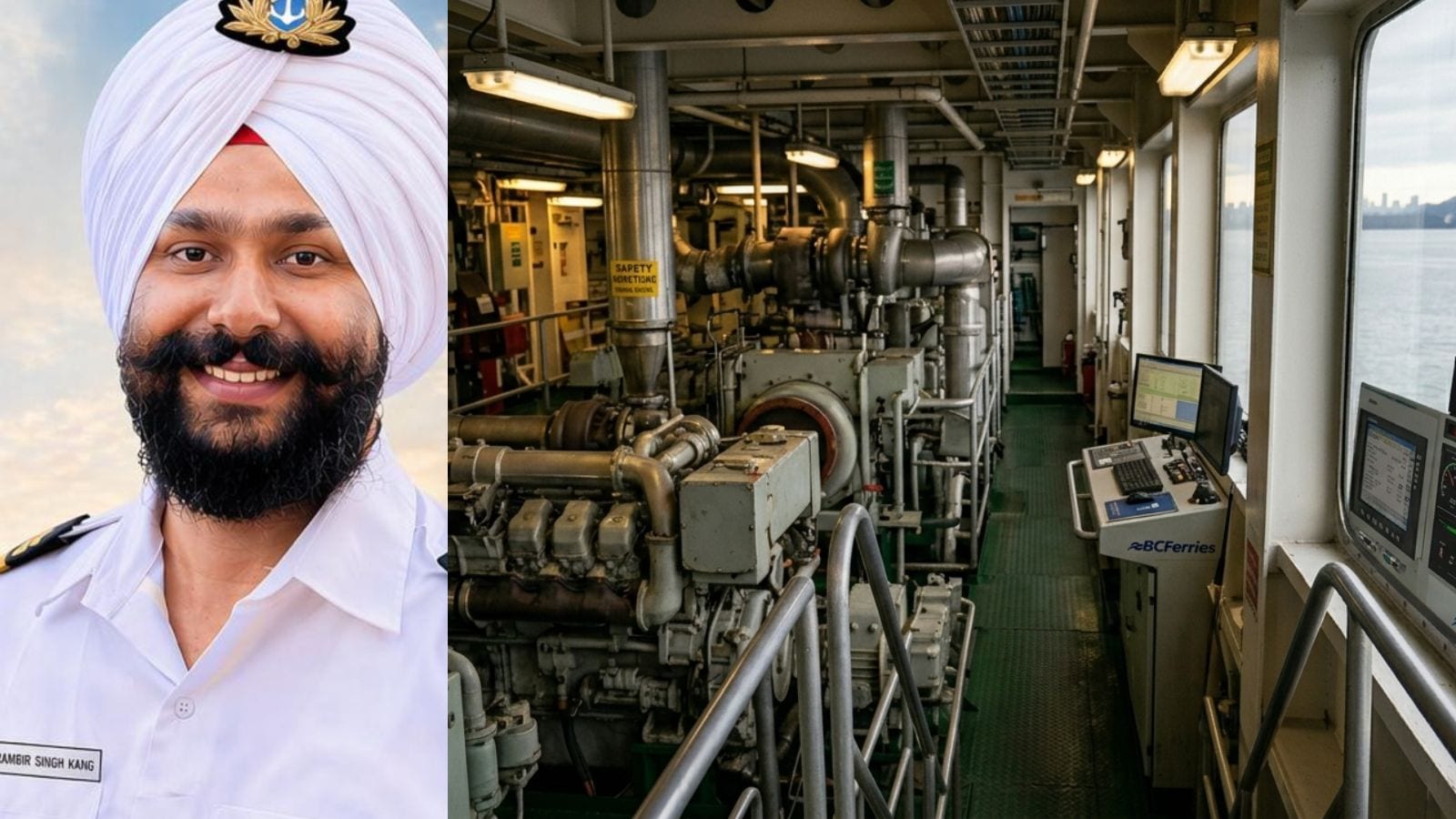
In a significant milestone for religious accommodation in Canada’s maritime sector, Karambir Singh Kang from Kang village in Dhariwal tehsil of Gurdaspur, Punjab, has become the first Sikh marine engineer to serve with a full beard at BC Ferries, the province of British Columbia’s primary ferry operator. This was announced on April 30. The appointment follows nearly four years of sustained advocacy by the World Sikh Organization of Canada (WSO) and the BC Ferry and Marine Workers’ Union.
Kang, a 2nd Class Transport Canada-certified Marine Engineer (Class 2 CoC Motor), Red Seal Millwright, and PMP-certified professional, had repeatedly reached the final stages of hiring at BC Ferries but was turned away due to the company’s earlier clean-shaven policy, which was linked to self-contained breathing apparatus (SCBA) requirements for safety roles. “I had the required Marine Engineering credentials and consistently reached the final stages of hiring, but each time I was told I would need to be clean-shaven. Because of my faith, that was not an option. This is a proud moment. It shows that change is possible, but there is still work to be done to ensure full and equal access for everyone,” Kang said in a statement.

The policy change stemmed from a comprehensive risk assessment conducted by BC Ferries. The assessment determined that several key positions, including Deck Officers, Chief Engineers, and most First Engineer roles, do not require immediate SCBA readiness. As a result, the clean-shaven requirement was removed for these positions where it was not essential for safety. The decision applies fleet-wide and now accommodates beards for religious, medical, or personal reasons while upholding operational standards. In parallel, the organisation also updated its uniform policy in July 2024 to formally recognise turbans.
Alongside Kang’s appointment, Capt. Gurpreet Singh Bajwa has become BC Ferries’ first turbaned Sikh Deck Officer and Captain. Bajwa, who joined in 2023, played an active role in the advocacy, including representing union workers during the risk assessment. “I stood my ground for my faith, not just for myself, but so that no one after me has to choose between who they are and the career they deserve,” he stated.
WSO President Danish Singh hailed the development as “a significant step forward for equality and inclusion in British Columbia. For too long, Sikh workers have been forced to choose between their faith and their careers. Blanket clean-shave requirements are neither appropriate nor consistent with the law. This decision shows that with evidence-based policy, collaboration, and persistence, safety can be fully maintained while respecting fundamental rights.”
A 2012 alumnus of Jawahar Navodaya Vidyalaya (JNV) Pathankot, Kang pursued marine engineering education at Birla Institute of Technology and Science (BITS), Pilani. He holds additional credentials including a leadership course from Memorial University Marine Institute (sponsored by BC Ferries) and has worked towards Canadian certifications after initial training in India and Hong Kong. Based in Surrey, British Columbia , Kang has maintained strong ties to his roots, serving as a long-time blood donor at Civil Hospital Blood Bank in Gurdaspur since 2010 and volunteering with Khalsa Aid International for disaster relief.
The development builds on earlier union grievances filed around 2022 challenging the “no shave, no shift” policy at BC Ferries and aligns with Canada’s legal framework under the Charter of Rights and Freedoms and the BC Human Rights Code, which mandate reasonable accommodation short of undue hardship.
Story continues below this ad
While celebrating the milestone, WSO noted that broader regulatory reform is still needed. Outdated “skin-to-seal” assumptions in federal and provincial safety standards continue to affect bearded workers in firefighting, emergency response, oil and gas, and other sectors. The organisation is advocating performance-based respirator standards and supporting research into techniques like the Singh Thattha Method for safe respirator use with beards.

