

Walk past a roadside eatery in Varanasi at six in the morning, and you will see a familiar sight: The kettle on, the chulha glowing, and the first batch of puri-jalebi being prepared. What you may not notice is the smoke above it. Multiply that smoke by the lakhs of small commercial eateries across India’s cities, and you begin to see the scale of a problem my colleagues and I have spent the past year trying to measure.
In Varanasi, Guwahati and Ludhiana — three cities where we have undertaken detailed studies — commercial eateries, including tea shops, dhabas, canteens, sweet shops, restaurants and mid-day meal kitchens, account for roughly 10 per cent of PM2.5 emissions. But their pollution matters disproportionately because it peaks during the morning and evening hours.

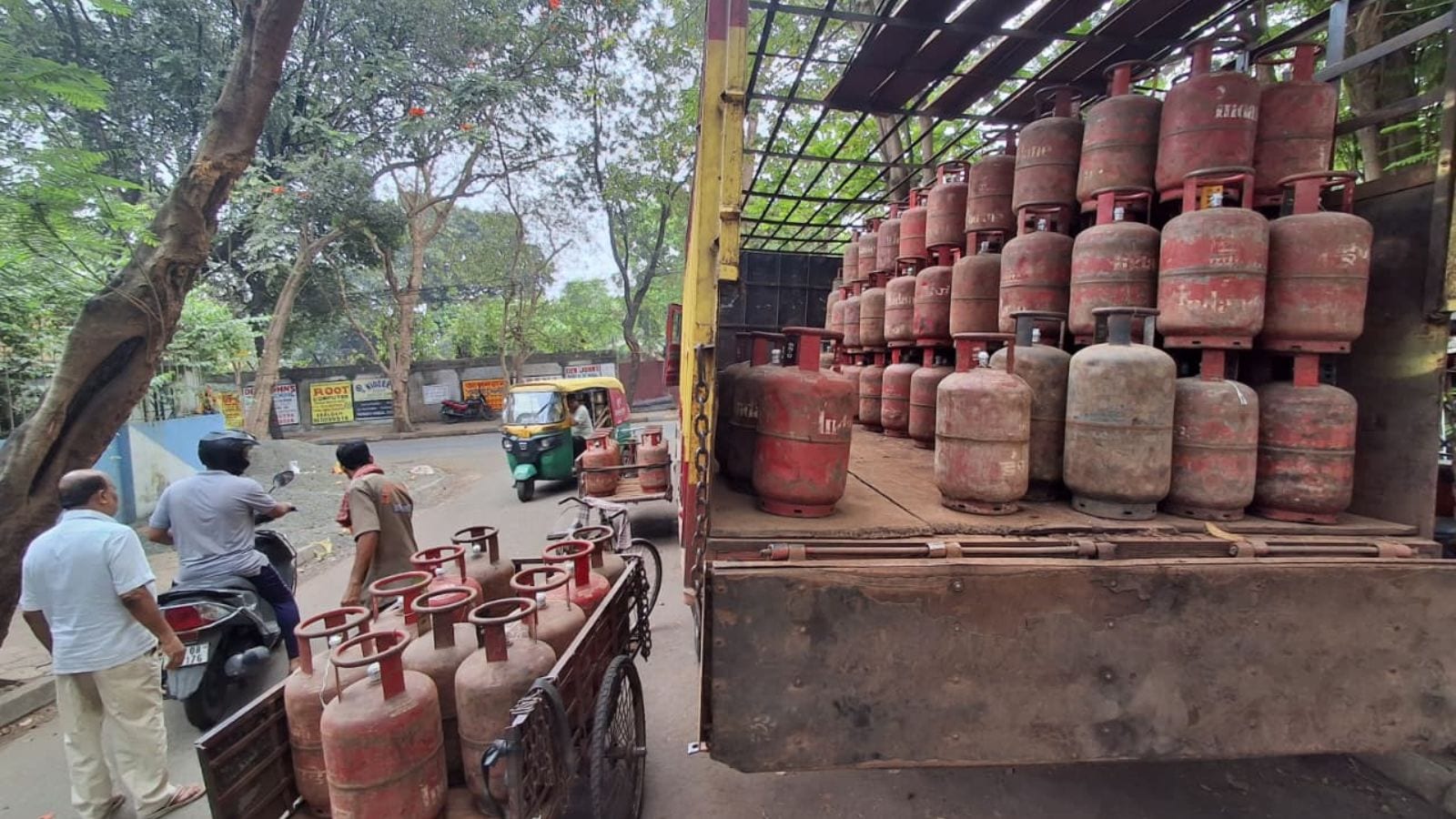
Until a few months ago, there was good news to report. These establishments were quietly shifting from coal and biomass to LPG. But this trend is now reversing due to supply constraints and rising LPG costs. Owners I have spoken to in recent weeks are talking about going back to coal or biomass. Some already have. If LPG supply remains constrained and prices stay elevated — both of which appear likely through the winter — air quality in northern India could be headed for another ugly season. A sizeable number of poor households and small businesses may be pushed back to dirty fuels.
But this need not happen.
The arithmetic
LPG is the most expensive fuel to cook a meal in India — whether at home, in a dhaba, or in a restaurant. Take a 19 kg commercial LPG cylinder, currently priced at about Rs 3,100-3,300. It contains roughly 240 kWh of thermal energy. But commercial burners typically deliver only about 55-65 per cent of this heat to the pot. This means that the useful cooking energy from one cylinder is only about 130-160 kWh. At current prices, LPG cooking therefore costs around Rs 22.5 per useful kWh.
Now run the same arithmetic for induction cooking. Even at an electricity tariff of Rs 15/kWh — a very high commercial tariff — and assuming 85 per cent efficiency, induction cooking costs about Rs 17.5 per useful kWh. That makes it around 20 per cent cheaper than LPG. At a more typical commercial electricity tariff of around Rs 9-10/kWh, the economics are even clearer. Induction cooking is nearly 50 per cent cheaper than LPG. For LPG to reach parity with induction cooking at this tariff, the cost of a 19 kg cylinder would need to fall to about Rs 1,700 — close to a 50 per cent price cut, which is unlikely.
The striking fact is that this shift in the economics of cooking happened some time ago. Many of India’s eateries have been quietly paying for the country’s most expensive cooking fuel — without realising it.
No economic barrier
If electricity is cheaper, cleaner and faster, why is the pot still on a gas burner? The barriers are real, but they are no longer primarily economic. They are about information, habit and infrastructure.
Awareness of electric cooking remains very low. Our survey shows that most eateries have little idea how induction can be introduced into their kitchens. We are also creatures of habit. The comfort of an open flame and a familiar way of cooking slows the transition. Many cooks also believe that switching fuels will change the taste of their food.
Then there is the issue of an inadequately sanctioned electrical load. Most small establishments simply do not have enough approved load at the meter to run two induction hobs during peak cooking hours. And, most decisively, there is no credible central or state programme that helps a sweet shop owner in Ludhiana, Guwahati, or Varanasi actually make the switch.
This is where policy must come in — not to subsidise the fuel, because electricity is already cheaper, but to support the transition. This means financing support for equipment replacement, fast-tracked load enhancement for small commercial connections, time-of-day commercial tariffs that reward cooking outside peak hours, and a clear deployment target for commercial kitchen electrification.
A new clean cooking mission
India spent the last decade subsidising LPG to displace biomass from the kitchen. That mission was right for its time. It saved lakhs of women from indoor smoke and brought millions of households and eateries into the modern energy system.
But the world has moved on. Electricity is now cheaper than gas at the burner. Renewables are pushing power costs further down. And the geopolitical risks attached to imported LPG — the Strait of Hormuz, dollar volatility and a tightening global gas market — are no longer footnotes.
The next phase of India’s clean cooking mission should not be about LPG. It must be about the plug.
A national programme to electrify commercial and residential cooking — starting with the most stressed segments such as small eateries, mid-day meal kitchens, government canteens, hostel messes and similar establishments — would deliver four gains at once: A developed market for induction cooking, cleaner urban air, lower running costs for small businesses, and greater energy security in the kitchen.
The economics have already chosen. Policy now needs to catch up.
The writer is CEO, iForest

