

4 min readNew DelhiMay 1, 2026 11:12 AM IST
Supreme Court news: Holding that even though a conviction can be based solely on a dying declaration, courts must still test it against surrounding circumstances and the overall evidentiary record, the Supreme Court acquitted the victim’s father-in-law in a 2001 burn death case, citing serious inconsistencies and lack of reliable proof.
A bench of Justices Aravind Kumar and N V Anjaria was hearing three connected criminal appeals arising from a Madhya Pradesh High Court verdict that had acquitted the accused of murder but upheld their conviction under Section 498A (husband or relative of husband of a woman subjecting her to cruelty) of the Indian Penal Code (IPC).

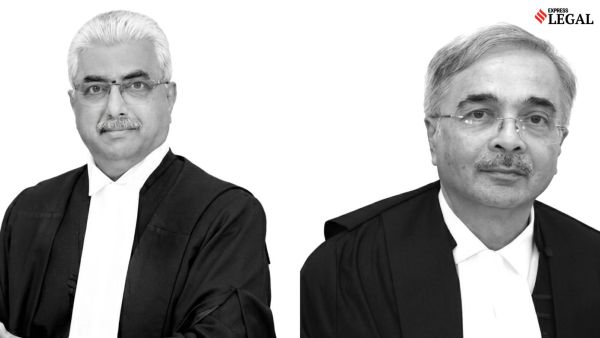 Justices Aravind Kumar and N V Anjaria stressed that where two interpretations of evidence are possible, the one favouring the accused must prevail.
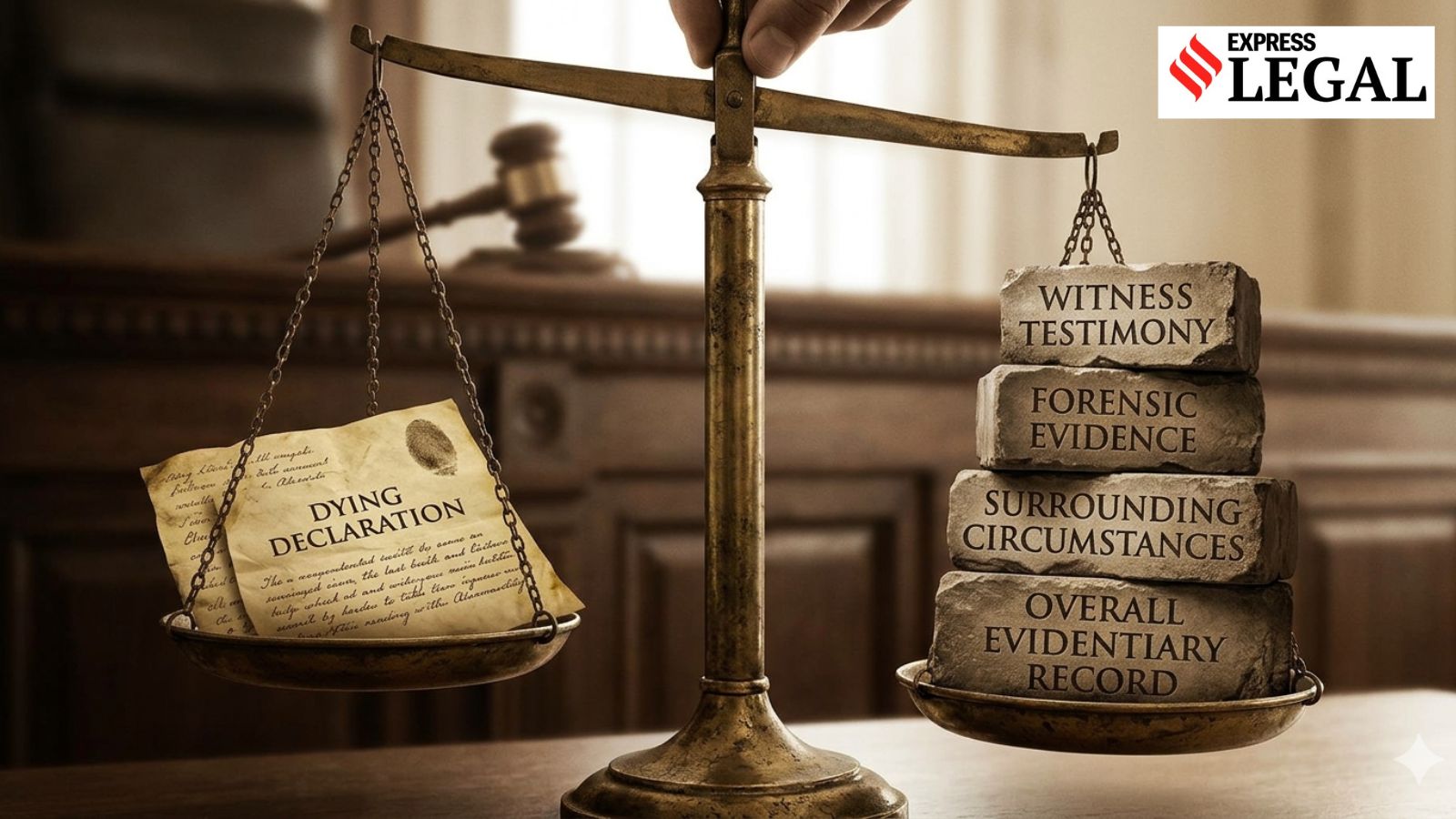
“While conviction can be solely based on a dying declaration, the court still has to weigh the same in light of surrounding circumstances and the principles governing evidence,” the Supreme Court bench said on April 30, laying down a crucial caveat on the evidentiary value of such statements.
Case background: Marriage, death within 9 months
The case dates back to July 12, 2000, when the deceased woman married one Nagendra Singh. Within nine months, on April 15, 2001, she sustained severe burn injuries at her matrimonial home in Madhya Pradesh and was hospitalised.
The prosecution alleged that she was subjected to harassment over dowry demands, including a car. In her first dying declaration recorded on April 16, 2001, she accused her husband and in-laws of pouring kerosene on her and setting her ablaze.
However, in a second dying declaration recorded on April 17, 2001, she stated that she had poured kerosene on herself and set herself on fire due to distress. She succumbed on April 22, 2001.
Court proceedings
The trial court convicted the husband and his parents under IPC sections 302 (murder) and 498A, awarding life imprisonment under the former charge.
Story continues below this ad
On appeal, the Madhya Pradesh High Court set aside the murder conviction, citing contradictions in evidence, but retained the conviction under Section 498A and reduced the sentence to the period already undergone.
Appeals before Supreme Court, contradictions
- Three appeals came before the Supreme Court – one by Narendra Singh (father-in-law), challenging his conviction for cruelty; one by the deceased’s brother, seeking restoration of the murder conviction; and one by the state of Madhya Pradesh, also challenging the acquittal under IPC Section 302.
- The Supreme Court found that the two dying declarations were inconsistent on the core issue of whether the death was homicidal or suicidal. This contradiction created a serious doubt about their reliability.
- It also noted that the first declaration appeared influenced, as evidence showed the presence of persons allegedly prompting the victim.
- Family members of the deceased introduced allegations of dowry demand during the trial that were missing from their earlier police statements. The Supreme Court viewed these as afterthoughts, weakening their credibility.
- Neighbouring witnesses turned hostile and did not support the prosecution’s case. No independent evidence established cruelty or dowry demand.
- A letter allegedly written by the deceased expressing distress was not proved through forensic examination and was, therefore, discarded.
Court’s observations on criminal law principles
- The Supreme Court bench reiterated that suspicion, however strong, cannot substitute proof.
- It stressed that where two interpretations of evidence are possible, the one favouring the accused must prevail.
- The apex court also cautioned against implicating family members without specific and credible evidence, particularly in cases under IPC Section 498A.
Final verdict
The appeal filed by Narendra Singh was allowed, and his conviction under Section 498A was set aside. Appeals by the state and the deceased’s brother seeking a conviction under Section 302 IPC were dismissed.

© IE Online Media Services Pvt Ltd

