

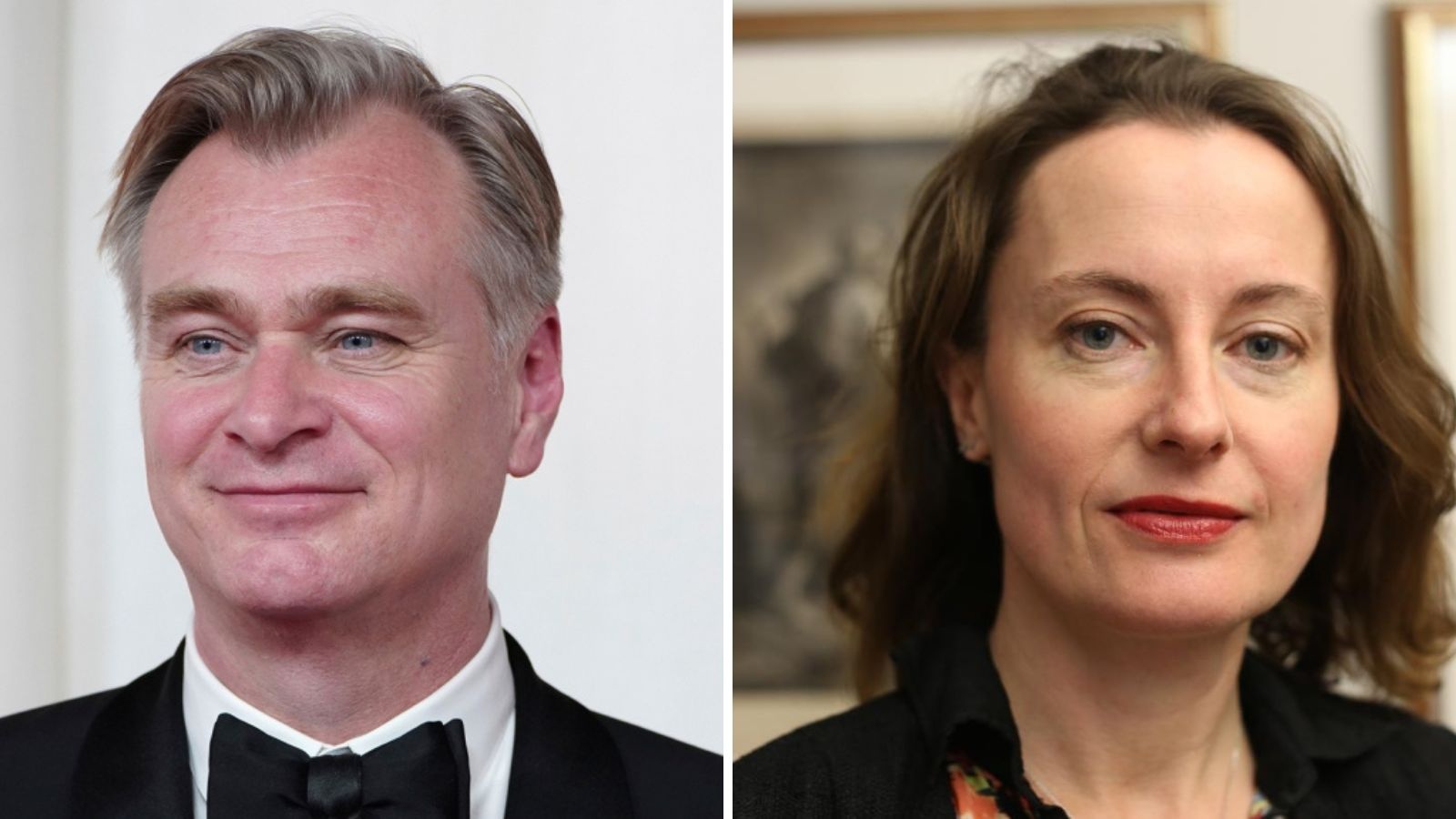
Christopher Nolan has said that his $250 million epic, The Odyssey, was shaped by the opening line of Emily Wilson’s celebrated translation: “Tell me about a complicated man.” The director praised the “genius” and “inventiveness” of Homer’s hero, insisting that Odysseus was “not just a soldier” but “an amazing strategist, a very wily person.”
Now, Wilson has seen the film, and she is not too impressed. In a searing 4,000-word review for the London Review of Books, “An Uncomplicated Man,” the classicist and University of Pennsylvania professor eviscerates Nolan’s blockbuster, arguing that it strips the epic of everything that makes it great.

“I was humbled to learn that Nolan has read at least the first line of my translation,” she writes. “But I would be ashamed to have written any part of this script.”
Wilson, the first woman to publish a full English translation of the Odyssey, likens the film to “an elaborate Fourth of July fireworks display” with “about the same level of narrative and emotional depth.”
“Nolan’s Odyssey lacks many of the elements that make the poem great,” she writes. “It has nothing convincing to say about time, memory, history, war, or about the relationship between one warrior’s glorious return and the lives of his family, adversaries, comrades, friends and neighbours.”
The review, published Monday, has already ricocheted across the internet.
A ‘simple action hero’
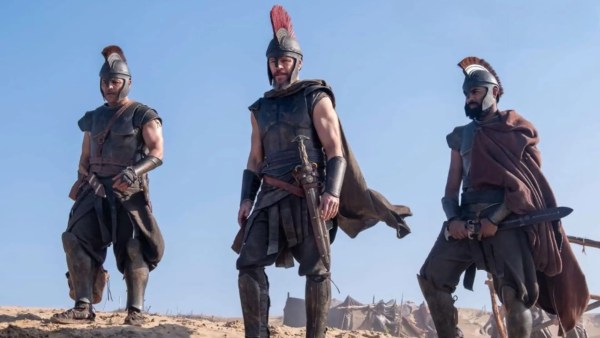 The Odyssey has been written and directed by Christopher Nolan. (Credit: IMDb)
Wilson’s central complaint is that Nolan’s Odysseus, played by Matt Damon, is anything but complicated. “I don’t think it’s a complicated movie,” she writes. “And I don’t think it’s even about a complicated man. I think it’s a quite simple action hero movie about an action hero who feels bad about being an action hero.”
Story continues below this ad
In Homer, she argues, Odysseus is a survivor, a liar, a manipulator, essentially a figure “you both admire and distrust.” Nolan’s version, by contrast, is “lummoxy,” “neither a master storyteller nor a flirt.”
The director, she writes, has sanded down every rough edge, turning the wiliest hero in Western literature into a guilt-ridden grunt who hikes “doggedly towards the camera across yet another beautiful landscape.”
Wilson is particularly incensed by the film’s treatment of one of the poem’s most famous episodes. In Homer, Odysseus outwits the Cyclops Polyphemus by telling him his name is “No Man,” a trick that saves his crew when the blinded giant’s neighbours come running. In Nolan’s film? “Odysseus doesn’t have to outwit Polyphemus because the Cyclops is a puppet who has no wits.”
Female characters reduced, diversity casting criticised
Wilson takes aim at the film’s treatment of women, a subject close to her work as a translator. Homer’s Penelope is a manager of a kingdom and a crisis for 20 years; Nolan’s Penelope, played by Anne Hathaway, “has no dreams” and is given “nothing to do except yearn for Matt Damon, for reasons unknown.”
Story continues below this ad
“The couple have no chemistry and nothing in common,” Wilson says.
Calypso, who in Homer delivers a “wonderfully outraged, operatic speech about divine double standards,” becomes in Nolan’s hands “an unpaid therapist, soothing the soul of the bedraggled, PTSD-ridden Odysseus with drugs.”
The film’s much-discussed race-neutral casting, which has drawn both praise and culture-war backlash, also comes under fire. Wilson argues that “there is nothing progressive about it.”
Actors like Zendaya, Lupita Nyong’o, and Himesh Patel, she writes, are relegated to “versions of the Black best friend, whose only role in the drama is to provide aid to the white protagonist.”
Story continues below this ad
Moral confusion and missed opportunities
The review is not merely a complaint about missed characterisation. Wilson, a scholar of classical reception, takes Nolan to task for his muddled engagement with the epic’s themes, particularly xenia, the ancient Greek code of hospitality.
“Deception is bad when Odysseus tricks Sinon or the suitors trick Telemachus, but good when Telemachus and Odysseus trick the suitors,” she writes.“Sharing is good… but one-man rule is also unambiguously good, and those who challenge monarchy or autocracy… are either evil or foolish. Either way, they have to die.”
She concludes that “any one of these moral contradictions could make for an interesting and generative theme in a movie, but Nolan lets the fragments of an incomplete set of big ideas spin around in the epic whirlpool, with no plank of solid, specific human experience to which we might cling.”
‘The writing is abysmal’
Perhaps the most withering passages are reserved for Nolan’s dialogue. “Writing dialogue is not one of Nolan’s talents,” Wilson writes. “The language is relentlessly expository, humourless and flat.”
Story continues below this ad
She quotes a sample: “‘Yes, my queen. The breaking of Zeus’ law, spreading like plague. Our age of bronze is collapsing, and maybe he couldn’t bear to see the ruins of what he’d done.’”
The result, she argues, is a script that fails to deliver on even its own modest ambitions.
Incidentally, Wilson’s own translation, which modernised the language, has been a lightning rod for controversy since its 2017 publication. Her decision to render the epic’s famous opening line as “Tell me about a complicated man” rather than the traditional “Tell me, O Muse” sparked debate among classicists and literary critics.
One post from May 2026 declared: “The Emily Wilson translation… is basically the Odyssey for people who thought Homer needed to be run through a modern accessibility filter.”
Story continues below this ad
A qualified thank you
Wilson, however, ends on a note of grudging gratitude, acknowledging that Nolan’s Odyssey is “not boring,” thanks to the source material, which she believes is “impossible to mess up entirely.”
She also celebrated the film’s cultural impact. “In what we are told is the streaming era, this epic is bringing audiences back to cinemas,” she writes.“Translations of The Odyssey, including mine, are flying off the shelves.”
USA Today reported that checkouts of the book from e-book lender Libby had increased 217%, and global listens of “The Odyssey” audiobook on Spotify have increased more than 300%. However, the Wilson’s translation has been the most popular.
She even allows that “perhaps the film will persuade a few college administrators not to cut their literature, language and history departments.” “Despite all this,” she concludes, “the release of The Odyssey is still an event to celebrate.”
Story continues below this ad
The film, which has already grossed more than $640 million worldwide, remains a commercial powerhouse with strong critical and audience scores on Rotten Tomatoes.
But for Wilson, the numbers don’t tell the whole story. “Nolan’s Odyssey lacks psychological, emotional, political and ethical depth,” she writes. “Its narrative structure is gimmicky. The writing is abysmal. None of the characters has convincing motivation for their actions or words. There are no sex scenes, and all the food looks horrible.”
In the end, the woman who gave Nolan his “complicated man” has delivered her verdict: the film is anything but.

