

One of India’s most popular street foods today, the vatakas (fritters) in chaat find mention in the 12th-century Sanskrit text Manasollasa. Puffed rice was invented in 1901 by botanist Alexander Anderson in Minnesota, US. Post-Partition Delhi saw several migrants prepare dishes such as chole-chawal and rajma-chawal to sell at stalls often set up on footpaths.
It is nuggets of trivia like these, clubbed with the experience of dining at 72 restaurants over a span of 15 years by four friends — Deepak Nirula, Nitan Kapoor, Ajay Shriram and Sunil Kant Munjal — that make the publication Table for Four: Delhi’s Dining Legacy (Family Fables Co).

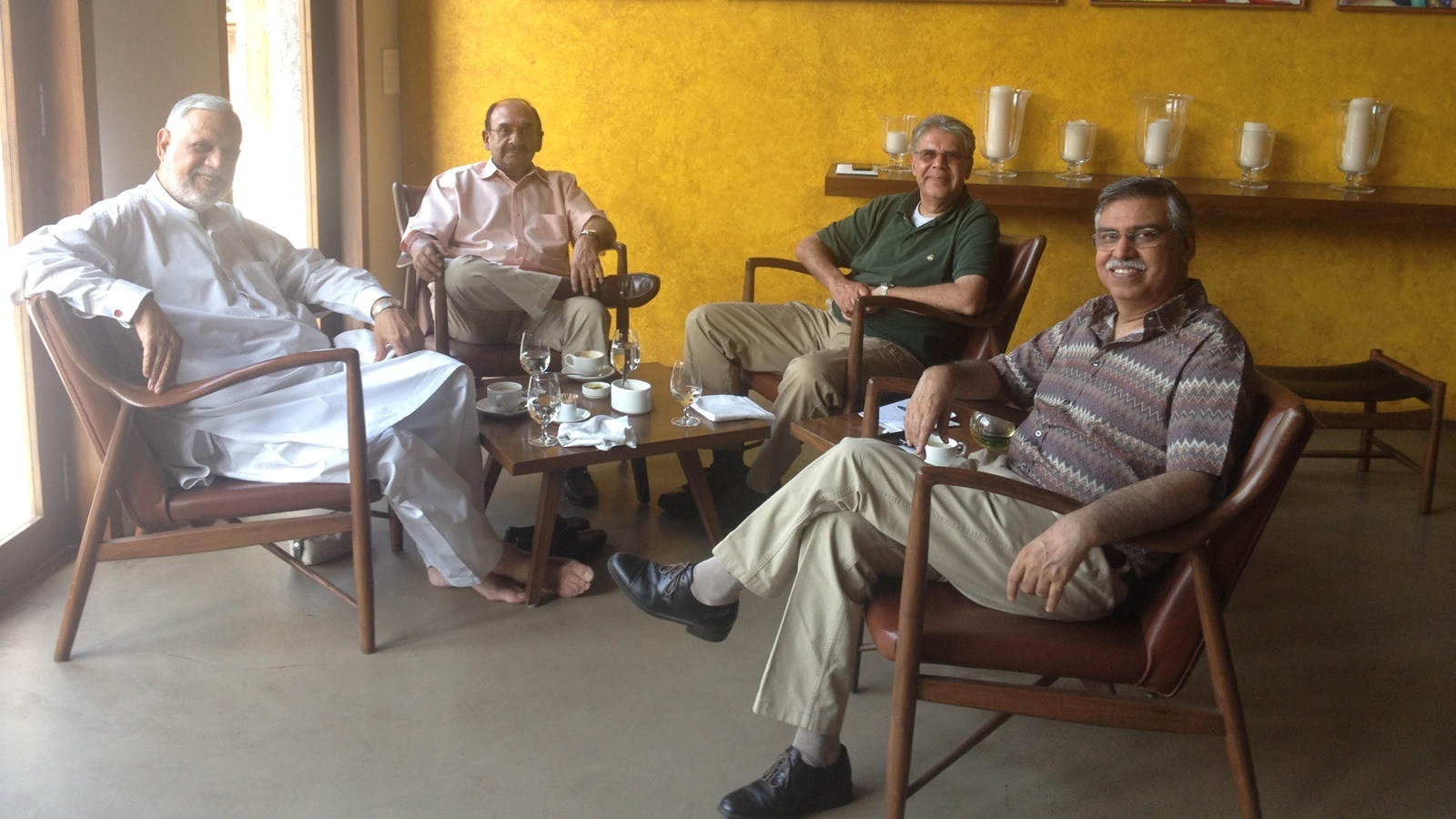
It all started in 2009. Close friends and members of the Doon School Old Boys’ Society, the quartet decided to meet regularly. Since each of them enjoyed dining out, they decided to meet up at different eateries and restaurants across the Capital and not just savour their meals but also review them. Years later, the idea of the book was born and is also now dedicated by the three others to Nirula, a restaurateur himself, who passed away in 2022.
Co-written by the co-reviewers, the book offers not just their reflections on the meals, camaraderie and conversations, but a chronicle of the very evolution of dining out in Delhi. Their very first outing, incidentally, was a restaurant that Munjal was to invest in years later — Indian Accent in 2009, soon after it opened at The Manor in Friends Colony West. Revisiting it in 2019 at The Lodhi, the review published rates the desserts 12/10. The baked fish with corn though, is described as “bland” and receives 7/10.
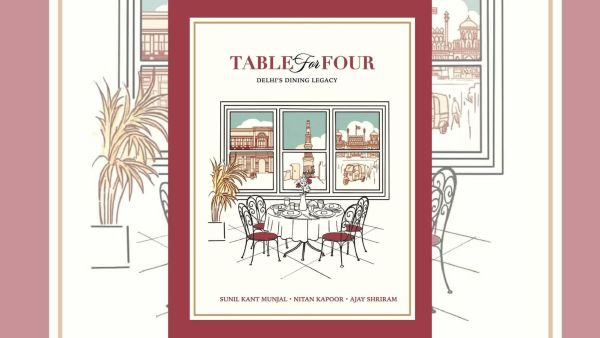 The book, Table for Four: Delhi’s Dining Legacy (Family Fables Co). (Source: amazon.in)
Besides the more predictable fine-dining establishments, more modest and old-school favourites also find a mention. So if at one place the co-reviewers recall hanging out at DePaul’s in Janpath in the late ’70s, they also walk through the lanes of Old Delhi and savour cutlets late into the night at a restaurant outside the Nizamuddin Railway Station. Among the reviews included in the book is also one of Bikanervala in Connaught Place from 2013 — the pani puri here, described as “very good”, earns a rating of 8/10. And not everything expensive necessarily fares well either. So while the Italian roast chicken at Basil & Thyme in Sundar Nagar scores 10/10, the green asparagus and hollandaise is rated a far less enthusiastic 6/10.
While there are recipes of iconic dishes such as the Green Papaya Salad by chef Garima Arora and Pan-Roasted Rawas with Panch Amrut-inspired Sauce by chef Rahul Akerkar, featured in the book, in an essay, author and food historian Anoothi Vishal charts Delhi’s dining history, from the time when “chatorapans” were frowned upon in Old Delhi. She terms the Mughal qahwakhanas, or coffee houses, in Shahjahanabad the oldest forms of restaurants in Delhi, and goes on to share how Partition refugees brought food traditions as memories with them, including the idea of the tandoor—arguably the very first installed at Moti Mahal in Daryaganj. The ’40s to the ’80s are described by her as the “golden age” of Connaught Place restaurants, and liberation, she notes, brought in its own changing dining aspirations in the ’90s.
The writing contributions also extend to leading figures from the culinary world, such as Rohit Khattar, Ritu Dalmia, Zorawar Kalra and Marut Sikka, each of whom reflects on their own journey, challenges and impressions. If Ritu Dalmia reflects how, in hindsight, she feels Mezza Luna and Cappuccino that she established in the ’90s were “ahead of their time”, Ankit Gupta, co-founder of Burma Burma, notes how since opening the restaurant in 2014, he has visited Burma 14 times and also shares his personal favourites from the menu. Marut Sikka, meanwhile, recalls frequenting legendary colonial-era clubs as a child.
Story continues below this ad
The co-authors, too, recall their shared past. While studying and working in the US, Nirula, they recollect, jotted names of ingredients across regional languages, also mapping cooking terminology, producing what they describe as “India’s first — or perhaps only — comprehensive gourmet lexicon”.

