

5 min readNew DelhiUpdated: Jun 8, 2026 05:14 PM IST
Iran-US War 100th Day: AstheUS-Iran war touches 100 days, the two countries have entered into a new equation that rests on neither side breaking off talks substantially, while continuing to trade limited strikes at strategic targets. The Strait of Hormuz remains blocked.
Even as this equation represents Iran’s strengthened bargaining position, Tehran faces an urgent need to translate this leverage into tangible gains, not least due to its continuing economic crisis, with YoY inflation touching 80%.

Iran’s need for decisive outcomes
For Iran, Washington’s overall preference for relying on its own blockade of the Hormuz without a full-scale war (for which its munitions still run low) is a concern. As several analysts have noted, the more days pass before a decisive outcome for Iran (unfreezing Iranian funds, sanctions removal, an end to the US blockade), the longer the break in Iran’s strategy of maintaining multi-pronged pressure.
Ultimately, Hormuz restrictions are an indirect leverage — they are sufficient to deter full-scale American/Israeli attacks but evidently insufficient to force the US towards decisive concessions.
Hence, on June 5, Advisor to the Supreme Leader, Mohsen Rezaee, declared toCNNthat the US failing to unfreeze $24 billion in blocked Iranian assets and lifting the blockade would prompt Iran to expand its punitive actions to the Mediterranean, the Red Sea, and the Bab-el-Mandeb strait. Among Iran’s allies, while the Yemeni Houthis’ ability to threaten the latter two has been decisively proven, Lebanon’s Hezbollah maintains an under-utilised ability to threaten military and commercial activity in the Mediterranean through its anti-ship cruise missiles.
However, while Iran maintains its reliance on UNGA Resolution 3314 to deem US bases in Arab countries as legitimate targets in response to limited US strikes on Iran, it is Israel’s war in Lebanon which potentially allows Tehran to generate newcasus belli.
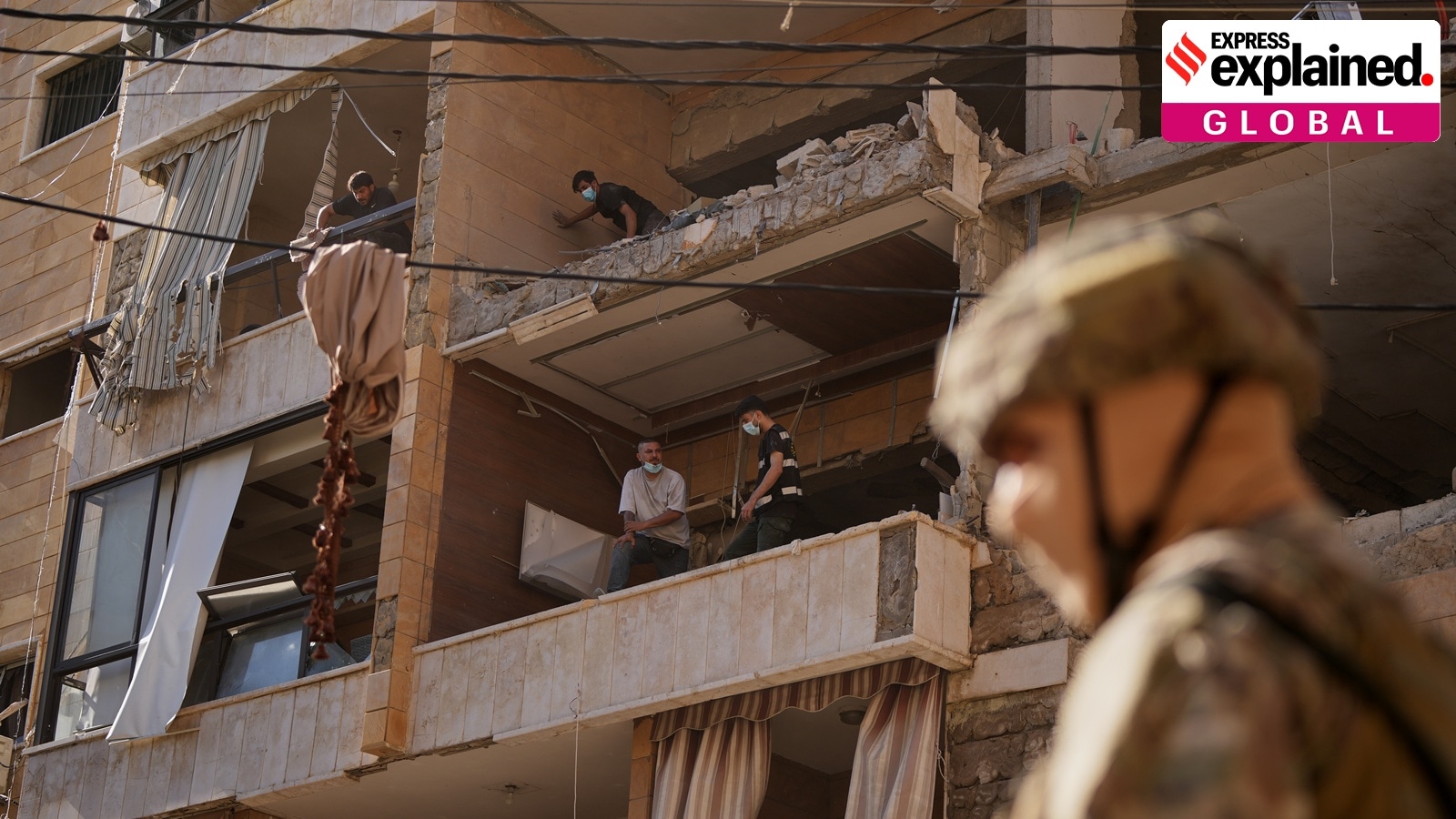
Despite a US-brokered ceasefire between Israel and Lebanon (Hezbollah) in April, Israel’s campaign in South Lebanon continued largely unabated, until Iran once again threatened to call off talks over it. By June 3, tripartite negotiations led to a joint statement by Israel, Lebanon, and the US, recommitting all parties to the April ceasefire. US President Donald Trump even said the US was “speaking to Hezbollah” and that he “would like to meet” Iran’s new Supreme Leader Mojtaba Khamenei.
Story continues below this ad
Iran’s linkage of ceasefire with Lebanon, not Gaza
Lebanon is not important to Iran solely due to the formidable value that Hezbollah brings to Tehran’s strategic power projection. Presently, the Israel-Lebanon ceasefire has a new characteristic — a fragile agreement that Iran knows Israel will inevitably violate. This provides Tehran a unique strategic option: to determine that Israel’s attacks in Lebanon warrant a tighter chokehold on Hormuz or a resumption of its missile attacks, at any point when Tehran perceives Washington to be slow-pedaling a deal.
Already by June 4, Iranian Foreign Minister Abbas Araghchi reaffirmed that, “this war will end only when it ends in Lebanon as well”. Combined with Rezaee’s statements, it is clear that while protecting Hezbollah is a clear Iranian objective, Lebanon principally serves as a pressure point to force Washington towards concessions vis-à-vis Iran itself.
For perspective, Iran has refrained from officially linking the ceasefire with Israel’s war on Palestine, or at least making it an immediate imperative. Apart from reports from the semi-officialTasnim Newsthat Tehran also requires Israel to cease hostilities in Gaza, Iran’s negotiating posture since April has prioritised Lebanon. This is despite Israel’s Gaza campaign pre-dating the current war on Lebanon, causing significantly greater casualty figures, and prompting international investigations into Israeli conduct. Iran’s regional posture has also been articulated historically as integrally tied with Palestine (Jerusalem or Al Quds).
Among other things, this reinforces Iran’s awareness that Washington is more likely to pressure Israel on Lebanon than on Palestine; a compromise Iran is willing to make for its immediate strategic needs. The alternative would be a bogged-down Iran with reduced bargaining space in the face of the marginal likelihood of Israel withdrawing from Gaza, even if Tehran threatens military action.
Story continues below this ad
Ultimately, these developments still retain both Iranian and American preference for a deal. However, it is now increasingly evident that just as Washington sought favourable terms through military action in March, Tehran is inching closer to adopting a similar posture. Functionally, this implies that organic pressures are building within the US-Iran equation that will either decisively break the ceasefire, or force Washington and Tehran into at least an interim arrangement, pending a larger deal.

