

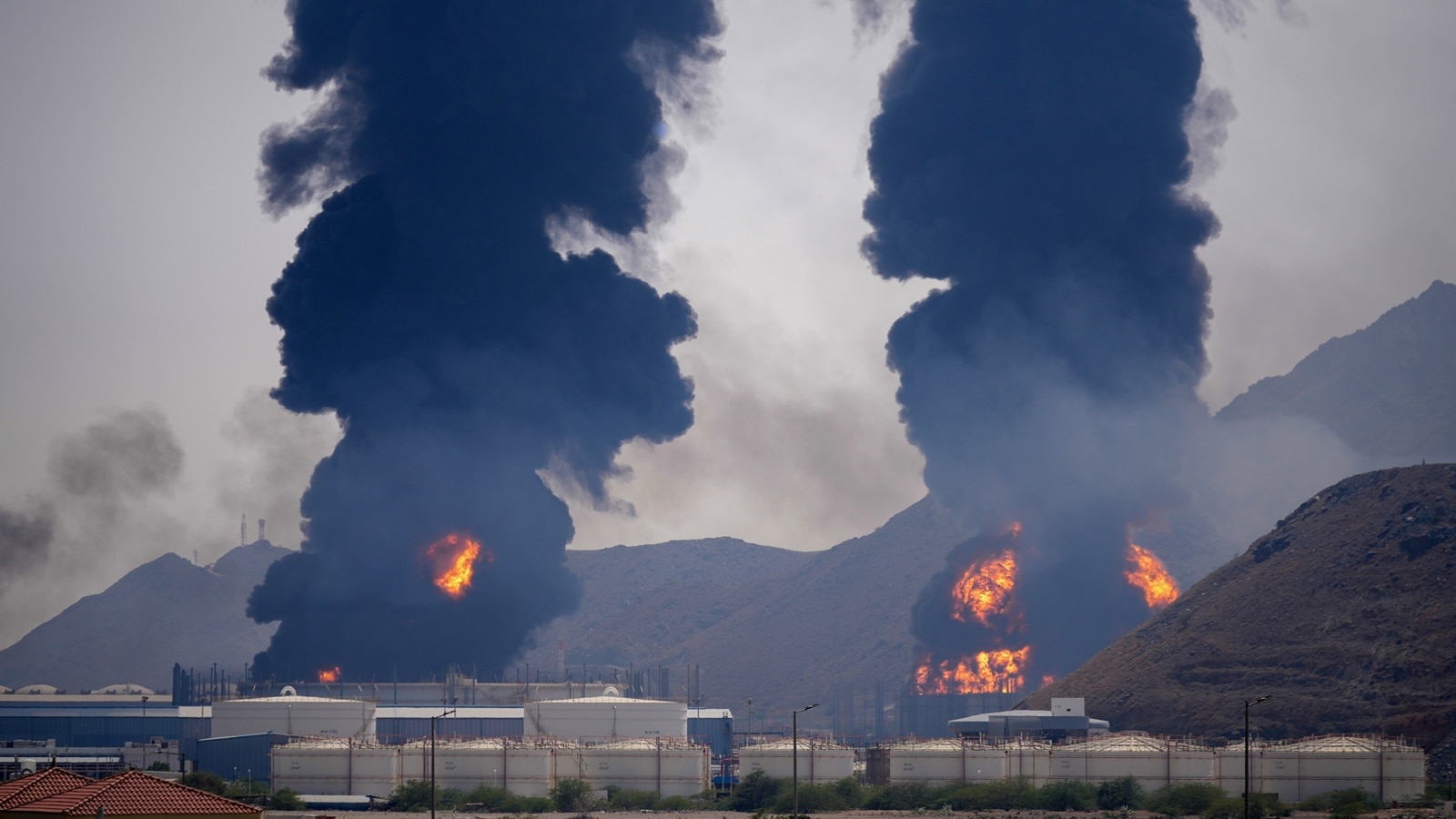
One hundred days into the US-Iran confrontation, temporary truces have collapsed.
The renewed attacks appear designed to coerce Iran back to the negotiating table on terms favourable to Washington and Jerusalem. Coercion can bring short-term compliance, but it rarely produces durable settlements. Tactical gains achieved through force evaporate when strategic grievances remain unaddressed. What now threatens the region is a prolonged no-war, no-peace equilibrium: Periodic strikes, low-intensity skirmishes, rising defence budgets and perpetual disruption to trade and investment. That slow burn is economically corrosive and politically destabilising.

The Strait of Hormuz illustrates the region’s fragility. Any sustained threat to shipping lanes will ripple through global markets, driving up energy prices and inflation. Nations dependent on Gulf hydrocarbons will feel the squeeze first, but the contagion will be global. GCC states that host US forces face a stark dilemma: Bases that assure one ally become liabilities when perceived as targets by another. Thus, policies intended to deter Iran risk provoking countermeasures that hurt both friends and partners.
The contest is as much about optics and leverage as it is about bombs. Behind closed doors, Pakistan, the Gulf Cooperation Council states, China and Russia have worked to broker a settlement. Their motive is pragmatic: The spiralling economic cost of sustained conflict, the threat to energy flows through the Strait of Hormuz, and the risk that instability will spill across borders and markets. Yet, these backroom efforts are handicapped by divergent aims.
Washington wants to reassure Israel and preserve regional primacy. Moscow and Beijing seek to blunt American influence while expanding their own footholds. GCC capitals, hosting foreign bases, juggle fear of Iranian retaliation with dependence on US security guarantees. The result is a patchwork of negotiations that struggles to deliver a coherent bargain.
At the heart of the crisis lies an uncomfortable hypocrisy. Iran remains a signatory to the Nuclear Non-Proliferation Treaty and allows international inspections of declared facilities. Israel is not an NPT party and keeps its nuclear capability beyond independent scrutiny. In a rules-based international order, standards must be universal; when they are not, legitimacy evaporates. Selective enforcement feeds narratives of injustice and amplifies grievances that arms alone cannot resolve.
Breaking the cycle demands a pragmatic approach. First, negotiations must be genuinely multilateral and include stakeholders with on-the-ground leverage: Regional powers, major external patrons, and representatives who can speak for influential nonstate actors. Emphasising the potential for collective action can inspire optimism about diplomatic solutions.
Second, confidence-building must be reciprocal and verifiable. Phased unfreezing of Iranian assets should be tied to measurable de-escalation steps, not vague commitments. Neutral, intrusive inspections must be expanded and publicised to rebuild trust. Parallel, verifiable limits on deployments and missile transfers would reduce the likelihood of miscalculation. Vague promises are worthless when lives and livelihoods hang in the balance.
Third, the international community must recommit to even-handed rules. Demands for nuclear restraint or strategic transparency are credible only if applied uniformly.
India’s role should be steady and pragmatic. New Delhi’s interests are unambiguous: Secure energy supplies, safe sea lanes and a peaceful neighbourhood. India should champion an inclusive, rules-based diplomatic process that foregrounds humanitarian concerns and rejects zero-sum posturing. Quiet facilitation offering neutral ground or logistical support for talks could allow New Delhi to play a constructive role without alienating partners. India’s own experience of balancing relations with diverse powers gives it the credibility to push for pragmatic compromise.
Military force can temporarily shape behaviour; it cannot build a stable political order. The hard lesson of repeated interventions is that coercion without a viable political framework begets perpetual crises. Durable peace will come only when states accept mutual limits, treat rules as universal, and provide credible guarantees that protect sovereignty and dignity.
Until such an architecture emerges, the Strait will remain a choke point, and the region will lurch between flashes of violence and fragile calm.
The writer, a former Armoured Corps officer, is a defence analyst

