

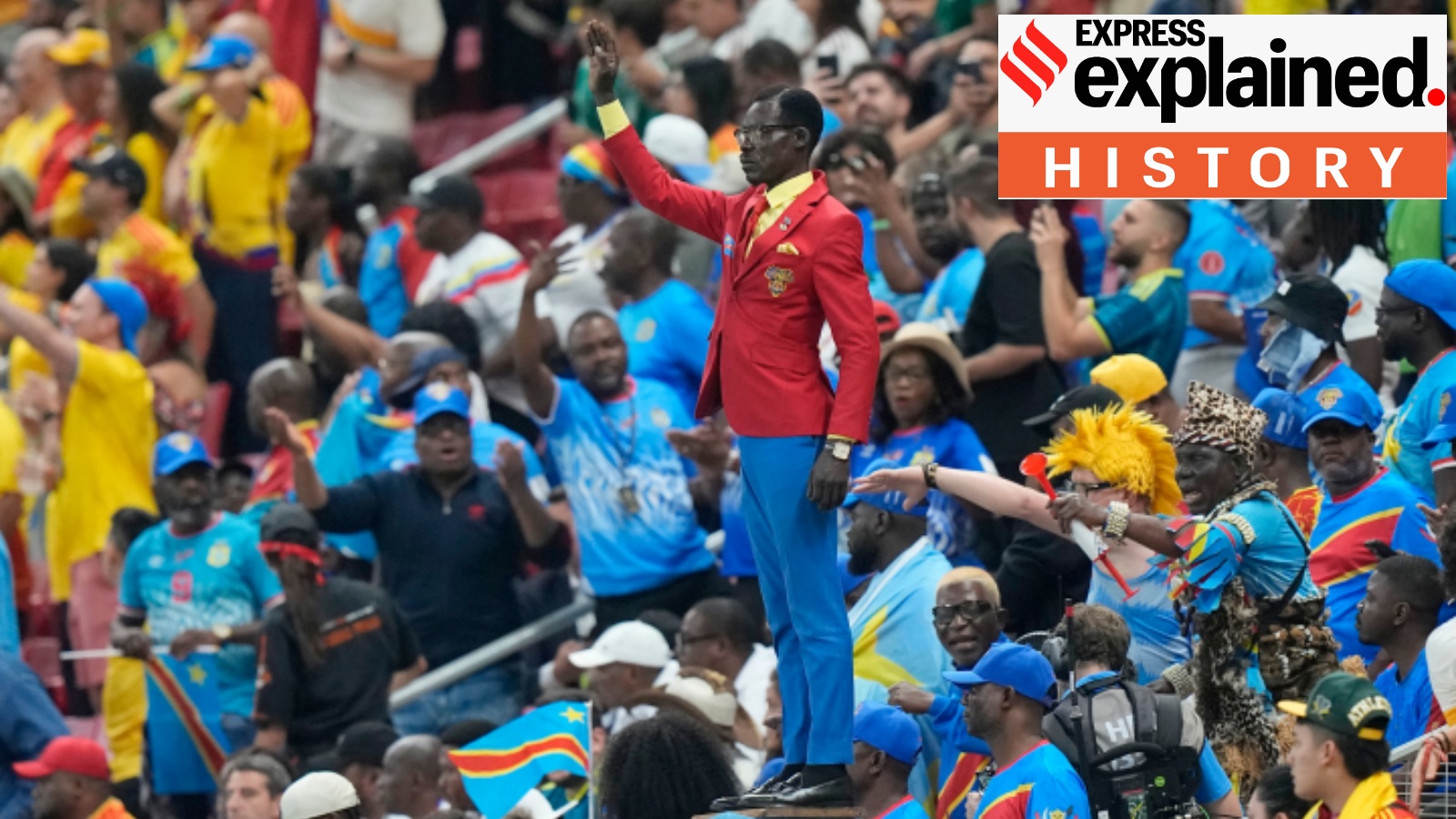
They first held the mighty Portugal to a 1-1 draw and put up a spirited defensive performance against Colombia in a 1-0 loss. But along with their performances on the pitch, a phenomenon in the stands has also drawn international attention — DRC superfan Michel Kuka Mboladinga who resembles the country’s first democratically elected Prime Minister, Patrice Lumumba.
Mboladinga dresses as Lumumba in brightly coloured suits — red, yellow and blue, the DRC’s national colours — and stands motionless with one arm raised like a statue throughout the match as fans sway, dance and celebrate around him.
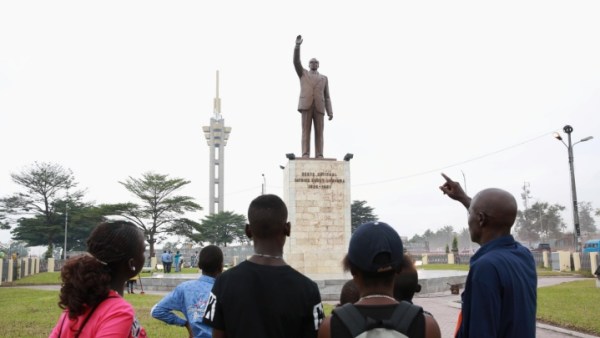 The famous Patrice Lumumba statue in Kinshasa which Mboladinga’s pose is modelled after (Wikimedia Commons)
Mboladinga, who first emerged during DRC’s matches at the Africa Cup of Nations, has stated that his stance represents national sovereignty and freedom — tenets that Lumumba advocated for. Here’s a look at who Lumumba was, what he stood for, and how the anti-colonial leader became an footballing standard-bearer too.
Who was Patrice Lumumba?
Patrice Emery Lumumba (1925-1961) is best remembered as the first Prime Minister of the DRC. His ascent, however, was nowhere as static as Mboladinga during the games, and is deeply linked to a history of colonisation.
Before achieving independence in 1960, Congo suffered through brutal colonial exploitation. In February 1885, Belgian King Leopold II established the Congo Free State when the territory was officially recognised at the Berlin Conference by other colonial powers of the time.
What set the Congo Free State apart was the fact that it was a private dominion of King Leopold, effectively making it his personal fiefdom. Leopold justified his actions in the name of bringing civilisation and Christianity to Central Africa.
Story continues below this ad
Dismantling any form of governance, the Belgians ensured the Congolese were forced to labour for mining their resources and critical minerals. Varying estimates agree that by the end of Leopold’s rule of the Congo in 1908, close to 10 million Congolese people had died of malnutrition, disease and calculated cullings.
Subsequently managed by the Belgian state until it achieved independence, the Congo was relieved of the more barbaric elements of Leopold’s rule. And yet, it remained structurally segregated with no access to education, healthcare or positions of governance for its people. Less than 30 people had completed university education at the time of independence.
Lumumba established himself as an advocate and co-founded the Mouvement National Congolais (MNC), promoting a unified Congo across its variety of ethnicities. Lumumba was a key part of the delegation that negotiated for independence and, following nationwide elections in 1960, assumed the role of Prime Minister.
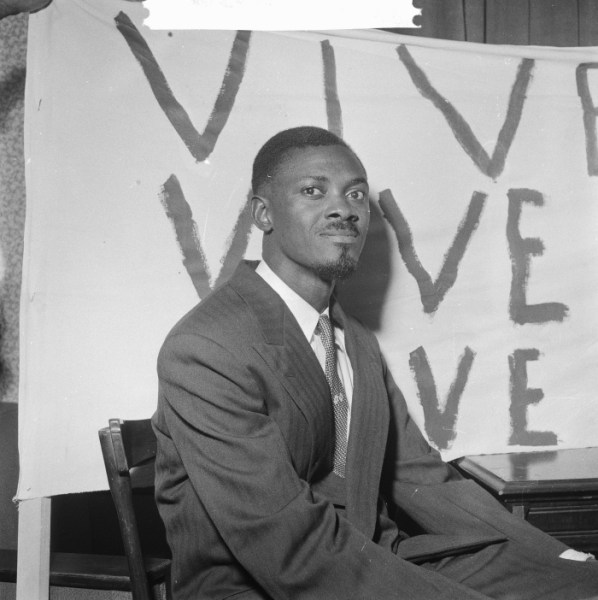 Patrice Lumumba in Brussels, Belgium in 1960 (WikiMedia Commons)
Less than a year later, however, Lumumba was abducted along with two of his aides and assassinated by Belgium-backed individuals, who had commercial and strategic interests in the region. His remains were later exhumed and dissolved in acid, but not before a golden tooth was kept by one of the Belgians involved in his killing. It was only returned to Lumumba’s family and buried four years ago.
Story continues below this ad
Despite having barely served a year, Lumumba’s vision of unity for the Congo survives as a ray of hope for the country — a sentiment that Mboladinga hopes to portray during games.
Lumamba’s vision
Lumumba’s advocacy of African unity and liberation, not just independence, and support for nationalist movements across the continent positioned him as a volatile figure for the West.
Philosopher Frantz Fanon stated that Lumumba was “sold to Africa”, meaning his commitment to his homeland thwarted the attempts of the West to purchase his services.
His experience as an evolue, a Congolese administrator for the Belgian State, left him wanting more for himself. Much of his early writings focussed on how to ease an evolue’s life before his shift in focus towards the Congolese masses.
Story continues below this ad
In an incident which invites parallels with Jallianwala Bagh, the Belgian Force Publique opened fire during a Congolese riot in Leopoldville in 1960. Commanding officer Emile Janssens said, “We killed them because they were thieves. If they don’t keep quiet, we shall recommence this sport”.
The rebellion that preceded the incident marked the radicalisation of the Congolese population living in the capital, triggering wider involvement in the nationalist struggle. Importantly, Lumumba no longer confined himself to promises of change hawked by the Belgian administration. It was clear to him that the Congolese had no option but to struggle for freedom.
Belgian sociologist Ludo De Witte noted that the Belgian elite of the time hoped for an ‘independent’ Parliament comprising at least 80% pro-Belgium MPs. This was, however, a miscalculation. Lumumba was adamant about achieving a sovereign state that opposed tribalism, seen as the biggest divider of the Congolese people.
Spirit of the national team
Lumumba’s principles have been resurrected by Mboladinga at a time when the world’s eyes are on the DRC team. His tribute during AFCON 2025 generated massive attention, which he described as a “patriotic mission”.
Story continues below this ad
As the nation continues to battle the outbreak of a disease and violent conflict, his embodiment of Lumumba seeks to provide moral support to the team. Mboladinga’s immobility evokes the enduringly unbreakable spirit of Lumumba.

