

4 min readUpdated: May 29, 2026 12:03 AM IST
Jwala Gutta had once said she picked Ashwini Ponappa as a partner not because of her smashes, which were excellent, but due to her serves. Now, Tanisha Crasto, hoping to reach Jwala’s heights in mixed doubles (the latter reached World No. 6 with V Diju), is proving why a swell serving game can literally win matches.
To get to match point at the Singapore Open, Tanisha sent a bamboozler that confounded none less than Yuta Watanabe – a seemingly benign backhand wobble serve that left the Japanese skill-master confused.

Watanabe is a twice Olympic medallist and four-time World Championships podium finisher, including two silver medals in mixed doubles. The Japanese 28-year-old isn’t easily frazzled. The two hooting serves at the end were just the finishing touches of a firecracker game.
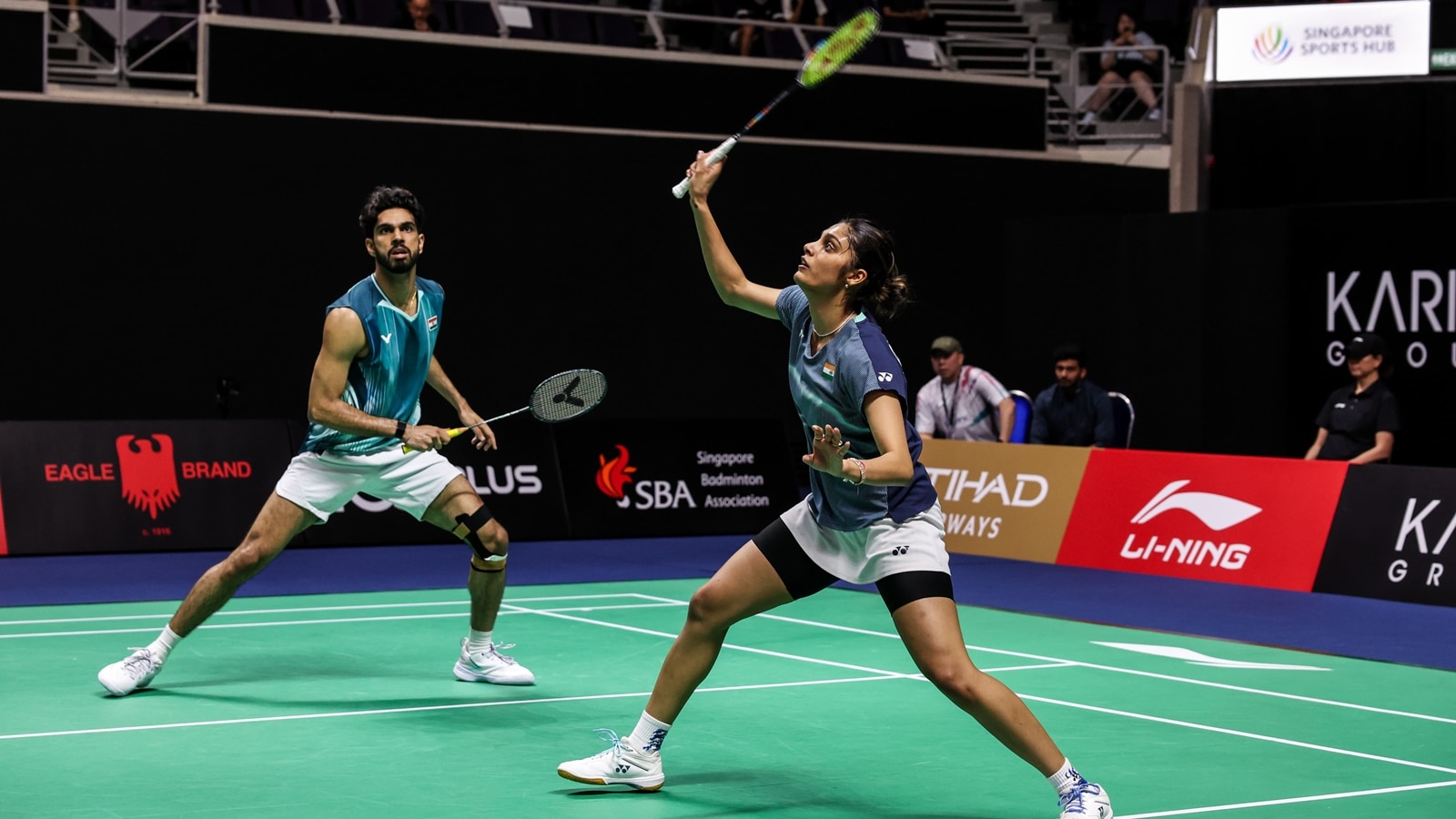
Tanisha’ explosive bursts, as she strikes a whisk-like rotating pattern with Dhruv Kapila and goes about creating chances while never giving up, has been one of Indian badminton’s most underrated progressions.
On Thursday, at the Super 750, Tanisha and Dhruv lost the opening game, before bouncing back to beat Watanabe and Maya Taguchi 8-21, 21-17, 21-16 and reach the quarterfinals.
Tanisha is very different from India’s OG mixed doubles star Jwala, whose game relied on her smarts and big leftie attack with Diju. Tanisha’s game is more like popping up at different parts of the court with swift movements, and finding gaps on the opponent’s court before lasering in her shots with great energy and useful unpredictability. The decibel levels carry value of their own, like they used to for Carolina Marin.
Already an Olympian in women’s doubles and of versatile utility in team events, she’s not had the easiest times, given her reactive-reflexive high-risk game, which can cop a fair amount of errors. But she thrives in the chaos that mixed doubles tends to be, doesn’t get afraid of front-court confrontations, and can surprise opponents when she actually gets into textbook patterns.
Story continues below this ad
Dhruv is more methodical, the muscle from the back, who creates openings for Tanisha, but has a good understanding of forecourt exchanges too. His accuracy varies and injury concerns bog him down, but together they have the potential to pierce the top tier of mixed doubles someday.
After losing the opener 21-8 to Watanabe-Taguchi, the Indians ensured an early lead in the second. Tanisha would send one over the Japanese heads to reach 11-8, but it was in breaking the 14-14 deadlock that Tanisha showed the first signs of her audacity. She went after Watanabe with her angled smashes smacking one into his ribcage.
She would pop up the shuttle at the net making a Watanabe kill difficult, to go up 18-14. A Taguchi service error gave the Indians game point to level matters. But it was Tanisha who once again made the shuttle pop up like a champagne cork, using her racquet frame, that gave them the game 21-17.
The Indians, not technically the most refined, were merely staying afloat till 9-11 in the decider. In some rallies – like the one to get to 12-11 – Tanisha’s only job was to scream panicked prods to Dhruv to take the shuttle, as he did all the work. There is no unspoken understanding or some poetic connection between these two that makes them a good pairing – just clear (and loud) communication where a ‘Dhruv’ or ‘Me!’ is yelled out by Tanisha, when going for the shuttle. But the ruckus brings decisiveness.
Story continues below this ad
At 16-12, the perfect game came together. Dhruv managed to use his power to push both Watanabe and Taguchi to the back court, and Tanisha smartly turned her racquet head for a cross-drop to the forecourt empty space.
Still the Japanese reached 16-17. It’s when Tanisha attacked Taguchi’s serve savagely with an upright backhand return to create a melee. To get to 20-16, Tanisha sent a trick serve that saw Watanabe fumble. And on the third shot of the next point, it was once more her awkwardly exchanged return that drew out an error. The piercing war cry followed.

