

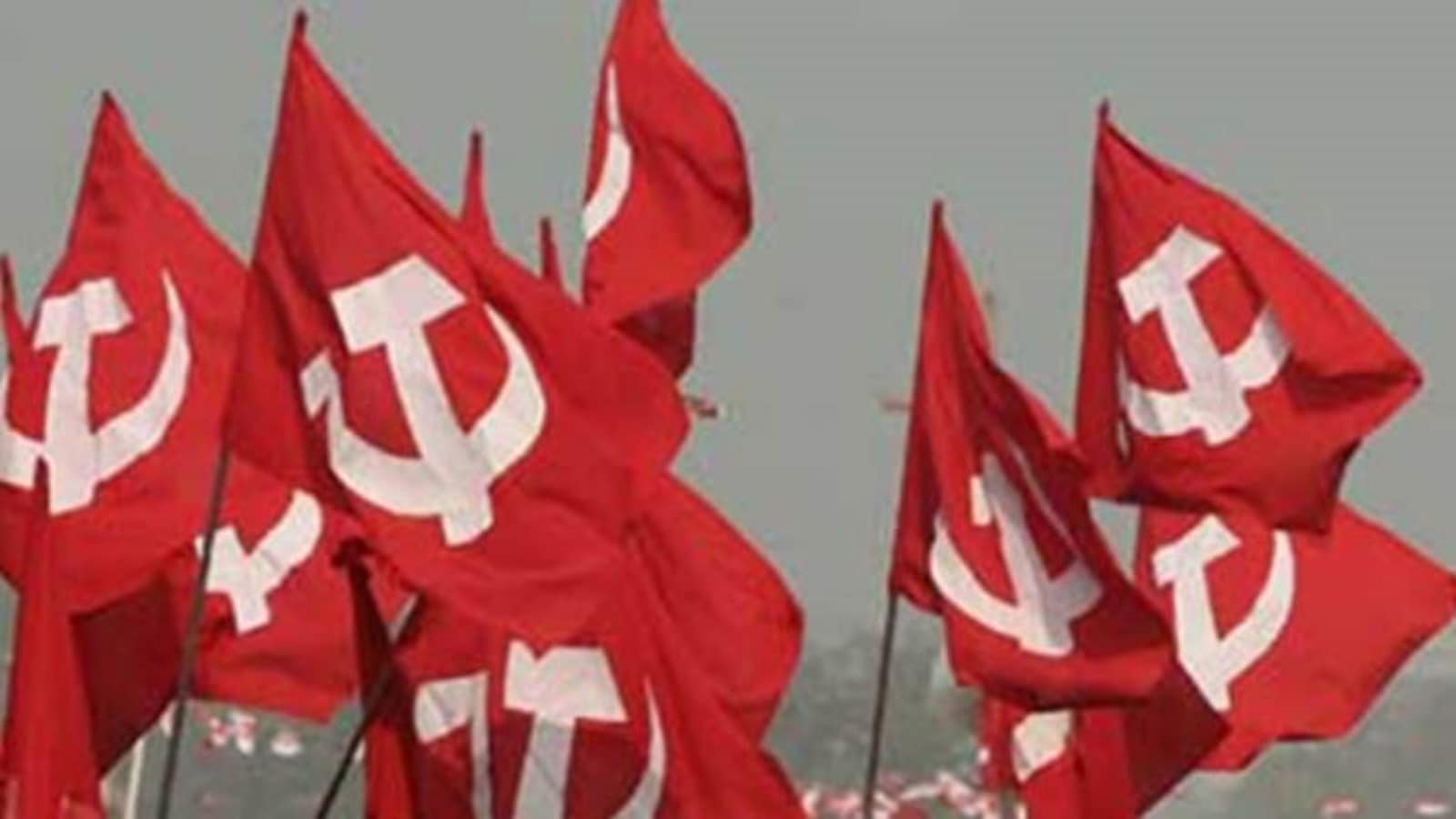
For nearly a century, the image of the hammer and sickle has been more than just a relic of the Cold War in India; it has been a governing reality. While the Soviet Union collapsed and China pivoted to state-sponsored capitalism, India remained a peculiar outlier — a vibrant democracy where card-carrying Communists didn’t just protest in the streets, but sat in the halls of power, winning elections and running states — West Bengal, Tripura, and most enduringly, Kerala.
But today, as the news of the decimation of the Communists in the Kerala Assembly elections sinks in, that historical anomaly faces a Francis Fukuyama moment: Is this “the end of history” for Indian Communism? With the rout of the incumbent Left Democratic Front (LDF), India will, for the first time in nearly 50 years, be without a single Communist-led state government. For a movement that once positioned itself as the inevitable future of the Global South, this isn’t just an electoral dip; it seems the sun has set on Indian Communism.

To understand the gravity of this moment, one must examine the Left’s rapid collapse. As late as the middle of the first decade of the century, the Communists were the kingmaker of Indian politics, holding over 60 seats in the Lok Sabha and providing the crucial outside support that kept the central UPA government stable. They were the ideological guardians of the welfare state, taking a share of the credit for MNREGA, vetoing aggressive privatisation and pulling support to the government over India’s nuclear deal with the United States.
The decline was swift and brutal. First came the fall of West Bengal in 2011, ending a record-breaking 34-year reign. Then, in 2018, their second stronghold of Tripura collapsed to the BJP. In both cases, it wasn’t just a defeat but a decimation: The party was reduced to a cipher in states it had ruled with such authority. This left Kerala — the first state in the country to elect a Communist government in 1957 —as the last redoubt, bolstered by the fact that despite a half-century practice of Kerala voters turfing out incumbent governments every five years, the Left won a historic re-election in the midst of Covid, in 2021. So what happened to reduce them to 35 seats out of 140 today?
Today’s crisis isn’t merely one of arithmetic; it’s one of language. The Indian Left has struggled to find a new vocabulary for a “New India”. They have never quite come to terms with the economy of aspiration. Historically, the Left drew its strength from organised labour and agrarian reform. But since the 1990s, India’s growth has been driven by services, gig work, and a soaring middle-class aspiration. To a young coder in Gurgaon or a delivery driver in Kolkata, rhetoric opposing liberalisation or capitalism can sound less like protection from exploitation and more like a barrier to opportunity.
At the same time, the Communists have long ceased to hold the trademark on social welfare. Every other party is matching or beating the Left at its own game. The Congress had its “Indira Guarantees” in Kerala; even New Delhi has repackaged welfare as targeted delivery. By providing gas cylinders, toilets, and digital cash transfers directly to the poor, other parties and the central government have overtaken the traditional class-based mobilisation of the Left.
Nationally, the Communists also became victims of the far-reaching change in the patterns of political mobilisation from class solidarity (in the era of strong unions and the allure of global Communism) to other forms of identity politics — the latter both caste-based and religious, as well as, in some states, regional and cultural. While the Left spoke of universal class-consolidation, regional and caste-based parties spoke a more intimate language of social dignity. Indian Communism, dominated largely by an ageing and mostly upper-caste leadership, failed to reorganise its internal hierarchy to reflect the rising power of subordinated castes nationwide.
Despite the national trend, Kerala has always been different. Its Communists had a strong lower-caste and OBC base and were not above stigmatising the United Democratic Front (UDF), led by the Congress, as a party of minorities. But that kind of appeal to the Hindu majority waned with the rise of the BJP in the last decade.
Finally, governance failures took centre stage. The “Kerala Model” — prioritising healthcare and education over industrial output — earned the state international praise, helping win re-election during the pandemic for its robust public health response. However, by 2026, the Communists carried a heavy burden of anti-incumbency. The UDF attacked the government on rising state debt, corruption and the exodus of youth seeking opportunities elsewhere. With the LDF’s rout, the arc that began in 1957 has finally begun to close.
Is this the final chapter for Marxism in the world’s most populous democracy? Not necessarily. Unlike the stagnant administrations of the past in Bengal, the Communists in Kerala have proven to be more adaptive and competent. And we can’t forget the state’s political pendulum: Kerala has habitually swapped its government every five years. The LDF’s loss now after a second successive term might not be a rejection of Marxism so much as a return to the state’s democratic rhythm. Unless a game-changing UDF government ensures otherwise, the “Red Sunset” could just prove to be a scheduled eclipse before the next cycle.
In the end, the “Communist” label in India is less about Cold War ideology and more about a unique brand of social-democratic welfare. Even if the hammer and sickle disappear from the map this month, the questions the Left raised — about inequality, the unstable indignity of labour, and the need for a social safety net — will continue to haunt “New India” for years to come. The red flag may be lowered, but the grievances it raised will have to be addressed by others.
Meanwhile, the issue for the Indian Left is no longer whether history has ended, but whether it still has a compelling story to tell.
The author is a fourth-term Congress MP from Thiruvananthapuram and co-chaired the party’s campaign in 2026

