

Prime Minister Narendra Modi’s push for setting up designated fast track courts to try NEET paper leak cases highlights a recurring debate over the judiciary’s capacity to deliver swift justice and puts in focus how such courts have delivered over the years.
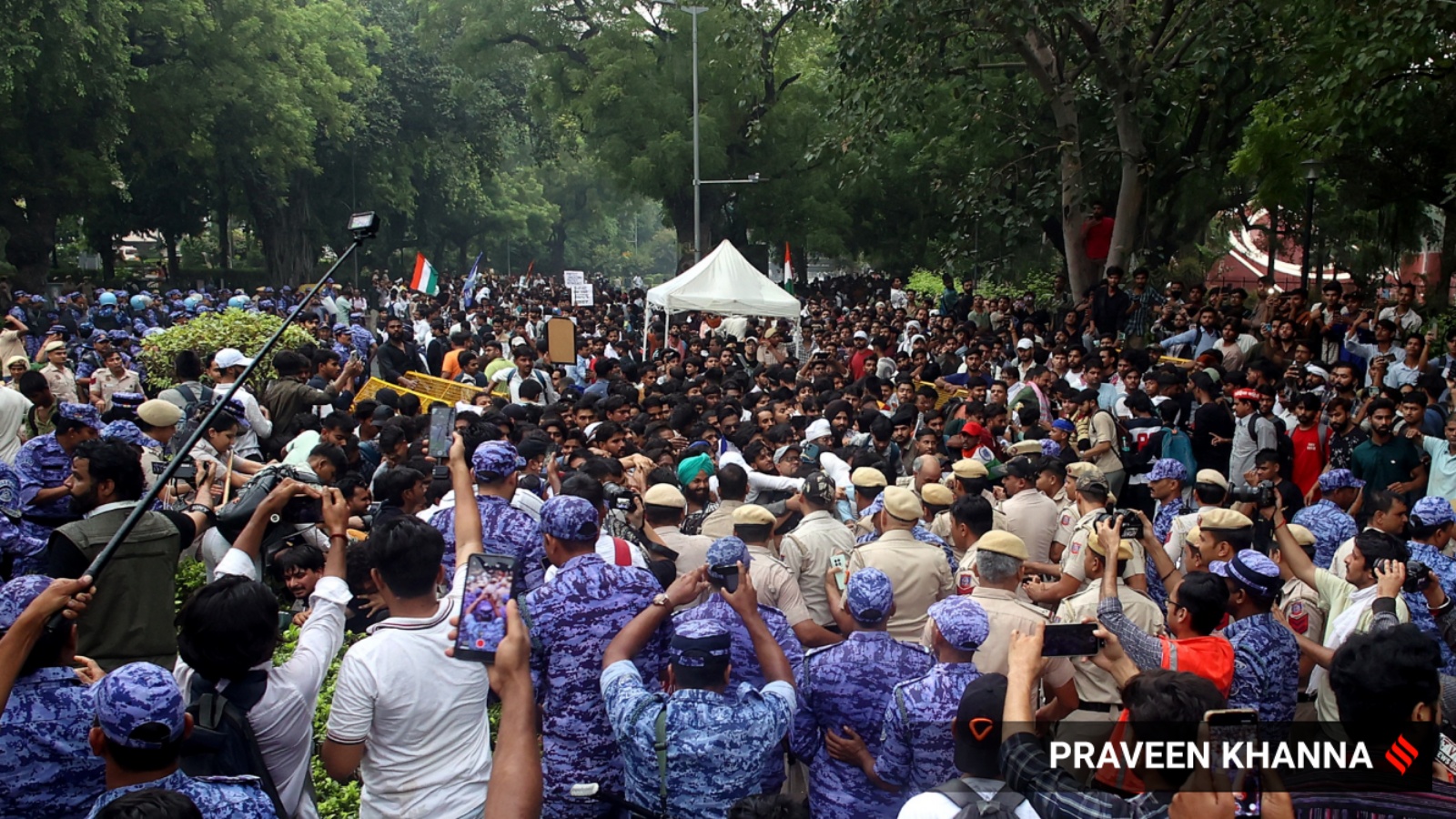
The PM’s statement comes amid protests raging across the nation led by the Cockroach Janta Party (CJP) and backed by the Opposition, including the Aam Aadmi Party, Congress, and Shiv Sena (UBT), among others.
The question, however, remains on how the government will set up such courts, given that most existing fast-track courts primarily deal with sexual crimes. As the debate unfolds, it is worth looking at the evolution of the fast-track courts (FTC) ecosystem in India.
Former Supreme Court judge Abhay S Oka says that more than fast-track courts, it was essential to focus on the investigation given the nature of offences in the paper leak case. “They must appoint proper investigating officers who have expertise in such matters. The reason is that in such cases, there is never direct evidence or eyewitnesses. Therefore, a very intelligent and competent investigating officer is required,” he tells The Indian Express.
The former top court judge says the investigating officer should work closely with forensic and other experts, given the nature of the crime. “They will have to actually trace the phone calls made by the accused persons. So this is the vital area, that there has to be proper investigation. Because from the very nature of the offence and to prove the involvement of those people, that will be very difficult.”
The second important aspect, according to Justice Oka, is witness protection. “Special protection should be given to the witnesses because it’s a huge scam — leaking papers of an exam like NEET, in which lakhs of students appear.” Thirdly, he highlighted the need to have a proper, skilled public prosecutor. “They (government) will have option of passing an enactment and creating a special court. Otherwise, the simplest other option is that the high court ensures the case is entrusted to an experienced and seasoned sessions judge,” he says.
Former law secretary P K Malhotra says the nature of the fast-track courts will depend on the scheme that the government wants to introduce, similar to the existing scheme of FTCs for sexual assault cases.
Story continues below this ad
“We have a concept of special courts, which is laid down in various legislations. For example, you have a special court for CBI, a special court for economic offences. But provisions for those special courts are made in the special, particular enactment itself. But these cases pertaining to paper leak, more particularly NEET examination, under what law are they going to cover? If they are covering it under a special law, probably you can constitute special courts for them,” Malhotra tells The Indian Express.
He underlines the “time-bound justice” delivery by such courts, emphasising that they can include domain experts to deal specifically with such cases. “So the advantage cannot be underestimated. But what procedure, more particularly for this paper leak cases, will be adopted by the government will depend on the scheme which the government is coming out with,” he notes.
According to Malhotra, it will depend on whether these cases will be dealt with as per the administrative scheme of fast-track special courts in rape or POCSO cases, or if there will be a special court to deal with such cases for which an amendment in law may be required. “That will depend on the final decision that the government will take. But yes, to satisfy the demand of the students who are agitating, I think this is a good statement which has come from the Prime Minister. But let us wait for more details,” he adds.
Referring to the 2G spectrum and Satyam ‘scam’ cases, former additional solicitor general of India, Sidharth Luthra says, “There were special courts constituted back then. While it is important that the guilty be punished and special courts for dealing with examination leak cases are crucial to punish the guilty, it must be kept in mind that they should be set up in all states as NEET paper leak is not the only such incident.”
Story continues below this ad
Luthra emphasises that special courts must be “empowered” under state legislations on the subject of examinations as well. “More important is what steps are the UGC, the Central HRD ministry and state government higher education departments doing to ensure such incidents (paper leak) don’t happen in the future. Without reform in the examination system, there is no hope for our students,” Luthra says, arguing that the problem will persist as long as there are just a “minuscule” number of seats in “medicine, engineering and other subjects for which competition is high”.
Key cases fast-tracked in India
- 2012 Delhi Gangrape and Murder (2012–2013)
The gangrape of a 23-year-old paramedic student inside a moving bus in Delhi on December 16, 2012, had provoked widespread protests across the country demanding a speedy trial. The trial eventually concluded in less than nine months, awarding capital punishment for the convicts and sparking the creation of nationwide FTCs.
- 2008 Mumbai Terror Attacks (Ajmal Kasab) (2009–2010)
Mumbai terror attack accused Ajmal Kasab’s trial was held in a specialised Fast-Track Sessions Court in Mumbai. Despite an 11,000-page chargesheet and dozens of charges, the court delivered a guilty verdict within 12 months.
- Kolkata RG Kar Medical College Case 2024
Following nationwide protests, the trial for the rape and murder of a postgraduate trainee doctor was directed to a fast-track court in Kolkata to expedite daily hearings. The verdict, awarding life imprisonment to the accused, was delivered within six months of the crime.
Story continues below this ad
Setting up of FTCs, evolution
In June 2000, the 11th Finance Commission allocated Rs 502.90 crore and proposed rolling out additional courts to reduce pendency of over 2 crore cases in district and subordinate courts across states.
In 2013, after the 2012 Delhi gangrape case, the Department of Justice implemented a project titled ‘Plan Scheme for Action Research and Studies’ on judicial reforms under the National Mission for Justice Delivery and Legal Reforms. Under the scheme, financial aid was extended for research and several aspects of judicial reforms, including a study on ‘Evaluation of Functioning of Fast Track Courts in India’ by the National Law University, Delhi.
Sexual assault cases were central to the implementation of this scheme. According to the study, the establishment of FTCs was not accompanied by special infrastructure, special administration, a separate cadre of staff or relaxation of the procedures. Therefore, their working is no different from regular courts, and they face the same structural difficulties as regular courts. The lack of adequate support has even caused overburdening of the FTCs.
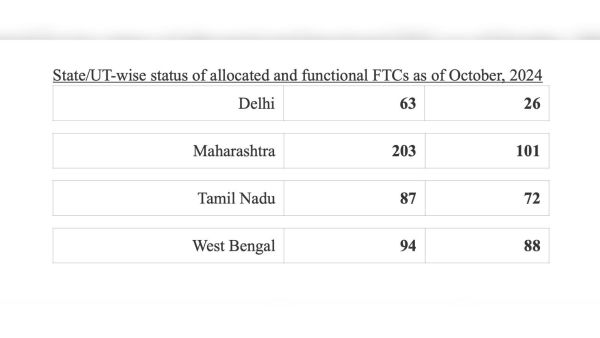
In July 2019, the Supreme Court had, in a suo motu case, issued directions to ensure speedy investigation, trial and disposal in cases under the Protection of Children against Sexual Offences (POCSO) Act. The following month, the government devised a centrally sponsored scheme to implement the Criminal Law (Amendment) Act, 2018, and comply with the apex court’s directives to establish special POCSO courts. The Centre extended the scheme from April 2023 till March 2026, with a total outlay of Rs 1,952.23 crore.
Story continues below this ad
In July 2022, former law minister Kiren Rijiju, while answering a question in the Lok Sabha, referred to the 14th Finance Commission’s recommendation of setting up of 1,800 FTCs between 2015 and 2020 for the “speedy trial of specific cases” of heinous nature, civil cases related to women, children, senior citizen, disabled persons, persons infected with terminal ailments, etc, besides property related cases pending for over five years.
The Centre said that setting up of such FTCs and allocation of funds had to be done by the state governments in line with their needs and resources and in consultation with the respective high courts.
‘Disposal rate of 96%’
In March 2025, the government claimed a disposal rate of 96.28 per cent in fast-track courts, particularly of cases involving survivors of sexual crimes. “In 2024 alone, 88,902 new cases were instituted, while 85,595 cases were resolved, underscoring the effectiveness of these courts in addressing case backlogs,” the statement read.
Union Law Minister Arjun Ram Meghwal referred to the information provided by different high courts and said in the Lok Sabha, “As on January 31, 2025, 745 FTCs, including 404 exclusive POCSO Courts, are functional in 30 states/UTs. These courts have disposed of more than 3,06,000 cases as of 31.01.2025.”

