

6 min readNew DelhiApr 15, 2026 07:00 PM IST
The Madhya Pradesh High Court recently sharply criticised the Election Tribunal for engaging in “moral policing”, set aside its order voiding the 2022 election of the president of the Multai Municipal Council, and restored the Bharatiya Janata Party (BJP) candidate as president.
Justice Vivek Jain, in his April 6 order, held that the tribunal could not step into the shoes of the BJP party authority and attempt to remedy what it perceived as wrongful cross-voting by INC (Congress) councillors.

The high court was hearing three revision petitions challenging the June 2023 order of the election tribunal, which had set aside the election and directed fresh polls.
“The Election Tribunal seems to have done a moral policing since the winning candidate should not have taken the support of cross-voters..The Election Tribunal could not step into the shoes of the party authority of the BJP and tried to remedy if something was wronged by the cross-voting of INC Councillors,” the order read.
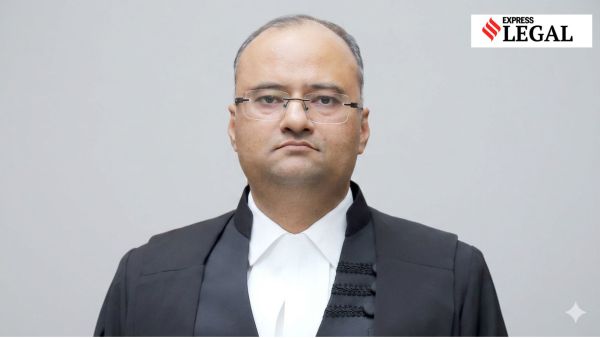 Justice Vivek Jain pointed out that the election tribunal had no business to guide the returned candidate on whom to appoint as a member of the president-in-council.
The high court noted that one petition was filed by the winning candidate, Neetu Parmar, while the other two were filed by ward members, Varsha Gadekar and Vandana Sahu, who were voters in the presidential election but were not parties to the original election petition.
Election, result, fresh election
- This case arose from a dispute over the election of the president of the municipal council in Multai, Madhya Pradesh, held in 2022.
- It was placed on record that the election process was two-stage- the councillors/ ward members were first elected by the public (on party lines), and then, these councillors voted among themselves to elect the president (indirect election, not on party symbols).
- In the present case, there were 15 councillors who formed the electoral college. Further, both main candidates -the petitioner and the challenger were originally elected as councillors on BJP tickets.
- It was noted that there were no candidates from the INC (Congress) in the fray for the president’s post, as the only INC candidate withdrew.
- The petitioner secured 9 votes, while the opponent received 6 votes, leading to the petitioner being declared elected as president.
- The runner-up candidate challenged the election, alleging that certain votes in favour of the winning candidate contained identification marks and should have been treated as invalid.
- It was further alleged that the winning candidate secured votes from INC councillors despite being a BJP-backed candidate, suggesting the use of illegal means or inducements.
- Accepting these contentions, the election tribunal declared the election void and directed fresh elections in its June 2023 order.
‘No moral policing’
- The Madhya Pradesh High Court held that the tribunal had engaged in “moral policing” by suggesting that the runner-up, having secured a strong mandate in her ward, should have been accommodated in positions such as the president-in-council or as a presiding officer.
- Clarifying the legal position, the court stated that there can be only one presiding officer in a municipal council.
- It further observed that in a parliamentary democracy, an elected candidate cannot be compelled to appoint a rival candidate to any position of confidence.
- The high court emphasised that a person who enjoys the confidence of the house is entitled to appoint individuals who command that confidence, and not necessarily their electoral rivals.
- Therefore, the court said that such a winning candidate cannot be expected to appoint his rival contender in the election to any post of confidence.
- The election tribunal had no business to guide the returned candidate on whom to appoint as a member of the president-in-council.
- The court also held that merely because some INC councillors were later appointed to positions in the council, no inference of corrupt practice could be drawn.
- The high court ordered to set aside the June 2023 order passed by the election tribunal and upheld the election of the returned candidate.
- It also directed that the candidate be allowed to reassume charge as president.
Trial of election petition
- It is settled in law that corrupt practice is to be proved like a criminal allegation in a criminal trial.
- Proof of corrupt practice requires strict proof, and no inference as to corrupt practice can be made.
- The trial of an election petition alleging corrupt practice is of a quasi-criminal nature, having the burden of proof on the election petitioner to prove the ingredients of the charges.
- The court pointed out that the law gives the right to any elector to oppose the election of a successful candidate.
- However, once the election of a successful candidate has been set aside, then an individual elector challenging the order of the tribunal to support the returned candidate is totally alien to the law.
Arguments
Appearing for the petitioner, senior advocate Sanjay Agrawal argued there were no identification marks on the votes, which were found by the tribunal to be proved, and the decision of the tribunal in that regard is utterly perverse and contrary to the record.
Story continues below this ad
It was further added that the conclusion arrived at by the tribunal is a far-fetched conclusion and not a legal and valid conclusion, but only a presumption made by the tribunal that is founded in fantasy, not in reality.
He added that the previous order passed by the tribunal should be set aside and the election of the petitioner should be upheld.
The counsel for voters argued that the order of the tribunal is fully valid and proper because the votes of opposite political parties were secured by the petitioner, and it amounts to a corrupt practice.
On the contrary, advocate Shrikrishna Sharma raised a serious objection as to the maintainability of all three revisions and contended that since the fresh election has only been ordered, the person who would have been aggrieved is the elected candidate, and to that extent, the revision of only the elected candidate can be entertained.
Story continues below this ad
He added that no other party can be entertained and, therefore, the revisions filed by two councillors in their capacity as electors deserve to be dismissed as not maintainable.

© IE Online Media Services Pvt Ltd

