

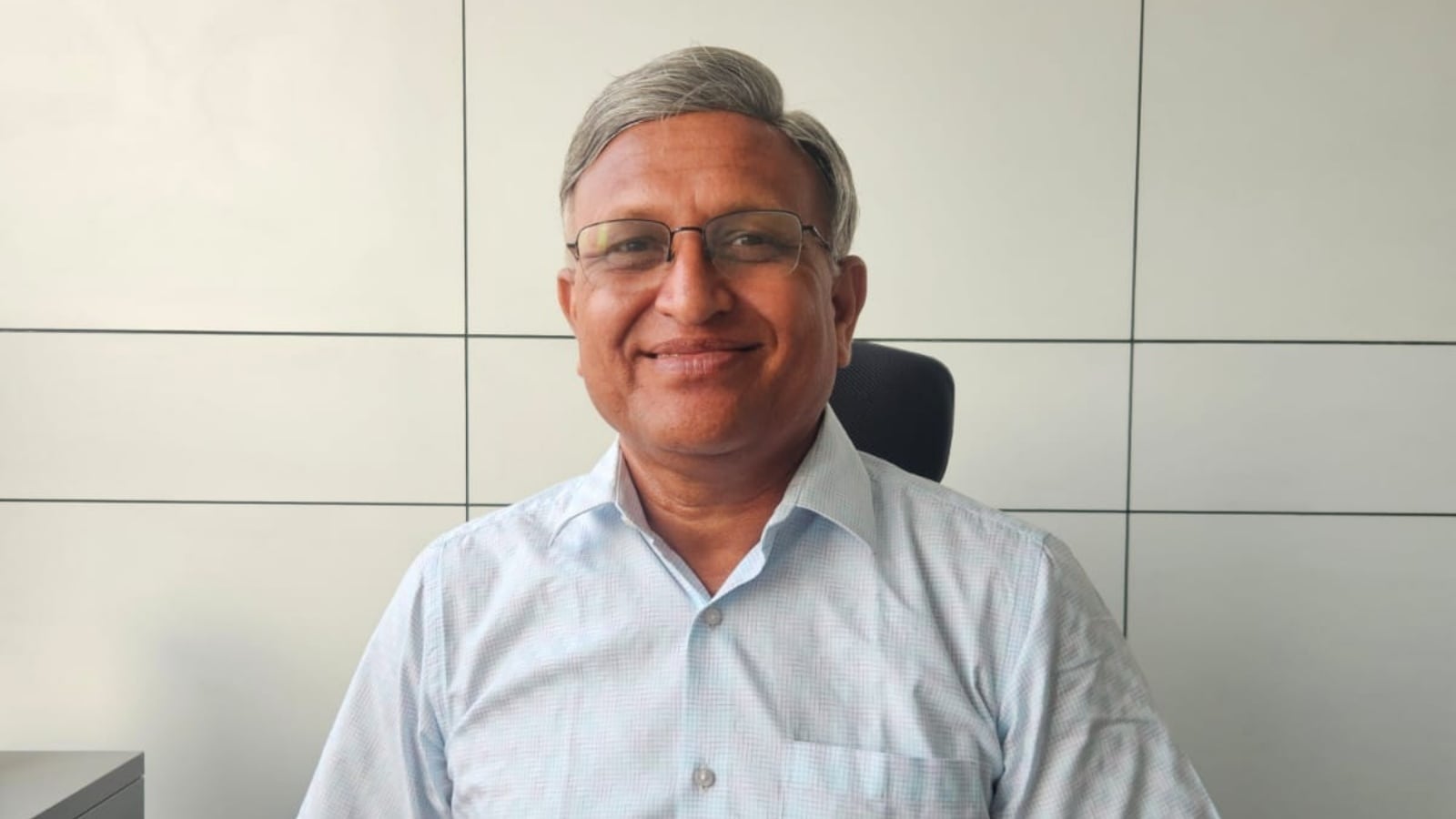
This is one demonetisation story that has a happy ending – though after a decade of waiting.
Girish Rameshchandra Malani of Pune, who could not convert Rs 2 lakh in old notes of Rs 500 denomination as the money was seized on a charge that was later dismissed, is now set to get an equivalent amount in the new currency.
Originally from Akola and now based in Bibwewadi, Pune, the civil engineer and contractor says the experience has strengthened his faith in justice, but reinforced that it often comes too late. “It should not take these many years to get what is legally ours,” says Malani.
On December 1, 2016, the then 41-year-old, along with his sister Sonal Soni, was on his way to the Renuka Devi Temple in Mahur. He was carrying 400 notes of Rs 500 denomination, part of his business funds that he planned to deposit in his Akola bank account before the December 30 government deadline to exchange old currency.
Prime Minister Narendra Modi had announced demonetisation, in a sudden move, on November 8 that year.
“I was carrying cash from Amravati and going to Pusad to drop my sister, when she suggested that we visit the Mahur temple that was nearby,” he says.
Their car was intercepted by a police patrol team at the Keroli Naka check-post, put up as part of security for the ongoing nagar panchayat elections in Nanded district. “They checked our vehicle, and found the cash. I tried to explain that I was going to deposit the money for exchange before the demonetisation deadline. But they said it was election time and this amount of cash could not be carried, and seized it,” says Malani.
Story continues below this ad
He was summoned by Income Tax officials to Nanded and asked to prove the source of the funds. Malani says he submitted his bank statements, audit papers, Income Tax returns and business documents, which showed that the cash was from the legitimate infrastructure business he operated with his brother.
Malani says he was “not very mature” at the time and subjected to many rounds of questioning. “It was the first time I had faced something like that, or been summoned by Income Tax officers for an inquiry. It was stressful.”
The officials were eventually convinced that there was no illegality, and Income Tax authorities communicated to Malani by December 28, 2016, that no further action was required. Paperwork took another three days, says Malani, with the notes reaching him finally on December 31, 2016 — missing by exactly one day the deadline to exchange the demonetised currency.
Malani says he approached the Reserve Bank of India’s Nagpur office in January 2017, as well as sent formal emails, hoping for relief due to his exceptional circumstances. However, the RBI refused to entertain his request.
Story continues below this ad
“Even they were correct at their end,” says Malani. “If they had made an exception for me, they would have had to do so for everyone.”
In Malani’s case, the Central bank also cited the Specified Bank Notes (Deposit of Confiscated Notes) Rules, issued by the Union Ministry of Finance on May 12, 2017, arguing that confiscated demonetised notes could only be accepted if the seizing authority had recorded the serial numbers at the time of seizure and if court directions specifically mentioned those details. But, the Mahur police had not documented each note’s serial number, the RBI said.
Malani decided to approach the Bombay High Court’s Nagpur Bench, and filed a writ petition on September 25, 2017. His lawyer C N Deshpande argued that Malani had been unfairly deprived of his right to deposit legal cash solely because authorities retained it beyond the deadline.
Says Malani: “The mental struggle was immense. The case weighed heavily on me, and I would just focus on my work. But life had to move forward, and I told myself I couldn’t keep crying over Rs 2 lakh forever.”
Story continues below this ad
At the same time, he admits he didn’t expect the court case to last nearly a decade. “I thought justice would come quickly… I kept thinking, why should I suffer for no fault of mine.”
At other moments he considered giving up. “I thought maybe I should just let it go because it was too much trouble. But then, I thought — I have done nothing wrong, so why should I quit?”
Finally, Malani decided to document each demonetised note’s serial number on his own. “I took down all the 400 serial numbers one by one.”
On March 20, his legal team submitted an affidavit to the Bombay High Court listing the serial numbers.
Story continues below this ad
On April 22, a Divisional Bench of Justices Urmila Joshi-Phalke and Nivedita P Mehta ruled in Malani’s favour. They held that the rules should not be followed so strictly when it was the government’s own actions that had led to the situation.
Accepting the March 2026 affidavit by Malani’s side as sufficient compliance, the court directed him to submit the notes to the RBI in a week, and told the Central bank to verify the serial numbers and pay him Rs 2 lakh in valid legal tender within eight weeks.
RBI data shows that more than 99% of the demonetised Rs 500 and Rs 1,000 notes, amounting to Rs 15.310 lakh crore, had made their way back into the system by August 9, 2018, leaving about Rs 10,720 crore that hadn’t.
Malani says he often thinks about how different things could have been for him, including for the family’s firm, Shri Sai Infrastructures. “Those Rs 2 lakh could have gone into the business, fixed deposits or even gold.”
Story continues below this ad
He thanks his family, particularly brothers Sumit and Manish, for helping him carry on. “They thought the money was gone for good, but we should fight because the mistake was not ours,” Malani says, adding, “I always believed truth would win.”
The Covid pandemic was one of the reasons for the delay in his case, he admits, but says that it doesn’t excuse the delays of the judicial system. “Decisions should come much faster. Cases like these should be put on the fast track.”
The thought of asking that he be paid back with interest has crossed his mind, Malani laughs. “But that could mean another five or 10 years in court. I would rather take what is mine and move on.”
One of his first stops after getting the money will be a temple – marking a full circle from where the story began. “I will make a chadava (an offering) of Rs 5,000.” It won’t be in cash, but in the form of a food donation.
Story continues below this ad
Malani never travels with more than Rs 50,000 during elections now. Cash is only for small payments.

