
Close Menu
  • Home
  • Education
  • Health
  • National News
  • Politics
  • Relationship & Wellness
  • World News
What's Hot

Iran discovers over 7.5 trillion cubic feet of gas reserves as US blockade squeezes energy sector

August 24, 2026

A Detroit couple bought a vacant 1925 bank and neighboring bar for $66,000; 13 years later, one old bank vault is a den and another is a wine cellar

August 24, 2026

A cactus-eating moth released on Caribbean islands as biological control later reached Florida; since appearing there in 1989 it has spread west to Texas and become a threat to native prickly pears

August 24, 2026
Facebook X (Twitter) Instagram
Facebook X (Twitter) Instagram YouTube
Global News Bulletin
SUBSCRIBE
  • Home
  • Education
  • Health
  • National News
  • Politics
  • Relationship & Wellness
  • World News
Global News Bulletin
Home»Business»Meet the 2025 Nobel laureates in Physiology: Degrees and labs that shaped their careers – The Times of India
Business

Meet the 2025 Nobel laureates in Physiology: Degrees and labs that shaped their careers – The Times of India

editorialBy editorialOctober 6, 2025No Comments3 Mins Read
Facebook Twitter Pinterest LinkedIn Tumblr Email Telegram Copy Link
Meet the 2025 Nobel laureates in Physiology: Degrees and labs that shaped their careers – The Times of India
Share
Facebook Twitter LinkedIn Pinterest Email Copy Link
Meet the 2025 Nobel laureates in Physiology: Degrees and labs that shaped their careers
Meet the 2025 Nobel laureates in Physiology

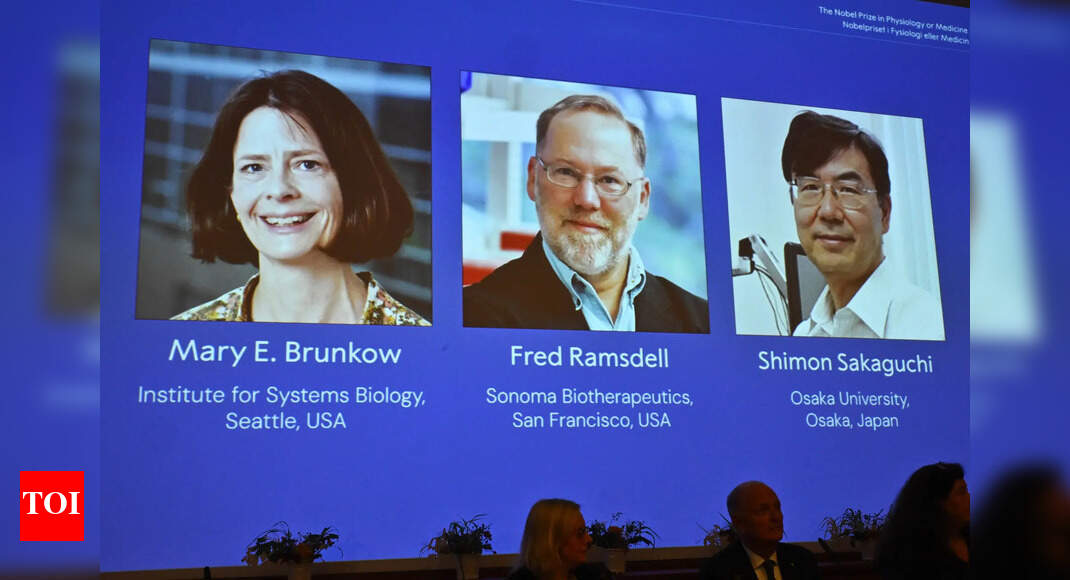
The 2025 Nobel Prize in Physiology or Medicine has been awarded to Mary E. Brunkow, Fred Ramsdell, and Shimon Sakaguchi for their groundbreaking discoveries in peripheral immune tolerance—a mechanism that prevents the immune system from attacking the body’s own tissues. Their work has transformed our understanding of immune regulation, paving the way for innovative treatments for autoimmune diseases, cancer, and improving organ transplant success rates.

What they won the Nobel Prize for

The trio was recognized for uncovering the pivotal role of regulatory T cells (T-regs) in maintaining immune balance outside the thymus. For decades, central tolerance, which means the elimination of self-reactive immune cells in the thymus, was considered the primary defense against autoimmunity. Sakaguchi’s 1995 work identified T-regs, specialised immune cells that suppress overactive immune responses, establishing that self-tolerance is actively maintained in peripheral tissues.Brunkow and Ramsdell’s research on the “scurfy” mouse strain revealed that mutations in the FOXP3 gene disrupt regulatory T cell function, leading to fatal autoimmune disorders. Their findings linked these genetic insights to the human autoimmune disorder IPEX syndrome, demonstrating how FOXP3 mutations cause catastrophic immune dysfunction. Collectively, their discoveries have opened new avenues for therapies targeting autoimmune diseases, cancer, and transplant rejection.

Mary E. Brunkow

Mary Brunkow earned her Ph.D. from Princeton University and currently serves as a Senior Program Manager at the Institute for Systems Biology in Seattle. Her work focused on identifying the FOXP3 gene mutation in scurfy mice, establishing the molecular basis of regulatory T cell function and connecting it to human immune diseases. Brunkow’s research has been central to understanding how T-regs prevent autoimmunity and maintain immune system balance.

Fred Ramsdell

Fred Ramsdell received his Ph.D. from the University of California, Los Angeles (UCLA) and is a Scientific Advisor at Sonoma Biotherapeutics in San Francisco. Collaborating closely with Brunkow, Ramsdell helped identify the FOXP3 gene mutation and demonstrated its critical role in immune regulation. His work has been instrumental in linking genetic mutations to dis-regulated immune responses, providing the foundation for modern immunotherapies.

Shimon Sakaguchi

Shimon Sakaguchi holds an M.D. and Ph.D. from Kyoto University and is a Distinguished Professor at Osaka University’s Immunology Frontier Research Center. Sakaguchi’s pioneering studies in 1995 revealed the existence of regulatory T cells, showing that immune self-tolerance is actively maintained in peripheral tissues. His work laid the conceptual groundwork that allowed Brunkow and Ramsdell to connect genetic mechanisms to immune regulation.

The takeaway

The discoveries by Brunkow, Ramsdell, and Sakaguchi have fundamentally reshaped immunology, providing a deeper understanding of how the immune system protects the body from self-attack. By linking regulatory T cells to genetic mechanisms and human disease, they have launched a new era of research and therapies that harness the body’s own regulatory systems. Their work exemplifies the Nobel Prize’s mission of honoring scientific breakthroughs that deliver the greatest benefit to humankind.

Follow on Google News Follow on Flipboard
Share. Facebook Twitter Pinterest LinkedIn Tumblr Email
Previous ArticlePope hopes Gaza plan achieves ‘desired results’ soon
Next Article Insects stop play! Bizarre scenes as India vs Pakistan Women’s World Cup match paused for pest-control
editorial
  • Website

Related Posts

Iran discovers over 7.5 trillion cubic feet of gas reserves as US blockade squeezes energy sector

August 24, 2026

A Detroit couple bought a vacant 1925 bank and neighboring bar for $66,000; 13 years later, one old bank vault is a den and another is a wine cellar

August 24, 2026

A cactus-eating moth released on Caribbean islands as biological control later reached Florida; since appearing there in 1989 it has spread west to Texas and become a threat to native prickly pears

August 24, 2026

How Ananta Maharaj row exposed old fault lines over Netaji

August 24, 2026

Odisha woman’s remains found in trolley aboard TN Express, Chennai cops launch search in state

August 24, 2026

Trump tariffs: What India can learn from Canada’s failed trade talks with US

August 24, 2026
Add A Comment
Leave A Reply Cancel Reply

Economy News

Iran discovers over 7.5 trillion cubic feet of gas reserves as US blockade squeezes energy sector

By editorialAugust 24, 2026

Gas refinery at the South Pars gas field in Asalouyeh, Iran. (AP Photo) Iran has…

A Detroit couple bought a vacant 1925 bank and neighboring bar for $66,000; 13 years later, one old bank vault is a den and another is a wine cellar

August 24, 2026

A cactus-eating moth released on Caribbean islands as biological control later reached Florida; since appearing there in 1989 it has spread west to Texas and become a threat to native prickly pears

August 24, 2026
Top Trending

Iran discovers over 7.5 trillion cubic feet of gas reserves as US blockade squeezes energy sector

By editorialAugust 24, 2026

Gas refinery at the South Pars gas field in Asalouyeh, Iran. (AP…

A Detroit couple bought a vacant 1925 bank and neighboring bar for $66,000; 13 years later, one old bank vault is a den and another is a wine cellar

By editorialAugust 24, 2026

Michael and Lynne carried out much of the renovation themselves. (Pictures: Homes.com)…

A cactus-eating moth released on Caribbean islands as biological control later reached Florida; since appearing there in 1989 it has spread west to Texas and become a threat to native prickly pears

By editorialAugust 24, 2026

Cactoblastis cactorum, commonly known as the Argentine cactus moth An invasive South…

Subscribe to News

Get the latest sports news from NewsSite about world, sports and politics.

Facebook X (Twitter) Instagram YouTube

News

  • Education
  • Health
  • National News
  • Relationship & Wellness
  • World News
  • Politics

Company

  • Information
  • Advertising
  • Classified Ads
  • Contact Info
  • Do Not Sell Data
  • GDPR Policy
  • Media Kits

Services

  • Subscriptions
  • Customer Support
  • Bulk Packages
  • Newsletters
  • Sponsored News
  • Work With Us

Subscribe to Updates

Get the latest creative news from FooBar about art, design and business.

© Copyright Global News Bulletin.
  • Privacy Policy
  • Terms
  • Accessibility
  • Website Developed by Plenary Media Solution

Type above and press Enter to search. Press Esc to cancel.