

3 min readNew DelhiUpdated: May 12, 2026 03:51 PM IST
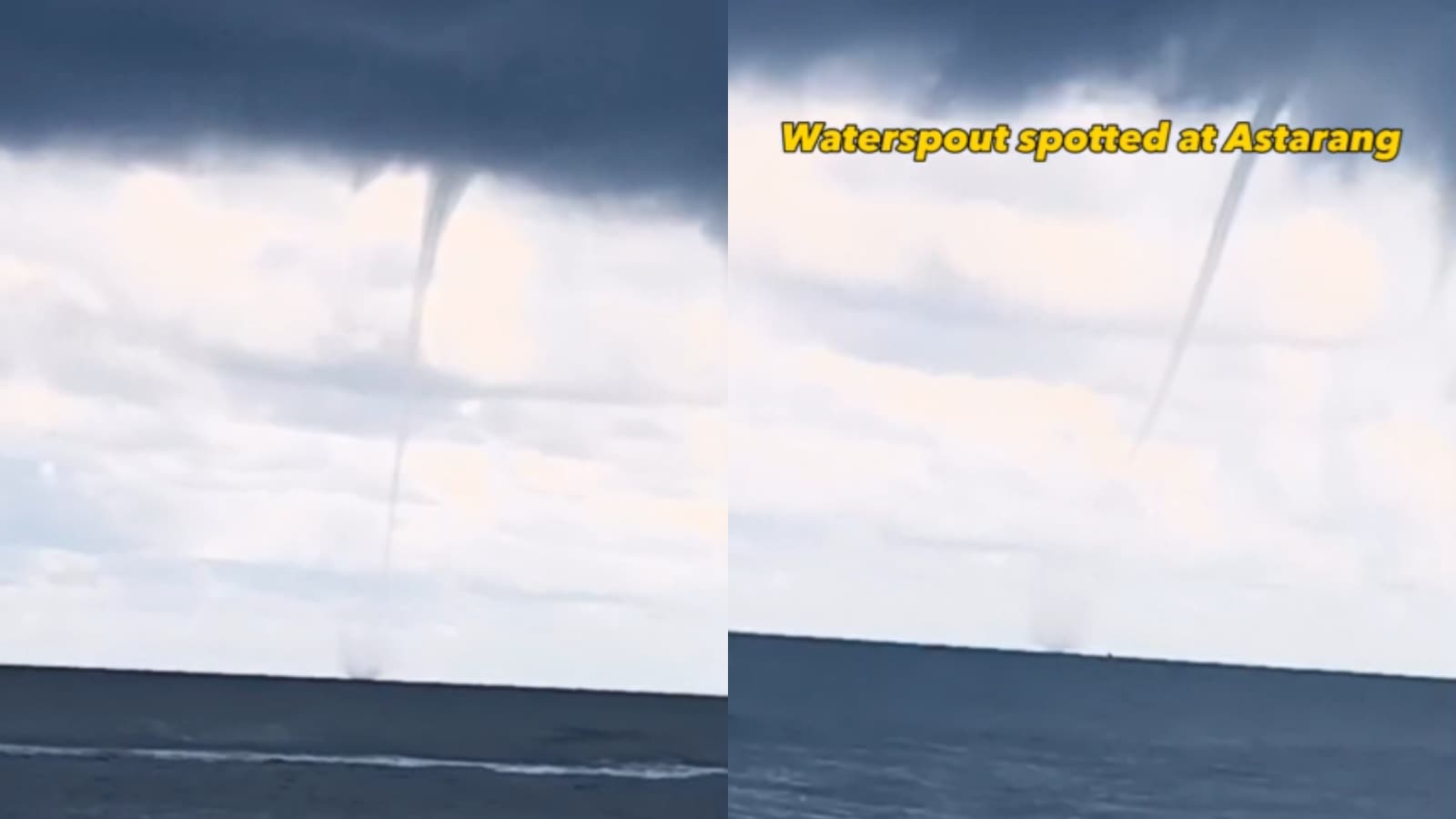
Visitors at Odisha’s coast were recently left astonished after spotting a rare weather phenomenon near the Astaranga shoreline in Puri district. Under darkening skies over the Bay of Bengal, a giant funnel-like cloud began stretching downward toward the sea, while the water beneath churned into a spinning vortex.
The dramatic scene, captured on video by onlookers, quickly spread across social media, with many comparing the strange formation to an elephant’s trunk emerging from the ocean. The incident occurred as a low-pressure system over the Bay of Bengal brought turbulent weather to the region.

As reported by NDTV and local Odisha media, the waterspout appeared off the Astaranga coast on Saturday afternoon. Witnesses said the weather shifted abruptly as heavy rain clouds gathered above the sea. Soon afterward, a towering funnel-shaped column formed between the clouds and the ocean surface.
Watch the video:
Waterspout spotted at Astarang, Odisha pic.twitter.com/OvRTuXUTF0
— Odisha Weatherman (@OdishaWeather7) May 11, 2026
The unusual shape reminded locals of an elephant’s trunk, giving rise to the regional name “Hatisunda.” At the base of the funnel, seawater could be seen spinning rapidly, creating a clearly visible whirlpool-like effect. The rare spectacle attracted the attention of both tourists and residents, many of whom stopped to watch the phenomenon unfold against the stormy backdrop along eastern India’s coastline.
What is a waterspout?
A waterspout is a spinning column made up of air and fine water spray that forms over a water body. The National Ocean Service classifies waterspouts into two main types, tornadic waterspouts and fair weather waterspouts.
Tornadic waterspouts are essentially tornadoes that either originate over water or travel from land onto water. They behave much like tornadoes seen on land and are usually linked to intense thunderstorms. These storms can bring powerful winds, rough seas, large hail and frequent lightning strikes.
Fair-weather waterspouts, on the other hand, typically develop beneath flat, dark cloud bases formed by growing cumulus clouds. Unlike tornadic waterspouts, they are generally not connected to severe thunderstorms. Instead of forming from the cloud downward, they begin at the water’s surface and gradually build upward. Once the funnel becomes clearly visible, the waterspout is usually close to reaching full strength. Since they form in relatively calm wind conditions, fair weather waterspouts tend to move slowly or remain nearly stationary.
© IE Online Media Services Pvt Ltd

