

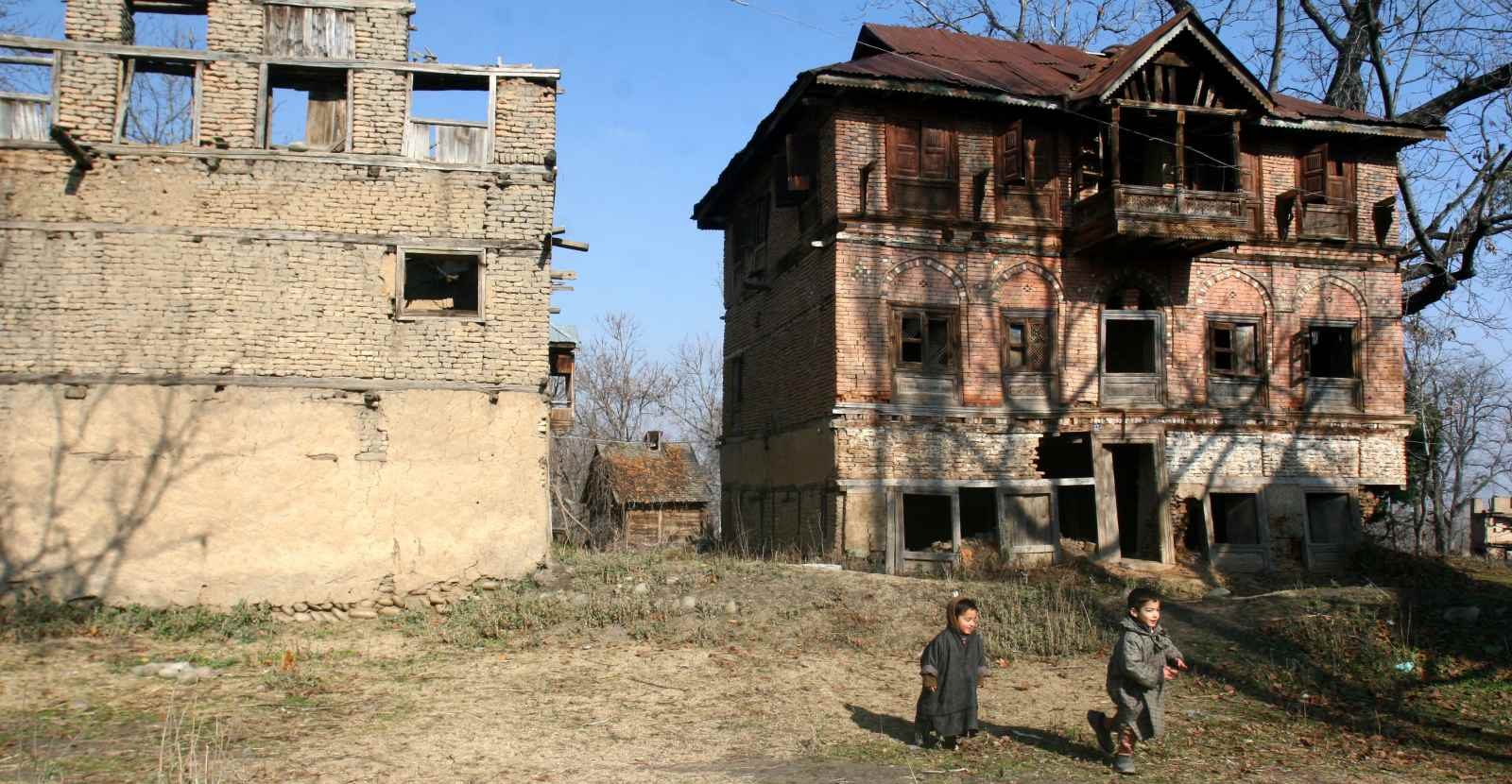
The search for lasting peace in Jammu and Kashmir cannot be confined to questions of security, governance or economic development. Peace is ultimately about people, justice and belonging. By that measure, Kashmir’s journey towards normalcy will remain incomplete until the dignified and secure return of the displaced Kashmiri Pandit community becomes a reality.
The exodus of Kashmiri Pandits in 1989-90 was not merely the displacement of a minority community. It represented the rupture of a civilisational continuum that had endured for centuries. As one of the Valley’s indigenous communities, Kashmiri Pandits helped shape Kashmir’s intellectual, philosophical and cultural traditions. Their contribution to Sanskrit scholarship, Shaivism, literature, education and public life formed an integral part of the region’s composite identity. Their absence has left a void that cannot be measured only in demographic terms.

Kashmir’s celebrated tradition of coexistence has meaning only when all its constituent communities are able to live there with dignity and equal rights. The return of Kashmiri Pandits is therefore not a concession to one community. It is an essential step towards restoring the Valley’s plural character and strengthening its democratic fabric.
The recent well-attended global conference of exiled Kashmiri Pandits in Srinagar deserves to be seen in this larger context. It demonstrated an unusual degree of unity among members of the displaced community across organisations and ideological differences. More importantly, it reaffirmed that despite more than three decades in exile, the aspiration to return to their homeland remains undiminished.
The conference also underlined an important distinction. Rehabilitation cannot be reduced to housing colonies or financial packages. Return must mean restoration of confidence, livelihoods, cultural institutions and equal citizenship. It must enable future generations to rebuild their lives in an environment free from fear and uncertainty.
This places a historic responsibility on the Union government. Successive governments have acknowledged the suffering of displaced Kashmiri Pandits and reiterated their commitment to facilitating their return. The time has now come to move beyond declarations and formulate a comprehensive, time-bound policy for secure, dignified and sustainable rehabilitation.
Such a framework must emerge through meaningful consultation with representatives of the displaced community. It should combine security guarantees with opportunities for employment, entrepreneurship, education and healthcare. Legal safeguards for property rights, protection of places of worship and preservation of cultural heritage must form an integral part of the rehabilitation process. Institutional accountability and measurable timelines will be essential if confidence is to be restored.
Security, understandably, remains the foremost concern. Any return strategy must provide credible institutional safeguards rather than depend upon changing political circumstances. Equally important is economic viability. Families returning after decades in exile should have access to opportunities that allow them to rebuild stable and productive lives.
Yet rehabilitation is not merely an administrative exercise. It is also about healing. Three generations have grown up carrying memories of displacement, trauma and loss. Restorative justice therefore requires acknowledgement of suffering alongside practical measures for rebuilding trust. The emotional dimension of return cannot be ignored if reconciliation is to be meaningful.
The larger Kashmiri society has an equally important role. Civil society, religious leaders, political representatives and citizens can help create an atmosphere in which returning families feel welcomed as equal stakeholders. Reconciliation cannot be legislated into existence; it must also be nurtured through public engagement and mutual respect.
It is in this context that the Supreme Court’s observations on truth, reconciliation and healing assume particular significance. The Court has emphasised the need for a time-bound and impartial Truth and Reconciliation Commission to examine human rights violations committed by both state and non-state actors over several decades. Such a process offers an opportunity to acknowledge the suffering experienced across communities while recognising the specific tragedy of the forced displacement of Kashmiri Pandits.
A credible truth and reconciliation process would not seek to reopen old divisions. Rather, it would help establish a shared historical record, recognise victims, encourage accountability and promote healing. Durable peace cannot rest on selective memory or silence. It must be founded upon truth, justice, acknowledgement and reconciliation. Addressing the alienation and distrust inherited by younger generations is equally essential for building a confident future.
The return of Kashmiri Pandits should therefore be viewed not as an isolated rehabilitation project but as part of a broader process of restoring Kashmir’s plural and constitutional order. Their presence would strengthen the Valley’s social diversity and reaffirm the values of justice, equality and fraternity that the Constitution seeks to uphold.
History occasionally presents opportunities to correct long-standing injustices. India stands at such a moment. A structured, time-bound roadmap for the safe, dignified and sustainable return of Kashmiri Pandits, supported by institutional safeguards and an honest process of reconciliation, would fulfil a long-pending national commitment. More importantly, it would help restore Kashmir’s civilisational balance.
Kashmir’s story will remain unfinished until its displaced sons and daughters can once again walk through their ancestral villages, worship at their ancient temples, rebuild their homes and participate fully in the life of the Valley. Only then can the promise of lasting peace acquire its fullest meaning.
The writer is a senior advocate of Supreme Court

