

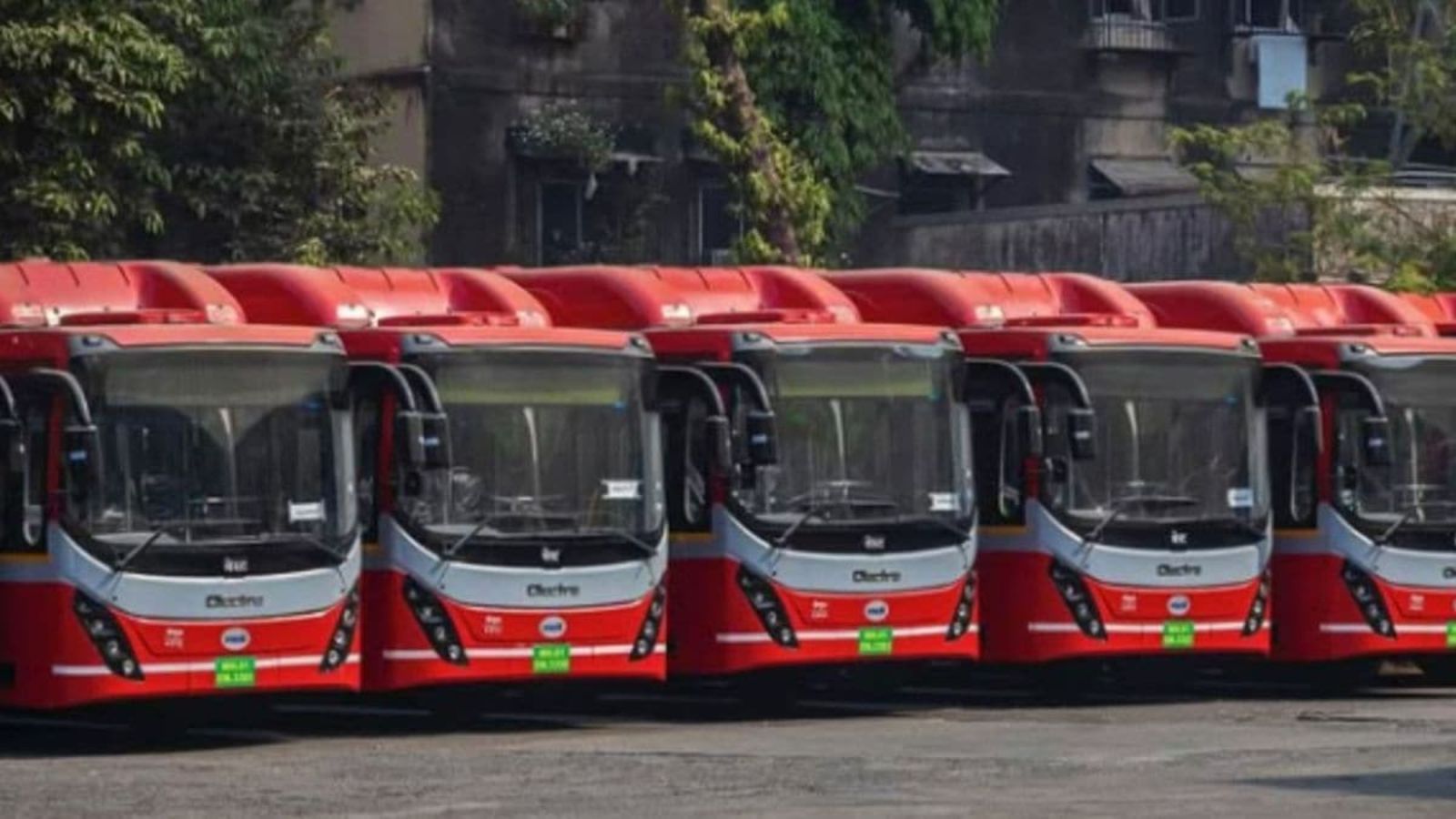
Commuters across Mumbai faced major inconvenience on Friday as employees of the Brihanmumbai Electric Supply and Transport (BEST) Undertaking continued their indefinite strike, bringing a large number of bus services across the city to a standstill. Transport Minister Pratap Sarnaik appealed to the labour unions to withdraw the strike and assured them that several of their demands would be taken up for discussions.
According to BEST officials, only 48 buses, including 39 wet lease and 9 BEST-owned buses, were operating on city roads until Friday evening, compared to the usual deployment of thousands of buses. Of these, 26 buses were forced to return to their depots after incidents of stone pelting, threats allegedly issued by striking workers, removal of air from tyres, and damage to vehicle mirrors.

The strike, led by the BEST Sanyukt Kamgar Kruti Samiti — a joint action committee comprising 12 unions — began Thursday midnight after talks with the administration failed to resolve a range of labour and infrastructure-related demands. Among the key demands raised by workers are the merger of the Brihanmumbai Municipal Corporation’s (BMC) ‘C’ budget allocated to BEST with its main ‘A’ budget, payment of pending legal dues to retired employees in a lump sum, reduction in dependence on contractual operators, and absorption of wet-lease workers into the undertaking’s workforce.
The disruption severely impacted lakhs of commuters who depend on BEST buses for last-mile connectivity to Metro corridors and suburban railway stations, forcing many to rely on autorickshaws, taxis and app-based transport services. Office-goers were particularly affected during rush hours, with the absence of buses leading to overcrowding at railway stations and alternative transport hubs.
Large queues of commuters were seen at locations such as Sterling Theatre Gully, where passengers waited for shared taxis to Cuffe Parade and Nariman Point. Several commuters reported extended waiting times and increased travel costs as they scrambled to find alternate means of transport.
Demand for shared taxis also surged outside the Chhatrapati Shivaji Maharaj Terminus (CSMT) on Friday morning. “While I usually ferry around 50 passengers every morning to areas such as Mantralaya, demand for the service increased significantly during peak office hours,” said taxi driver Amarjeet Mishra. He claimed that the number of passengers he ferried between 9 am and 10.30 am nearly doubled due to the unavailability of BEST buses.
App-based autorickshaw drivers associated with Ola, Uber and Rapido also reported a spike in bookings during the evening peak hours as commuters sought alternatives to the disrupted bus network.
Story continues below this ad
Many passengers, meanwhile, remained unaware of the suspension of bus operations. Seventy-year-old Darshana Javeri, a resident of Chembur who frequently uses BEST buses, said she had no knowledge of the strike. “I waited at the bus stop for over 25 minutes in vain before finally taking a local train to CSMT,” she said. Javeri later found it difficult to secure a bus from outside CSMT station as well, while commuters waiting nearby said they had encountered similar difficulties in areas such as Bhandup and Malad, forcing them to depend on suburban railway services and multiple interchanges to complete their journeys.
The strike also coincided with the Mumbai Metropolitan Region Development Authority’s (MMRDA) weekly Public Transport Day initiative at the Bandra-Kurla Complex (BKC). BEST typically operates 976 bus trips through 125 buses on 16 routes serving BKC every day. As part of the public transport promotion drive, the undertaking had deployed additional buses and personnel to facilitate commuter movement in the business district. However, the strike threatened to disrupt these arrangements and affect the overall execution of the initiative.
Apart from regular bus services, the agitation also cast uncertainty over premium services such as Chalo who rely on BEST infrastructure for vehicle charging and depot access for parking. BEST officials, however, denied that the ongoing strike had affected Chalo’s operations.
While protesting workers expressed regret over the inconvenience caused to commuters, they maintained that they had been left with no option but to resort to a strike. Workers gathered outside BEST’s Wadala depot argued that despite repeatedly raising concerns over wage parity and working conditions for employees hired through private contractors, the administration had failed to provide concrete solutions.
Story continues below this ad
“We are forced to work for a meagre monthly income of Rs 22,000, which is barely enough to sustain ourselves in a city like Mumbai,” said a bus driver employed through private contractor Mateshwari since 2024.
Employees from BEST’s supply department also joined the agitation, citing long-pending dues and salary-related grievances. “Even after five years of an interim salary agreement being implemented, we have still not received arrears for that period as per the Seventh Pay Commission,” alleged an employee from the electricity department who has been with BEST since 2005.
During the day, depot managers reportedly approached striking workers in an attempt to persuade them to resume operations, but the efforts yielded little response.
Despite the strike, the undertaking maintained that electricity supply services remained unaffected. BEST also pointed out that the BEST Workers’ Union, which represents nearly 46% of the undertaking’s workforce, had not participated in the agitation.
Story continues below this ad
Following the day-long strike, State Transport Minister Pratap Sarnaik held a meeting with representatives of the BEST Joint Action Committee and senior officials, including BEST General Manager Sonia Sethi and Additional Chief Secretary (Urban Development) Aseem Gupta to primarily discuss the issue of the merger of BEST’s budget with that of the BMC.
“BEST remains the lifeline of Mumbai with over 30 lakh passengers relying on the service daily. A strike of the organisation’s workers could cause immense hardships to ordinary students, citizens, office-goers, and the elderly,” Sarnaik said.
The agitation continued despite an ad-interim order issued by the Mumbai Industrial Court restraining BEST employees and workers affiliated with wet-lease operators from proceeding with the strike. In a parallel move, the state government invoked provisions of the Maharashtra Essential Services Maintenance Act (MESMA), declaring the transport and electricity services provided by BEST as essential services and prohibiting employees from participating in the agitation.
On Thursday evening, the Mumbai Police also issued a warning, cautioning protesters against damaging BEST buses and depot property during the strike.
Story continues below this ad
At present, BEST operates 2,766 buses on 399 routes every day, including feeder services and select long-distance routes, catering to nearly 25 lakh passengers. Through its electricity division, the undertaking also supplies power to around 11 lakh consumers across south and central Mumbai, underscoring the significance of maintaining uninterrupted services.

