

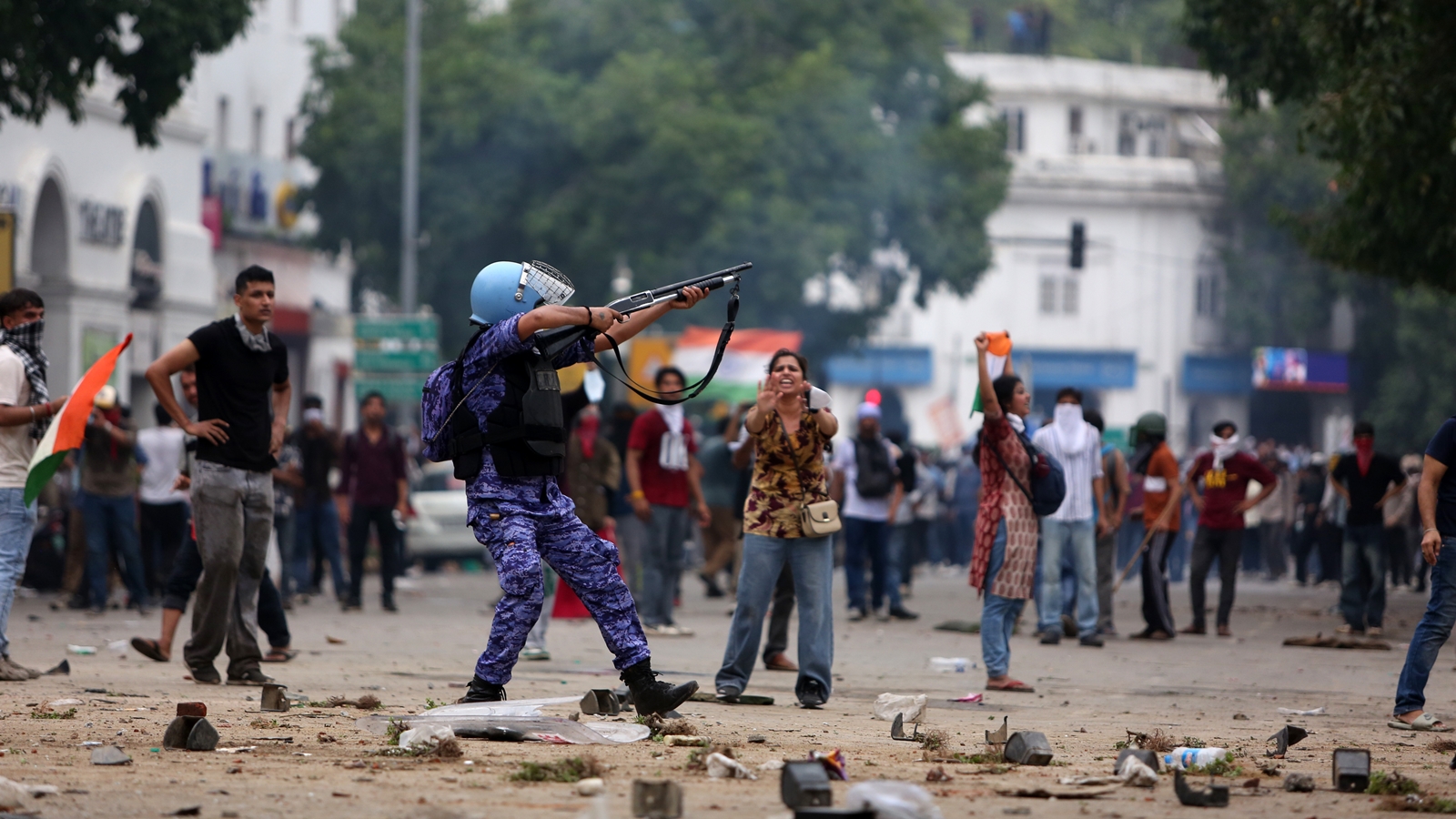
Monday’s street violence in the capital was a grim reminder of the crisis of January 26, 2021, when hundreds of protesters on tractors reached central Delhi and managed to breach security at the Red Fort.
Like the Red Fort incident more than five years ago, intelligence units of the security agencies, including the Delhi Police, failed to accurately estimate the number of protesters who would gather at Jantar Mantar over Sunday and Monday.

The Jantar Mantar area designated for the protest has the capacity to accommodate around 3,000 people. However, by Sunday evening, nearly 5,000 people from Delhi and across the country had gathered at the site.
According to sources, the Delhi Police Intelligence Department had estimated that the turnout could reach 7,000-8,000 people on Monday morning. The actual number, including those gathered elsewhere in the city, turned out to be 50,000 or more.
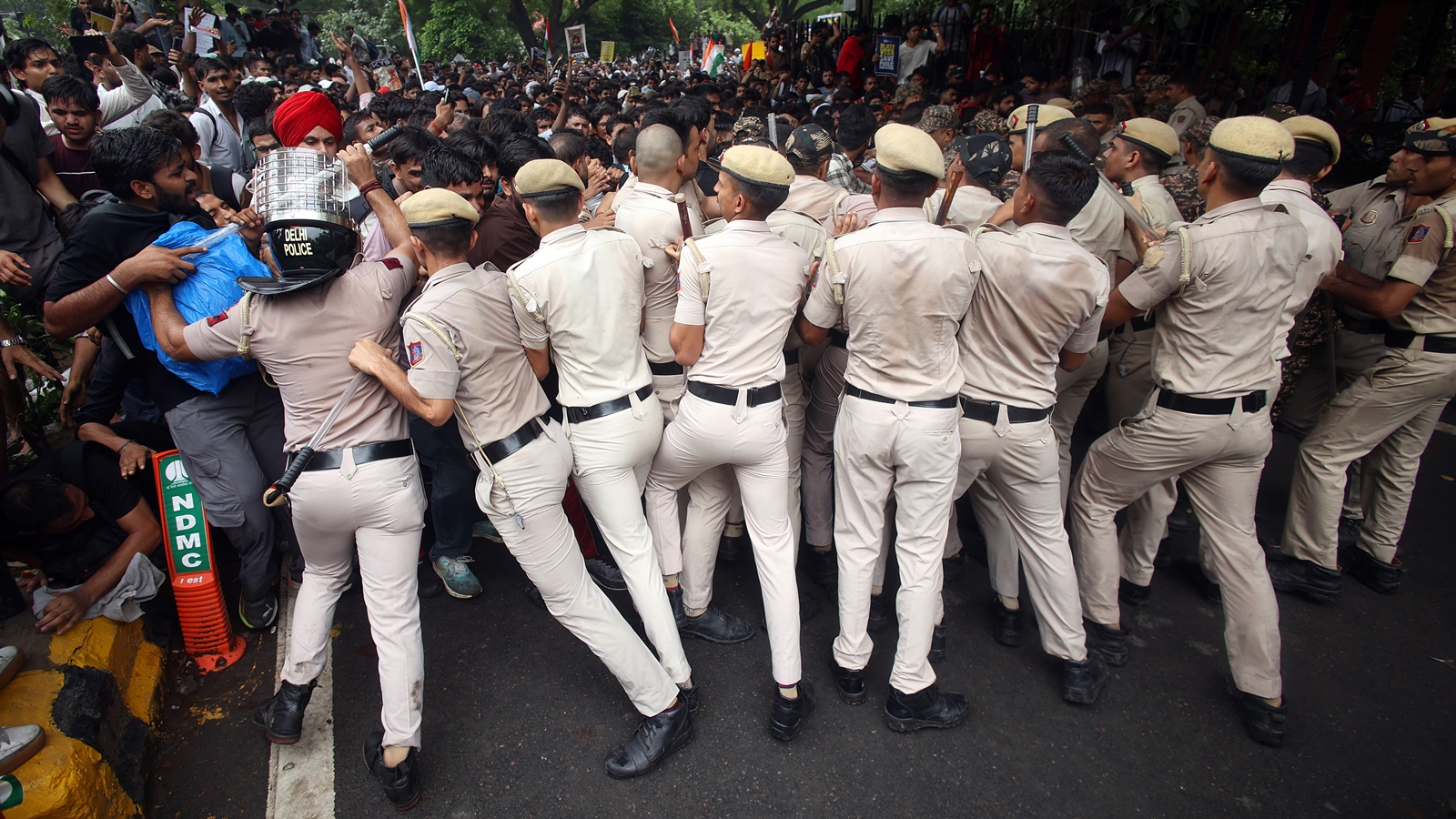 Officers try to stop protesters near Jantar Mantar. (Express photo by Praveen Khanna)
The crowd reached close to Parliament, where the Monsoon Session was underway. Sources in the Central Industrial Security Force (CISF) told The Indian Express that the force had not expected more than 5,000 people to join the CJP’s protest.
Indeed, the protest had failed to gather momentum for more than three weeks. Until June 28, when Sonam Wangchuk began his hunger strike, the number of protesters at Jantar Mantar had remained between 100 and 500. The protest gathered significant momentum after police moved Wangchuk to Safdarjung hospital on July 18.
Prepared for a crowd of 7,000-8,000, the police had deployed nearly 2,000 of its personnel and 32 companies of paramilitary forces, and extensively barricaded the area around Jantar Mantar. Late on Sunday night, multilayered barricades were erected at all four entry points to Jantar Mantar, as well as on Parliament Street, Raisina Road, and Dr Rajendra Prasad Road leading towards Parliament.
Story continues below this ad
On Monday morning, however, nearly 15,000 people gathered at Jantar Mantar. Police sent an urgent message to all 14 districts, asking each district to immediately depute one Assistant Commissioner of Police (ACP)-rank officer along with 100 police personnel to Jantar Mantar.
The Delhi Police Headquarters immediately deployed two Joint Commissioners of Police to oversee the situation. Deputy Commissioner of Police (New Delhi) Sachin Sharma attempted to establish contact with the protest organisers, Ashutosh Ranka and Saurav Das, to work out a compromise that would allow the march to proceed in a limited manner.
After three rounds of negotiations at the protest site failed to produce a breakthrough, senior police officers informed the organisers that the situation could spiral out of control.
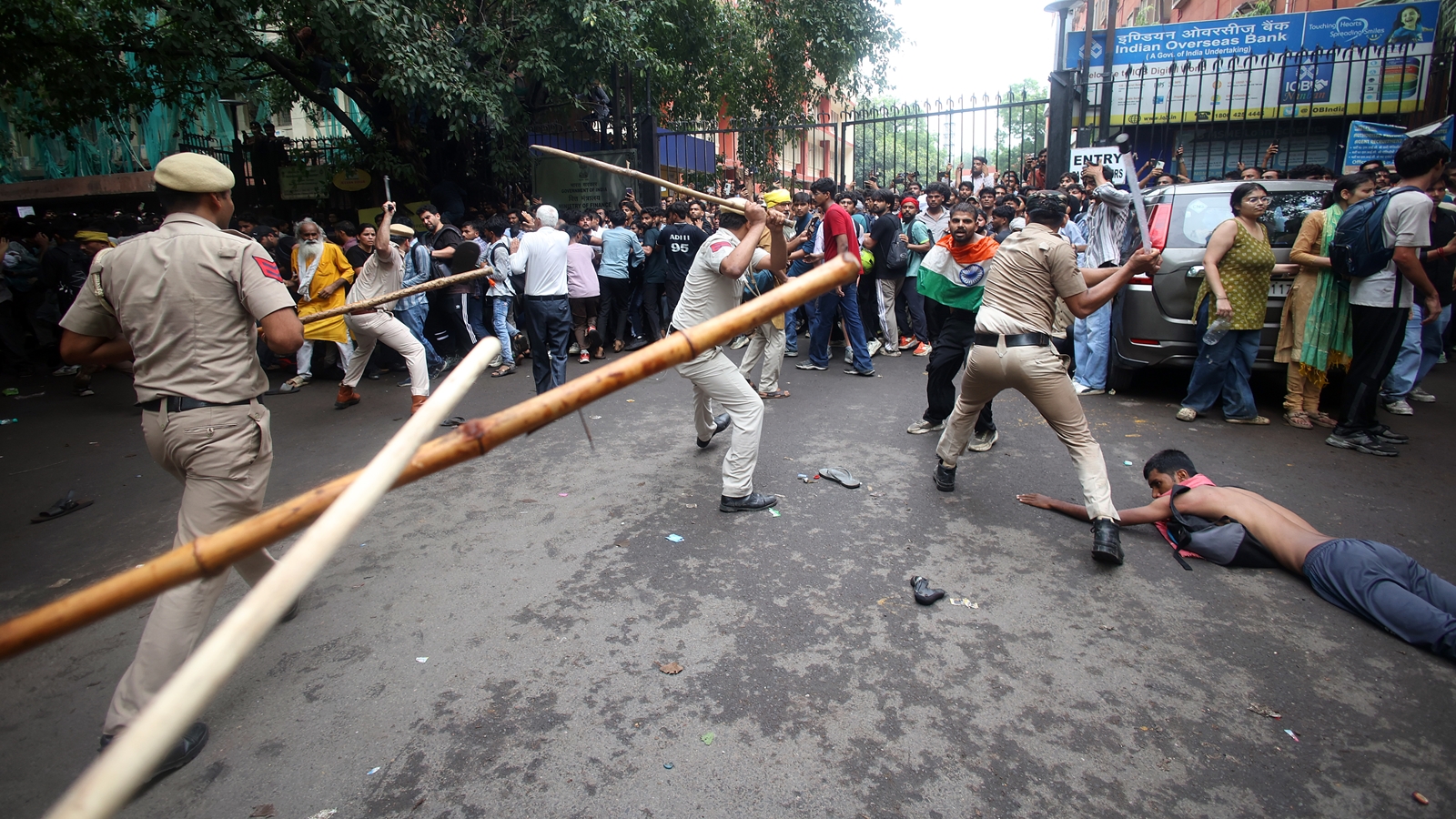 Delhi Police personnel disperse the protesters as they attempt to march towards the House, at Parliament Street, on Monday. (Express photo by Praveen Khanna)
The organisers also issued repeated appeals and made multiple public announcements urging protesters to remain peaceful and refrain from any acts of vandalism or provocation. However, by then, the situation had already slipped out of control.
Story continues below this ad
The police’s primary objective was to prevent the march from reaching Parliament. But the use of mild force and tear gas shells proved insufficient to deter the crowd. As the day progressed, the situation descended into repeated confrontations.
Police personnel carried out lathi charges to disperse protesters, who regrouped and charged back at the police. At several points, both sides appeared to advance towards each other simultaneously. Protesters hurled whatever they could find — including shoes, bottles, stones and even bushes — at the police, while security personnel responded with tear gas shells and baton charges.

