

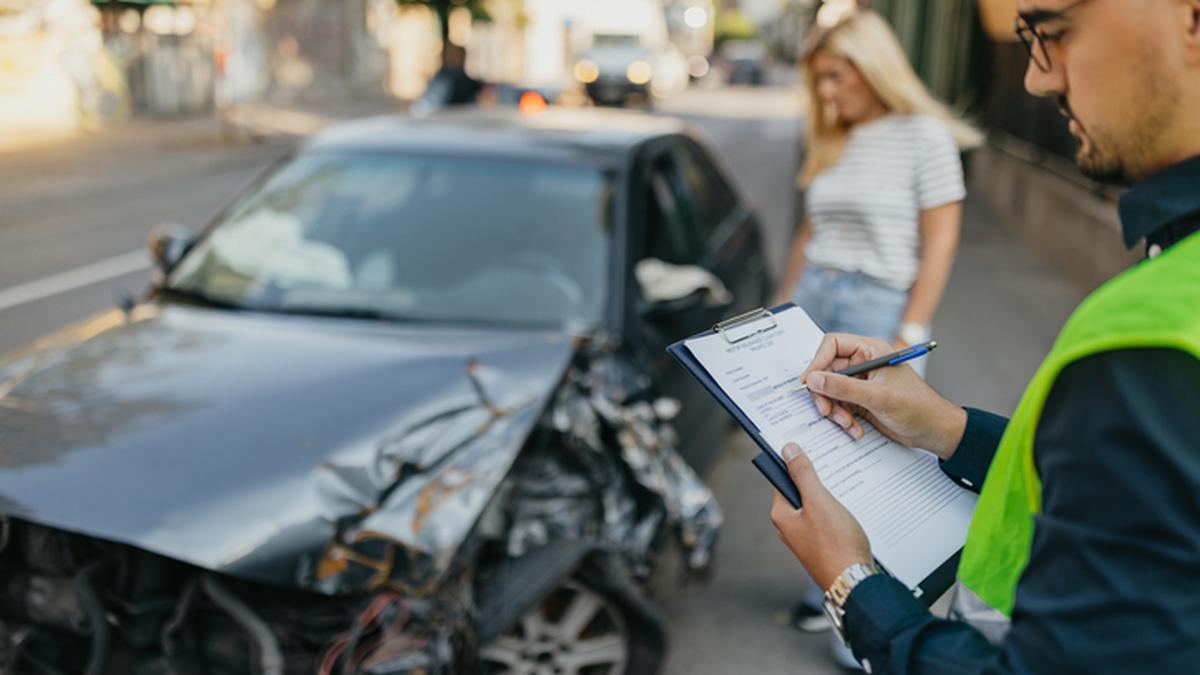
Road accidents cause major economic and emotional damage. Third party (TP) insurance is a massive public good reducing inequality and social friction.
In India, road accidents exact a staggering economic and human cost. Official data estimates the number of road accidents at 4.5 to 5 lakh each year and almost 1.5 lakh deaths annually, among the highest number of road-accident deaths worldwide. Every accident leaves behind emotional grief, financial loss and long-term hardship.
In the midst of this human and economic cost, TP motor insurance performs a lesser-known but crucial role. It ensures road mishap victims are compensated fairly regardless of the offender’s financial capacity. It prevents the burden of restitution from falling on individual shoulders and spreads it widely across society.
Yet, this system is now under strain. The premium structure has remained unchanged and no longer reflects ground reality. Different vehicle segments pose different risk profiles but are priced uniformly. The current structure is neither fair to consumers nor sustainable for insurers. What we need here is a rationalisation of TP rates.
TP motor cover, mandated under Sec. 146 of the Motor Vehicles Act, 1988, is one of those rare financial products created not for the buyer’s protection, but for the public good. Whenever a vehicle causes injury, death, or property damage, the insurer steps in to compensate the victim. This ensures that no accident victim is left without recourse if the liable driver cannot afford to pay.
At its core, the system balances three outcomes. First, it protects victims financially without long legal battles. Second, keeps drivers accountable, since every vehicle is traceable via valid policy and ownership record. And finally, makes society fairer by ensuring accident cost doesn’t financially ruin one party while leaving another unaccountable.
Why tariffed rates?
TP cover pricing has been tariffed since 1939, under the Insurance Act of 1938 and the Motor Vehicles Act of 1939 to keep cover affordable for vehicle owners while ensuring mishap victims always received compensation and to ensure insurers priced it fairly
Today, the purpose remains valid, but the conditions have changed dramatically. India now has over 350 million registered vehicles, complex traffic patterns and rising accident-related claim values. Under the current process, the IRDAI recommends actuarially-derived rates to the Ministry of Road Transport and Highways, which then notifies them after public consultation.
Same premium
Everyone pays the same premium for the same vehicle type, irrespective of driving behaviour, geography, or risk profile. This uniformity ensured fairness but now risks inefficiency. Since 2019, TP premiums have seen almost no upward revision, even as medical costs, repair bills and court-awarded compensations surged.
Inflation is eroding sustainability of current tariffs. Ultimately, insurers end up facing the brunt of rising claim burdens while victims risk slower or inadequate payouts.
We must acknowledge a public protection mechanism cannot stay robust if its economics do not keep up with the changing times.
Since inception, IRDAI has shown reform and consumer protection can move together. The 2007 de-tariffing of motor “own damage” premiums and, more recently, the deregulation of commission structures in 2023, proved that competition and oversight can coexist successfully.
The same can be achieved in third-party cover. A phased transition that begins with defined minimum and maximum price bands would preserve affordability while allowing insurers to price risk realistically. As data quality and claims experience evolve, these bands can be adjusted to reflect true market conditions.
De-tariffing will encourage accountability. With technology and telematics now capable of tracking driving behaviour, linking risk to premium can incentivize safer habits. This will lead to fewer accidents. Also, a sustainable pool ensures quicker and more equitable claim settlements.
Way forward
Internationally, de-tariffing has worked well. As industry stakeholders, TP motor cover is a collective responsibility that sustains public trust in roads, institutions and promise of safety. But the system supporting it must be financially healthy and operationally flexible. De-tariffing will be a crucial step forward in ensuring viability of TP cover so that citizens stay well protected.
(The writer is joint group CEO, PB Fintech)
Published – December 08, 2025 06:05 am IST

