

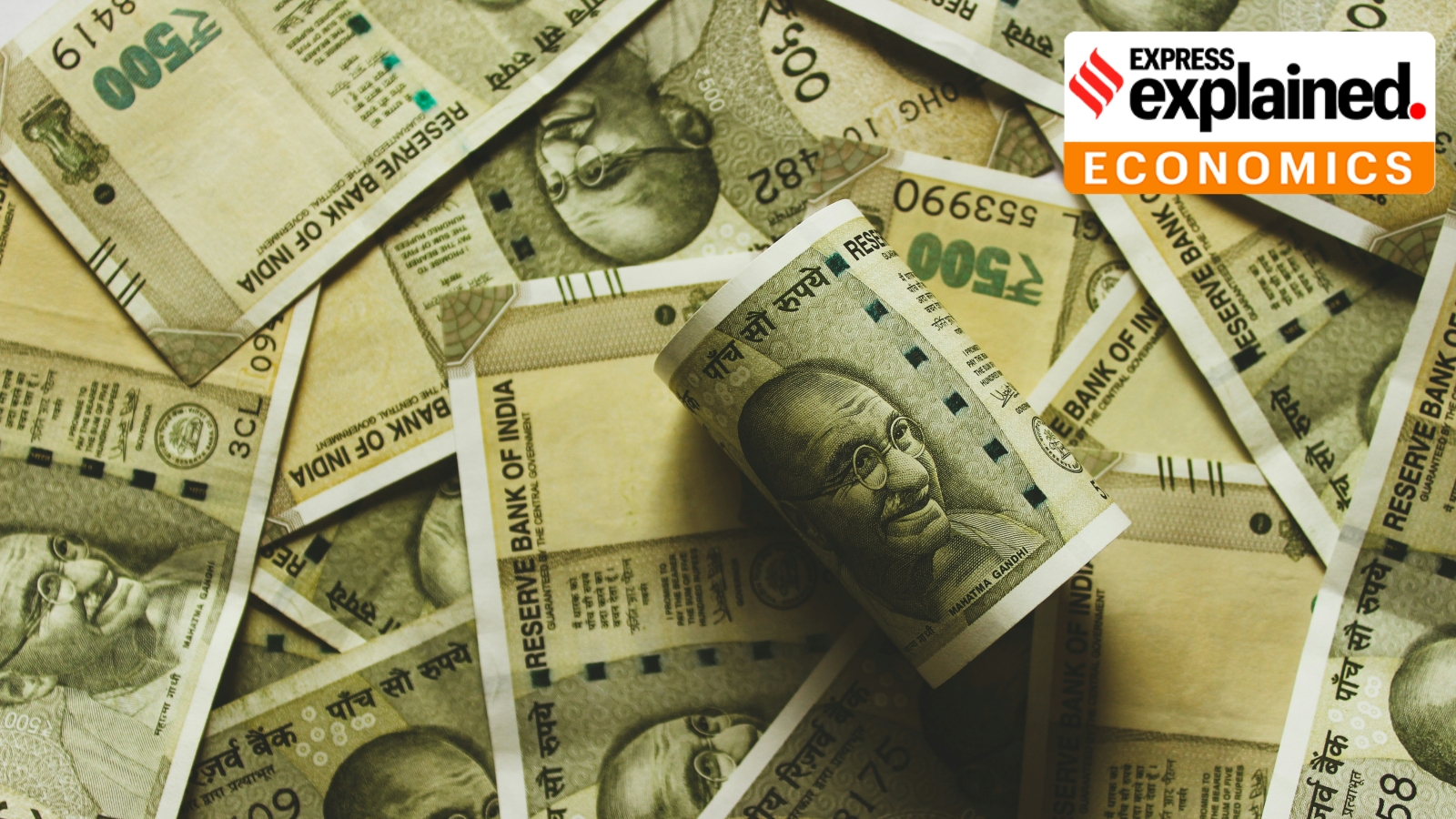
Last week, a tender floated by a subsidiary of the Reserve Bank of India (RBI) revealed the central bank’s intention to go ahead with a trial of plastic notes, some 15 years after a similar field trial was announced. But while the 2012 trial disappeared without a trace, there seems to be more momentum this time around.
The Bharatiya Reserve Bank Note Mudran Pvt Ltd’s (BRBNMPL) tender invited bids for 3.4 crore polymer sheets that are to be used to print currency notes. These aren’t just any old plastic sheets but have special security features. More interestingly, the tender said that the 3.4 crore sheets were an “immediate requirement” — once the field trials were successful, BRBNMPL would look to buy larger quantities.

But what’s the need to replace paper notes — which are made of paper made by using 100% cotton — with plastic ones? Are there any actual benefits? As it turns out, there are many.
The 2012 trials
In September 2009 — seven years after it said there was no proposal to introduce plastic notes — the RBI invited bids to procure 100 crore pieces of Rs 10-notes. These notes were to be introduced for a field trial in Kochi, Mysuru, Shimla, Jaipur and Bhubaneswar — different climatic zones that would test the resilience of the notes.
The trial, however, went nowhere.
“Though we had envisaged a trial of plastic notes in 2012/13, it remained a plan only,” a former central bank official told The Indian Express. “No decision had then been taken to proceed for procurement.”
In its annual report for 2014-15, the RBI said that while the Rs 10 plastic notes were technically evaluated, “certain technical infirmities emerged and the process could not be taken further”.
The project was then taken up by BRBNMPL and the Security Printing and Minting Corporation of India Ltd (SPMCIL). But there had been next-to-nothing on that front.Now, as last week’s tender revealed, BRBNMPL and SPMCIL will be the ones who will print the notes using the polymer sheets supplied to them.
Global adoption
Story continues below this ad
Even in 2009 or 2012, India would have been late to the plastic note party.
First issued by Australia in 1988, plastic banknotes are now used in more than 50 countries and are widely considered to be far superior to paper ones. Among developed countries, the likes of the UK, Canada, and New Zealand use polymer notes. And as Indian tourists would know, even our close neighbours such as Thailand, Vietnam, Malaysia and Singapore use plastic currency, albeit not exclusively.
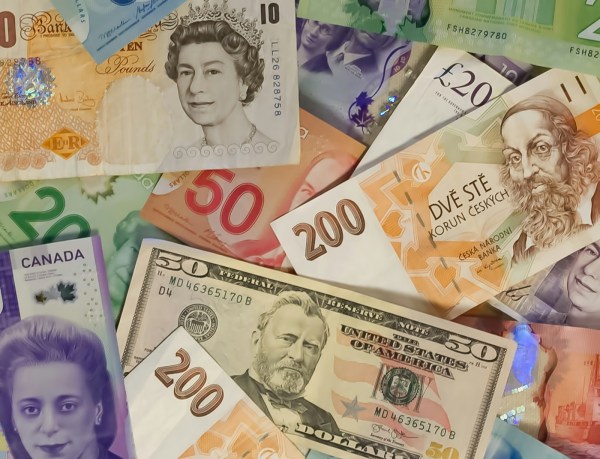 The UK and Canada are among the developed countries that use polymer notes. Unsplash
Plastic actually helps the environment
The biggest advantage plastic notes provide over paper notes is that they are far more durable, lasting anywhere between two to six times longer depending on the denomination of the note (small denomination notes are handled more frequently, which reduces their life). And this longer life is the source of nearly all the benefits.
Story continues below this ad
One, a longer life means fewer plastic notes need to be manufactured over any period of time. Two, printing fewer notes reduces costs related to making them — even though one plastic note is more expensive to make than a paper one — distributing them and destroying them. And the elimination of these costs has a favourable impact on the environment.
Back in August 2013, the RBI had said it had asked The Energy and Resources Institute (TERI) to conduct a study on the carbon footprint of cotton-based currency notes and plastic ones over their entire lifetime. This ‘Life Cycle Impact Assessment’ came to the conclusion that replacing cotton-based notes with plastic ones would have “significant environmental benefits”.
“Polymer/plastic banknotes (and the waste from production) can be granulated and recycled into useful plastic products such as compost bins, plumbing fittings and other household and industrial products. The base material of polymer is a non-renewable resource, but due to its recyclability, it has more than one life,” the RBI had said.
Money and numbers
In the last three years, the RBI supplied 8,270 crore pieces of new currency notes. Over the same period, it destroyed 6,213 crore pieces of old notes because they were far too dirty or torn to be used.
Story continues below this ad
As such, for every four new notes that the RBI sends out into the economy every year, it has to destroy three old ones. Plastic notes, on account of their longer life, will not have to be destroyed so regularly. This not only saves the RBI money but also reduces the impact on the environment.
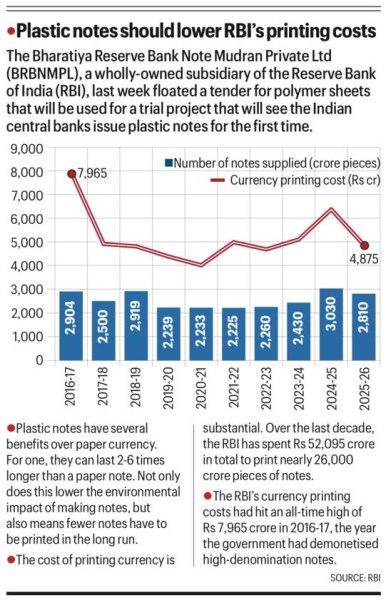 RBI’s cost of printing currency
The RBI currently spends thousands of crores every year to print currency notes. Just over the last decade, the central bank has spent Rs 52,095 crore in total to print nearly 26,000 crore pieces of notes.
While this is a big sum in itself, it is large even for the RBI, which routinely deals in thousands of crores. In fact, over the last 10 years, the cost of printing paper notes has accounted for anywhere between 15-44% of the RBI’s total expenditure, excluding provisions.
Then there is the security advantage. According to British firm De La Rue, which supplies notes to more than half of all central banks, plastic notes are more secure as most counterfeit notes are produced on paper. As such, counterfeit rates have fallen in countries where currency notes are made of polymer.
Story continues below this ad
In India, the number of counterfeit notes detected in 2025-26 rose to 2.3 lakh pieces, up from 2.17 lakh in 2024-25.
Cash is still king
But does India even require a shift to plastic notes considering the digital revolution that has occurred in the last 10 years or so, spurred by demonetisation and the Covid-19 pandemic?
As it turns out, Indians are demanding cash at rates matching those before demonetisation, with an RBI survey last year indicating “continued strong preference for usage of cash” by households and small retailers.
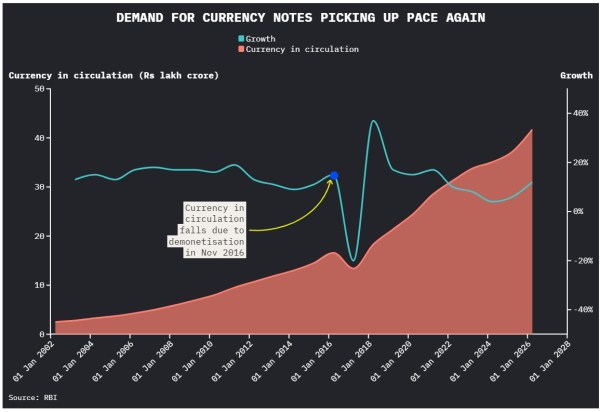 Cash demand rising
As at the end of March 2026, the total amount of currency in circulation in India was Rs 41.7 lakh crore, up 12% year-on-year. So, while digital payments are on the up and growing rapidly, demand for cash isn’t going anywhere.
Import concerns
Story continues below this ad
Despite all the positives of plastic notes, one issue remains: the possibility that India may end up having to import the sheets that are used to print banknotes.
While the tender expressly said bidders must ensure that their operations in Pakistan or China, if any, must be “suitably firewalled” from those in India, no raw materials be procured from these two countries, and that no employee who has previously worked or been posted or is citizen or person with origins in these countries be engaged for the India project, depending on a foreign entity for your legal tender is a vulnerability.
This, however, wouldn’t be a first. The RBI has gradually reduced its import of paper and ink needed to make notes, with Bank Note Paper Mill India Pvt Ltd — a joint venture between BRBNMPL and SPMCIL — starting domestic production of watermarked paper around a decade ago. In August 2018, BRBNMPL’s ink factory in Mysuru became operational.
Given these existing facilities, any shift to plastic must be gradual for two reasons. One, considerable investment has already been made. Two, more investment will be required for the plastic transition.

