
Close Menu
  • Home
  • Education
  • Health
  • National News
  • Politics
  • Relationship & Wellness
  • World News
What's Hot

US-Saudi deal, and new nuclear model for West Asia

July 25, 2026

'Arrest me if you want, but I am leaving': Sonam Wangchuk releases video alleging harassment; Safdarjung hospital issues clarification

July 25, 2026

At Jantar Mantar, the story isn’t just the demands — it’s people finally showing up

July 25, 2026
Facebook X (Twitter) Instagram
Facebook X (Twitter) Instagram YouTube
Global News Bulletin
SUBSCRIBE
  • Home
  • Education
  • Health
  • National News
  • Politics
  • Relationship & Wellness
  • World News
Global News Bulletin
Home»Business»El Nino may crest this year, spare India’s 2027 monsoon
Business

El Nino may crest this year, spare India’s 2027 monsoon

editorialBy editorialMay 24, 2026No Comments4 Mins Read
Facebook Twitter Pinterest LinkedIn Tumblr Email Telegram Copy Link
El Nino may crest this year, spare India’s 2027 monsoon
Share
Facebook Twitter LinkedIn Pinterest Email Copy Link
El Nino may crest this year, spare India’s 2027 monsoon
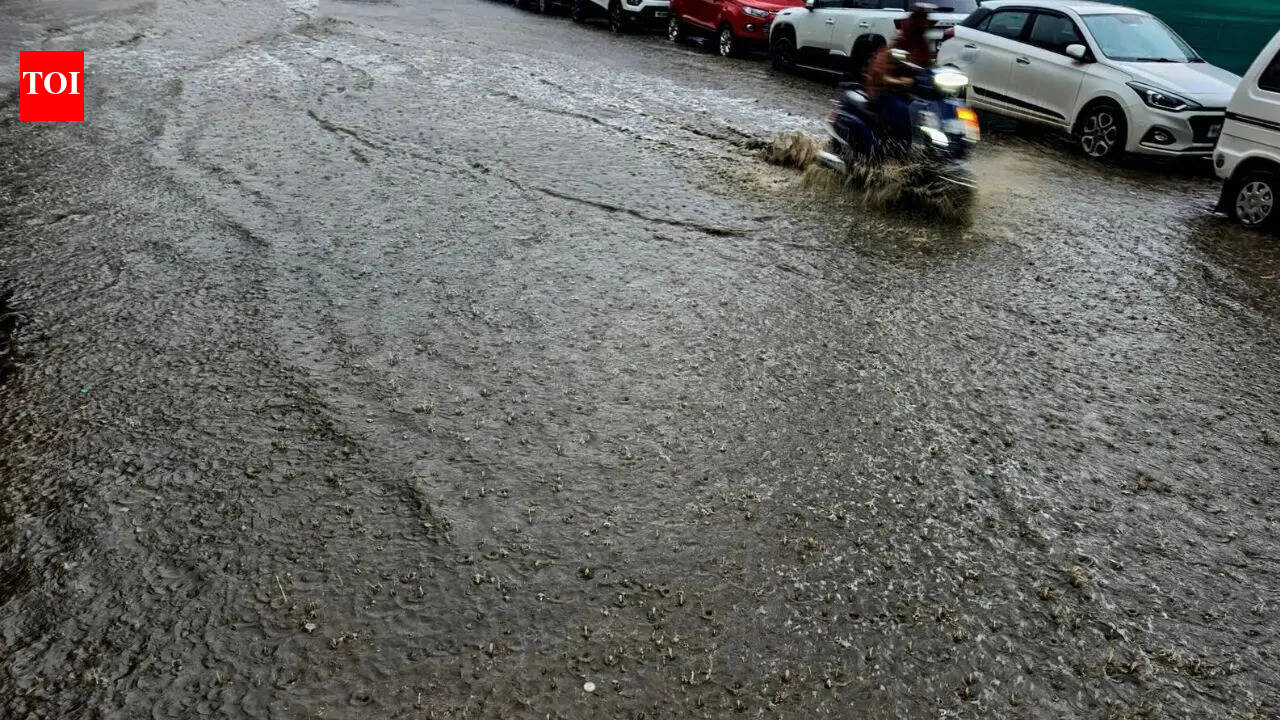
Meteorologists suggest strong El Niño events typically weaken significantly before India’s monsoon season.

PUNE: Major El Niño events often weaken substantially before the subsequent monsoon, meteorologists told TOI on Saturday, easing concerns about the system’s potential impact on India’s 2027 rainy season. This comes amid forecasts that a strong El Niño could develop by late 2026 or winter and persist into early 2027.An analysis of some of the strongest El Niño events since 1951, including the prominent episodes of 1982-83, 1997-98 and 2015-16, reveals a consistent pattern. These events tend to strengthen gradually during the latter half of the first year, reach peak intensity around the year-end or during winter, and then weaken before India’s June-Sept monsoon season arrives.For instance, during the record-setting 1997-98 El Niño, sea surface temperature anomalies in the central and eastern Pacific rose steadily from 1.6°C during June-July-Aug to 1.9°C in July-Aug-Sept. The warming intensified further to 2.3°C in Sept-Oct-Nov and peaked at around 2.4°C in Oct-Nov-Dec. By mid-1998, however, the system had weakened significantly and transitioned into La Niña conditions.A similar trajectory was seen during the 2015-16 El Niño event. Ocean temperatures increased from 1.6°C in June-July-Aug to 1.9°C in July-Aug-Sept, eventually crossing the 2°C-mark later in the year and peaking during winter. By the time the following monsoon season arrived in 2016, the event had already weakened.According to an official from the India Meteorological Department (IMD), this pattern is characteristic of strong El Niño events. “Strong El Niño reaches peak strength towards the end of the year or early the next year and then weakens. Before the following monsoon, it often becomes neutral or shifts towards La Niña, which is what we expect in 2027,” the official said.The official said historical patterns suggested strong El Niño episodes often weakened and transitioned towards neutral or La Niña conditions. He said subsurface cooling signals over the western Pacific were already emerging and might point towards such a shift next year. He, however, cautioned that projections extending too far ahead should be interpreted carefully, as forecast skill tend to decline at longer lead times.GP Sharma, president of meteorology and climate change at Skymet, emphasised that stronger El Niño events did not necessarily produce stronger monsoon impacts over India. “The degree of El Niño does not matter much. Weaker El Niño events have coincided with drought years, while stronger ones have not always produced severe impacts,” he said.Sharma said among six very strong El Niño events recorded since 1950, the outcomes varied widely, including one severe drought, two moderate droughts, two normal monsoon seasons and one below-normal year. This variability highlighted that other climatic factors also played an important role in determining India’s monsoon performance, he added.Former Indian Institute of Tropical Meteorology (IITM) director R Krishnan echoed this view, citing the 1997 event as a key example. ”In 1997, concerns had emerged because a very strong El Niño was developing, but India eventually saw a normal monsoon. By July the following year, it had already transitioned towards La Niña,” he said.Overall, while a strong El Niño may persist into early 2027, experts said historical patterns did not support the assumption that peak conditions would continue into the monsoon season. Instead, the likelihood of weakening, or even a transition to La Niña, suggested that the eventual impact on India’s 2027 monsoon remained uncertain and could not be judged solely on the expected strength of the El Niño event.El Niño is a periodic warming of sea-surface temperatures across central and eastern Pacific Ocean that can disrupt global weather patterns. For India, it often spells weaker monsoon currents, patchy rain, crop stress, and reservoir strain. Its opposite phase, La Niña, cools Pacific waters and generally boosts monsoon circulation, often bringing stronger seasonal downpour across subcontinent.

Follow on Google News Follow on Flipboard
Share. Facebook Twitter Pinterest LinkedIn Tumblr Email
Previous ArticleChhattisgarh High Court denies pre-arrest bail to ex-IAS Anil Tuteja in NAN ‘scam’ case: ‘Graft nation’s formidable enemy’
Next Article Cuba shows what American sanctions achieve: Not regime change, just human suffering
editorial
  • Website

Related Posts

'Arrest me if you want, but I am leaving': Sonam Wangchuk releases video alleging harassment; Safdarjung hospital issues clarification

July 25, 2026

'Cops everywhere': Wife Gitanjali shares photo from hospital, claims Wangchuk under constant vigil

July 25, 2026

Delhi shocker: Cab driver found stabbed to death inside car; cops suspect passengers

July 25, 2026

12.5% to 10%: Why Trump admin imposed reduced tariff rate on India & what it means

July 25, 2026

Himachal Pradesh: At least 13 feared dead after taxi crushed by boulders in Lahaul-Spiti

July 25, 2026

'She didn't disclose her whereabouts': JFI chief confirms Tulika Maan's CWG withdrawal, NADA hearing next

July 25, 2026
Add A Comment
Leave A Reply Cancel Reply

Economy News

US-Saudi deal, and new nuclear model for West Asia

By editorialJuly 25, 2026

4 min readJul 23, 2026 05:33 PM IST First published on: Jul 23, 2026 at…

'Arrest me if you want, but I am leaving': Sonam Wangchuk releases video alleging harassment; Safdarjung hospital issues clarification

July 25, 2026

At Jantar Mantar, the story isn’t just the demands — it’s people finally showing up

July 25, 2026
Top Trending

US-Saudi deal, and new nuclear model for West Asia

By editorialJuly 25, 2026

4 min readJul 23, 2026 05:33 PM IST First published on: Jul…

'Arrest me if you want, but I am leaving': Sonam Wangchuk releases video alleging harassment; Safdarjung hospital issues clarification

By editorialJuly 25, 2026

Wangchuk was shifted to Safdarjung Hospital by Delhi Police on July 18…

At Jantar Mantar, the story isn’t just the demands — it’s people finally showing up

By editorialJuly 25, 2026

Last night, just a few minutes shy of 8.30, the police resorted…

Subscribe to News

Get the latest sports news from NewsSite about world, sports and politics.

Facebook X (Twitter) Instagram YouTube

News

  • Education
  • Health
  • National News
  • Relationship & Wellness
  • World News
  • Politics

Company

  • Information
  • Advertising
  • Classified Ads
  • Contact Info
  • Do Not Sell Data
  • GDPR Policy
  • Media Kits

Services

  • Subscriptions
  • Customer Support
  • Bulk Packages
  • Newsletters
  • Sponsored News
  • Work With Us

Subscribe to Updates

Get the latest creative news from FooBar about art, design and business.

© Copyright Global News Bulletin.
  • Privacy Policy
  • Terms
  • Accessibility
  • Website Developed by Plenary Media Solution

Type above and press Enter to search. Press Esc to cancel.