

4 min readPuneUpdated: Jul 4, 2026 10:10 PM IST
Maharashtra Chief Minister Devendra Fadnavis on Saturday sought to downplay the appearance of potholes on the Rs 7,181-crore Pune-Mumbai Expressway Missing Link project within two months of its inauguration. The Opposition, however, seized on the Chief Minister’s remarks, saying they reflected the government’s “development model” and demanding action against those responsible for the alleged shoddy work.
“Some people are in the habit of amplifying an incident… On the Connecting Link, only two potholes have been noticed. It is wrong to say that the entire road has developed potholes,” the Chief Minister remarked.

“During the first rain, the durability of the work is tested, and the possible problems that could crop up are assessed… Anyway, the Maharashtra State Road Development Corporation (MSRDC) will take appropriate steps in this regard,” he added.
Describing them as “engineering” issues, Fadnavis observed, “Be it road work or flyover work, it takes some time for them to settle down after completion… All necessary steps will be taken to set them right.”
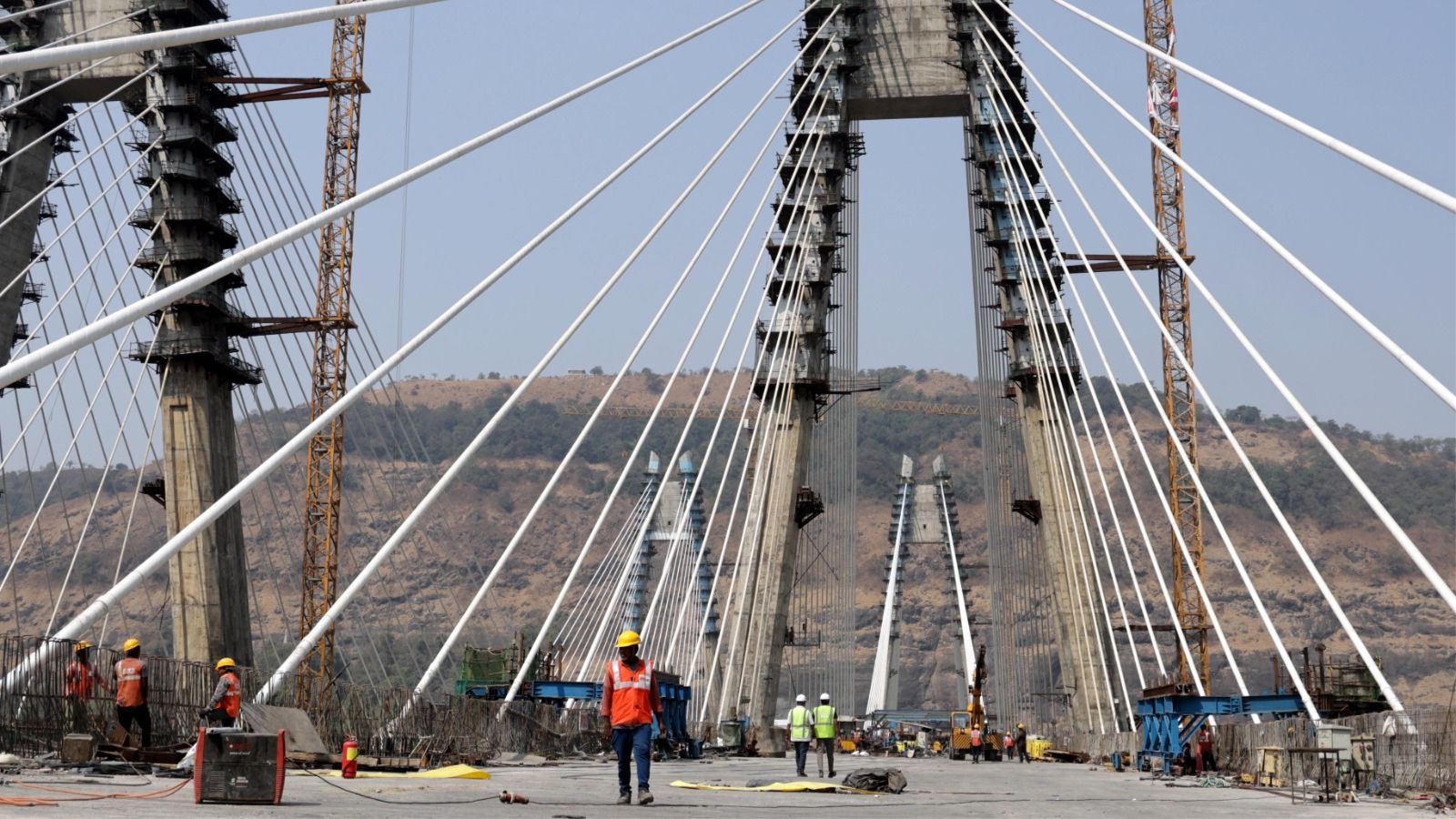
Fadnavis urged people not to lose sight of the fact that the Missing Link is an engineering marvel. “We have built one of the tallest bridges in the country. We have a tunnel going under a dam… These are engineering achievements that we all need to appreciate,” he said.
The Pune–Mumbai Missing Link project was inaugurated on May 1, 2026. The 13.3-km stretch bypasses the congested Khandala Ghat section of the Expressway and reduces the journey by about 6 km, cutting travel time between Pune and Mumbai by around 30 minutes.
The Opposition, however, targeted the Chief Minister over his remarks.
Story continues below this ad
“The potholes reflect the so-called ‘development model’ of the Fadnavis government. When the project was inaugurated, the government went to town, tom-tomming the manner in which it had been constructed. But now the shoddy work of the Fadnavis government stands exposed despite spending crores of rupees. Will the government initiate action against those responsible for the state of the road, or will they be allowed to go scot-free?” asked Maharashtra Congress chief Harshwardhan Sapkal.
The Aam Aadmi Party also criticised the Chief Minister’s defence, alleging that he was trying to shield the contractor.
“The Chief Minister’s response puts the public in a pit while shielding the contractor. Instead of fixing responsibility, he appears to be protecting the contractor,” said AAP spokesperson Mukund Kirdat.
According to Kirdat, the work ought to have been carried out in accordance with the Indian Roads Congress (IRC) 107:2013 standards and the Ministry of Road Transport and Highways (MoRTH) guidelines.
Story continues below this ad
“The quality of this work has nothing to do with the first monsoon or the new layer of asphalt. The use of mastic asphalt should have further improved the quality. It appears that the MSRDC has not provided the correct information to the Chief Minister. There is also a Defect Liability Period obligation on the contractor,” he stated.
Kirdat argued that the Chief Minister must realise that poor-quality roadwork can endanger the lives of commuters.
“What is needed is a zero-tolerance policy. Who is responsible? The Chief Minister will have to answer,” he said.
Congress MP Varsha Gaikwad, who is also the party’s Mumbai unit chief, questioned the Chief Minister’s defence.
Story continues below this ad
“Potholes have appeared within just two months of the inauguration of the Missing Link project, which was built at the cost of crores of rupees. Yet, instead of taking responsibility, the Chief Minister claims that the road undergoes testing after the first monsoon rain.
“Does this mean commuters’ lives and journeys have now become a testing laboratory? And if the highway is under testing during the first monsoon, has toll collection been stopped during this period? When potholes appear, it is not criticism; it is reality. If potholes form within two months on a highway built with taxpayers’ money, asking questions is the right of every citizen,” she said.
Gaikwad alleged that instead of acknowledging the failure, the government was busy blaming its critics.
“Anyway… the roads may not be strong, but the government’s excuses certainly are,” she noted.

