

6 min readNew DelhiApr 22, 2026 04:42 PM IST
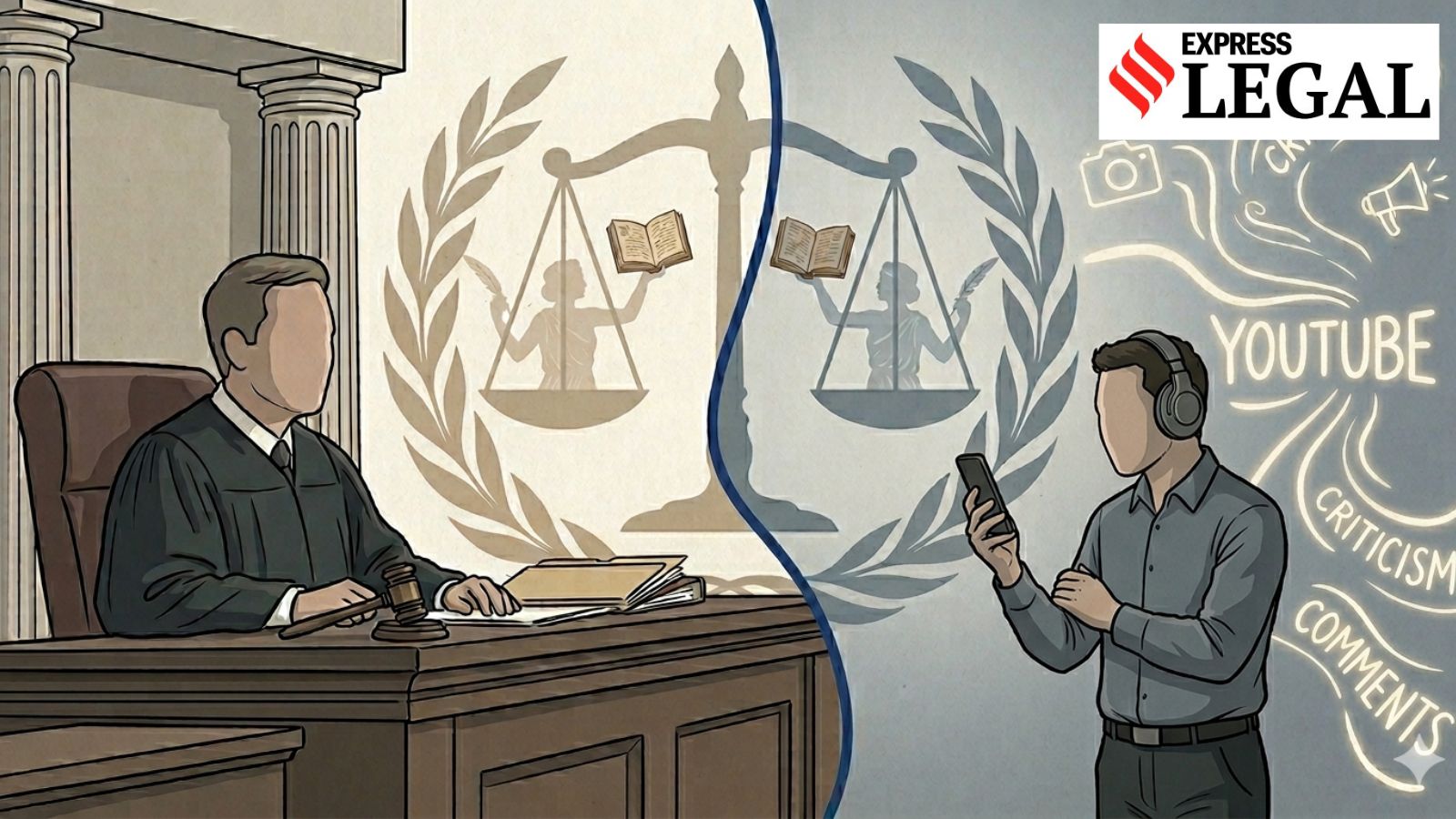
Delhi High Court news: Drawing a clear line between legitimate criticism of the judiciary and actions that “create sensationalism and distrust,” the Delhi High Court has held that YouTuber Gulshan Pahuja guilty of contempt of court through his videos targeting specific judicial officers with derogatory banners and commentary.
A bench of Justices Navin Chawla and Ravinder Dudeja was hearing suo motu criminal contempt proceedings arising from references made by two judicial officers over videos uploaded on a YouTube channel titled “Fight 4 Judicial Reforms” run by Pahuja.

“He (Gulshan Pahuja) has personally attacked three Judicial Officers and even imputed that in case a litigant‟s case is listed before them, such litigant should not expect justice…The intent of respondent no. 2 (Pahuja) is, therefore, writ large of only scandalising and lowering the image of these Judicial Officers in the general public, thereby lowering the authority of the Court. It is not to generate a healthy debate but to scandalise the Court,” the court said on April 21, adding that while reform advocacy is permissible, targeted vilification is not.
The court has asked Pahuja to be present personally on May 12.
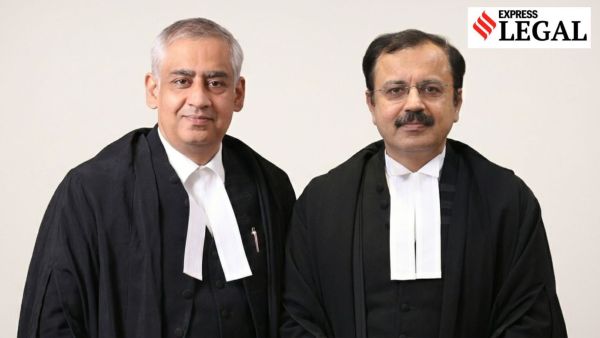 If one has to attack a judicial officer on his integrity or competence, it must be done with cogent evidence, said Justices Navin Chawla and Ravinder Dudeja of the Delhi High Court. (Image enhanced using AI)
‘Classic case of contempt’
- Every person is entitled to hold an opinion, and to express it, on the manner in which the justice dispensation system can be improved.
- However, in our view, naming of the two specific judicial officers and the manner of doing so in the banner, is not intended to promote the said campaign of having audio-video recording of the court proceedings, but to create sensationalism and distrust against the two named judicial officers, thereby lowering their authority.
- This is a classic case of criminal contempt being committed by him (Pahuja).
- If one has to attack a Judicial Officer on his integrity or competence, it must be done with cogent evidence; it cannot be made lightly.
- We must remember that such an attack, if made without any basis, undermines the authority of the Judicial Officer and interferes with dispensation of justice by him/her without fear or favour.
- Any such criticism must therefore be well founded, specially because the Judicial Officer, unlike the complainant, has no means to justify his actions in public.
- When a Judicial Officer dispenses justice, he/she is bound to make mistakes; no judicial officer is or can be expected to be 100 per cent correct all the time; it is for this reason that we have a hierarchy of courts, where a litigant can approach the higher court if he/she is dissatisfied by the verdict.
- In such remedy, maybe the order is set aside, however, this also does not mean that the judicial officer passing the original order did not act with integrity or was incompetent. In the present case, even this stage has not been reached.
- The respondent no. 2 (Pahuja) pronounced his verdict against the concerned Judicial Officers without any basis and thereby undermined their authority.
Background
The contempt proceedings arose from two references dated January 15, 2025 and March 10, 2025, sent by judicial officers from Delhi’s Karkardooma and Rohini courts.
The videos were hosted on a channel run by Gulshan Pahuja, who projected them as part of a campaign for judicial reforms, including audio-video recording of court proceedings.
The complaints concerned multiple YouTube videos uploaded between October 29, 2024 and March 7, 2025, featuring interviews of advocates along with provocative thumbnails and banners naming judges and making allegations about court functioning.
Story continues below this ad
Proceedings, timeline
- Oct 29, 2024: First video uploaded.
- Jan 5, 2025: Second video with provocative banner uploaded.
- Mar 3 and 7, 2025: Additional videos posted.
- Jan to Mar 2025: Judicial officers file references.
- Dec 2025 to Apr 2026: Hearings conducted in the Delhi High Court , including extensive arguments by the YouTuber appearing in person.
- April 21, 2026: Judgment pronounced bt Delhi High Court.
The Delhi High Court also ensured procedural fairness by allowing the respondent to argue in Hindi, providing translated orders and granting extended hearing time.
Apologies accepted, proceedings dropped against advocates
The Delhi High Court took note that two advocates featured in the videos, Shiv Narayan Sharma and Deepak Singh had made derogatory remarks against judges during interviews, but later tendered unconditional and unqualified apologies.
Accepting their remorse as genuine, the Delhi High Court discharged both advocates from contempt proceedings, noting their undertaking not to repeat such conduct.
The Delhi High Court also recorded that the advocates claimed they had no role in creating or approving the controversial thumbnails or banners, which were added later without their consent.
Story continues below this ad
Legal principles reiterated
Relying on settled law, the Delhi High Courtreiterated that criminal contempt includes acts that “scandalise or tend to scandalise” courts and lower public confidence in the administration of justice.
It stressed that contempt law is meant not to protect judges personally, but to safeguard public trust in the justice system.
At the same time, the Delhi High Court acknowledged that courts must exercise contempt powers with restraint, balancing them against the constitutional guarantee of free speech.

© IE Online Media Services Pvt Ltd

