

3 min readNew DelhiUpdated: May 23, 2026 12:16 PM IST
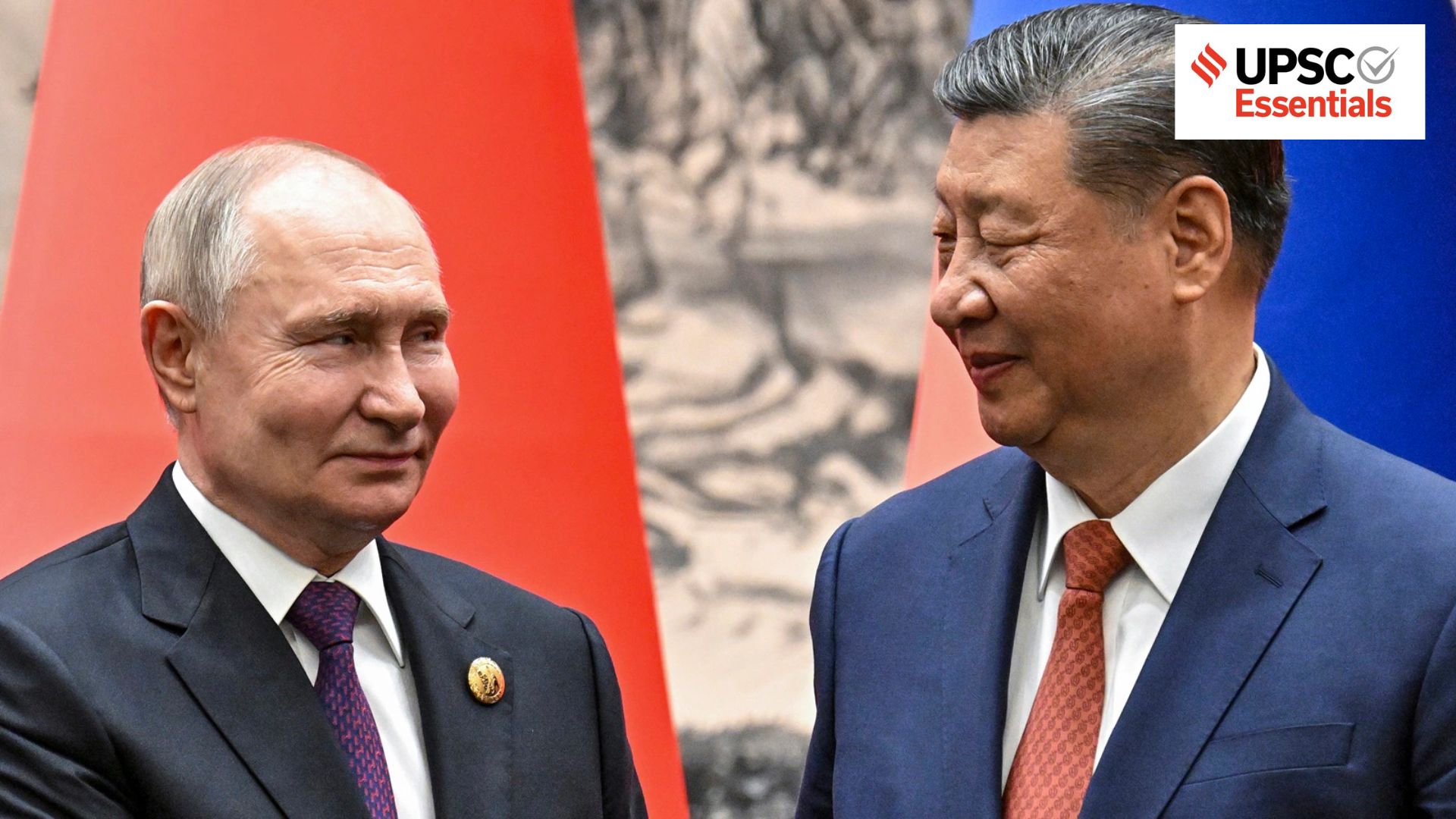
Calling for an immediate end to hostilities in West Asia, Chinese President Xi Jinping alsowarned of “unilateral and hegemonic countercurrents running rampant” in the world, as he held talks with his Russian counterpart, Vladimir Putin.
The talks, held during Putin’s two-day visit to Beijing (19-20 May), came less than a week after US President Donald Trump concluded his three-day visit to China. These visits are seen as underlining China’s emergence not just as a central hub of global diplomacy but also for regional and global stability.

The US has long been viewed as the guarantor of global order, but the speculation regarding China’s emergence as an alternative has triggered a debate around the idea of hegemonic stability.
What is hegemony
The word hegemony comes from classical Greek history, which means supreme command or supremacy. In edited volume Two Hegemonies: Britain 1846-1914 and the United States 1941-2001 (2002), S Ryan Johansson notes that the word hegemony was originally used to describe the relationship of Athens to the other Greek city-states that joined it in an alliance against the Persian Empire.
Notably, Athens “organised and directed their combined efforts without securing permanent political power over the other”. This conception of hegemony draws on the idea of leadership.
In the modern political discourse of international relations, however, the word is generally used to refer to a dominant state, also called a hegemon, that can provide stability to the international system by creating and enforcing the rules of global order.
While hegemony as dominance involves open coercion, hegemony as leadership comes about “when a great power creates an international order based on ideas and institution that embody its preferences and serve its interests while also helping other member states meet their goals,” says Atul Mishra, an Associate Professor of International Relations.
Story continues below this ad
Hegemonic stability
Emanating from the word hegemony, the idea of hegemonic stability is used to explain the anarchical system of international relations. Since the system is characterised by the absence of a world government, a hegemon is required to ensure stability and order.
Hegemonic stability theory explains why certain historical periods, such as those under British and American hegemonies – referred to as Pax Britannica and Pax Americana – were relatively peaceful. Applied to the post-1945 world order by a number of scholars, the theory draws attention to the dilemma faced by hegemons – first the UK before 1914 and now the US.
Current geopolitical upheavals, including wars in Gaza, Iran, and Ukraine, as well as disruptions in trade flows and supply chains that increase uncertainty in global markets and national economies, have sparked a debate around the US-led post war order. Although China is being seen as an alternative, it remains to be seen if Beijing would exercise “hegemony-as-leadership” or “hegemony-as-dominance”.
We would love to hear what you think about this new initiative. Send your comments atashiya.parveen@indianexpress.com.
Story continues below this ad
Click Hereto read the UPSC Essentials magazine forMay 2026.Subscribeto ourUPSC newsletterand stay updated with the news cues from the past week.


© IE Online Media Services Pvt Ltd

