

4 min readNew DelhiUpdated: May 22, 2026 06:20 PM IST
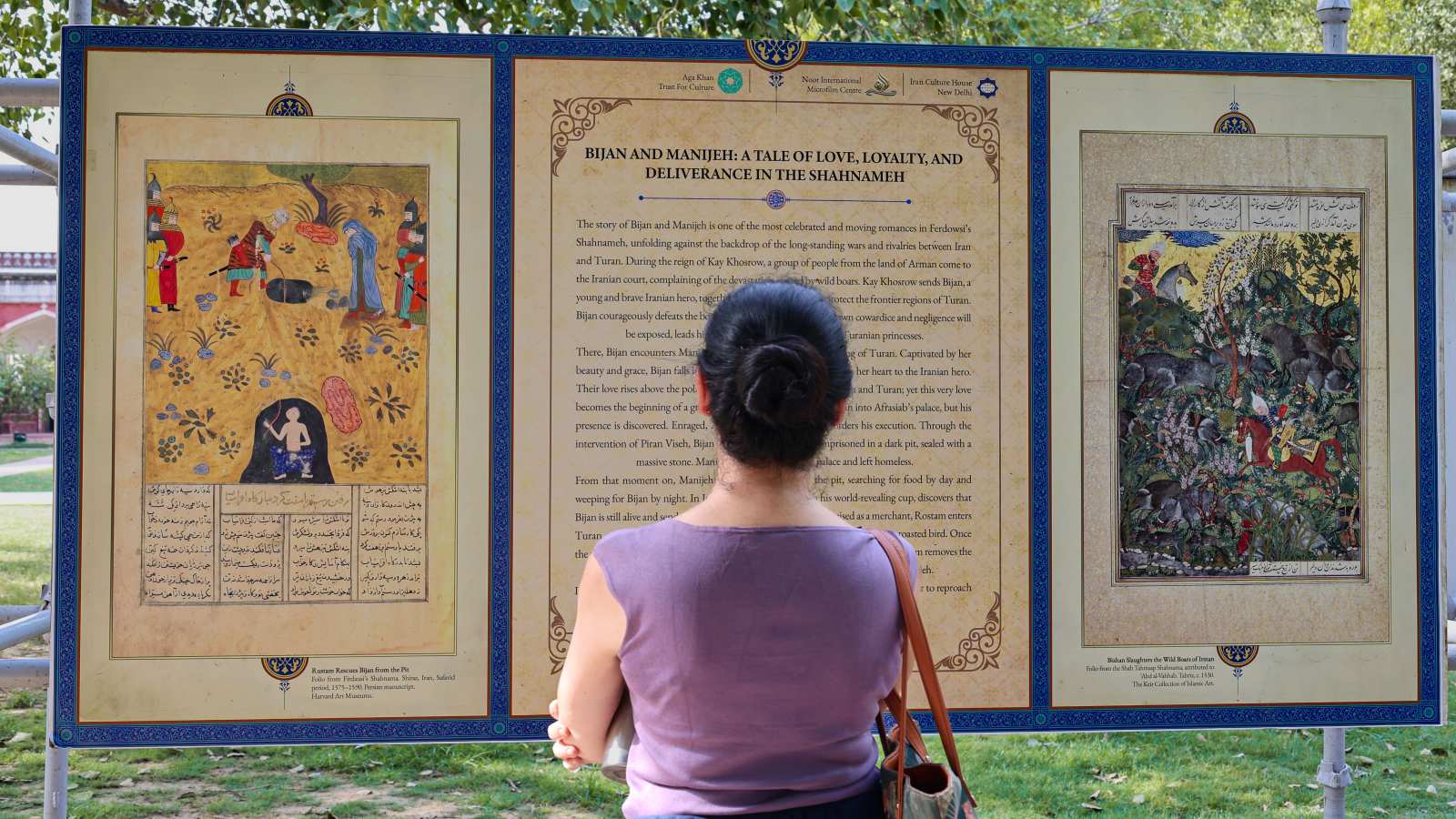
The exhibition titled “Shared Epic Worlds: The Shahnameh, the Mahabharata, and the Indo-Persian Imagination“ at Sunder Nursery brings together stories, paintings and manuscripts which explore deep cultural ties between India and Iran. On till June 4 near the amphitheatre area at the Sunder Nursery, the show has been organised withsupport from Aga Khan Trust for Culture, the Noor International Microfilm Centre and the Iran Culture House. The exhibition looks at how Persian and Indian cultures have influenced each other for centuries.
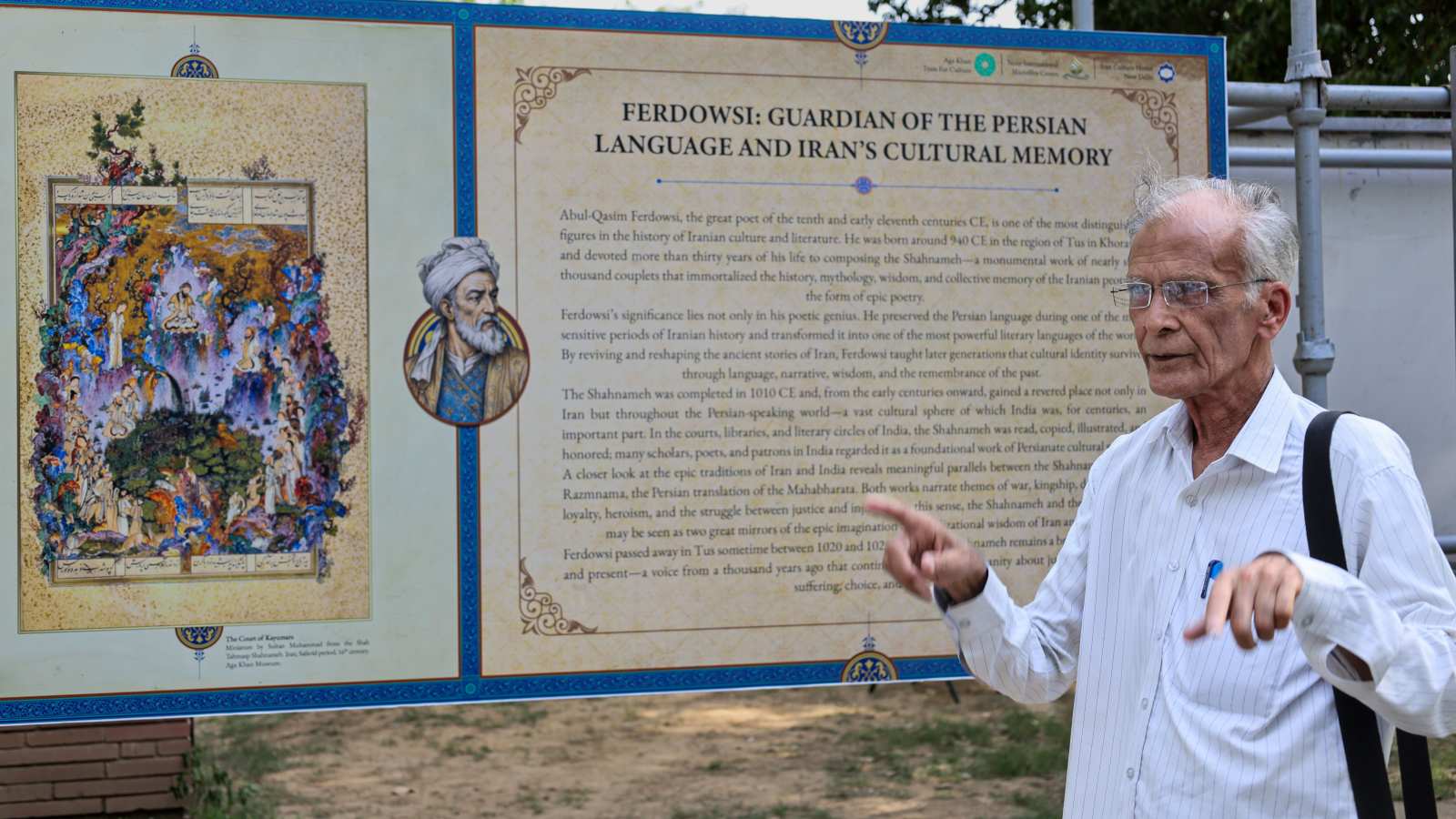
At the centre of the exhibition is the Persian epic Shahnameh, written by Persian poet Abul-Qasim Ferdowsi of the tenth and early eleventh centuries CE. The text, made up of nearly 60,000 couplets, preserves the mythology, history and collective memory of the Iranians. The Shahnameh and Razmnama, the Persian translation of the Mahabharat, are both works with themes of war, kingship, destiny, ethics, loyalty and struggle between justice and injustice, among others.

 Shahnameh of Ferdowsi Event at Sunder Nursery, New Delhi (04-06 PM)
Curated by Shahab Khajeh Piri, Deputy Director of the Noor International Microfilm Centre, the exhibition features 18 panels that compare stories, heroes and symbols from both epics. Speaking at the opening event of the exhibition Shahnameh Ferdowsi at the Sunder Nursery auditorium, Piri talked about how through the exhibition they wanted to highlight how ideas travelled across regions through trade, politics and royal patronage. Piri said how the Shahnameh “was never limited to Iran” and pointed to manuscripts preserved in Mughal royal libraries as proof of its importance even in India.
One of the panels shows a comparison between Rustam, the protagonist from Shahnameh and Arjuna, one of the prominent protagonists from Mahabharat. Both are mighty warriors who faced impossible choices. Rustam tragically kills his own son Sohrab without knowing who he is. Arjuna, on the other hand, had to fight a battle against his own extended family – the emotional weight of these stories is the same across centuries and cultures. An illustration titled Rustam Kills a Dragon: The Third Feat from Walters Museum is also part of the panel. Another panel shows a parallel between two mythical birds — the Simurgh of Iranian tradition and Garuda of Indian tradition, both of whom act as divine helpers in moments of crisis.
Fariduddin Farid Asr, Cultural Counsellor of the Islamic Republic Iran, took the occasion to speak in Farsi to share his views. “The Shahnameh is a book every Persian spends their lifetime with,” he said. He explained that the stories remain timeless because they deal with universal human emotions and its inclusivity. He added, “The literature before the Shahnameh were more focussed on Kings and champions, the stories were centralised around someone successful. The idea that even the most common person can reach higher positions was introduced by the book.”
Fathali, Ambassador of the Islamic Republic of Iran, noted how the Shahnameh is deeply connected to morality and identity. “Ferdowsi wrote the Shahnameh when Persian needed protection and revival. Society can survive only on the grounds of morality,” he said.
Story continues below this ad
Sharif Husain Qasemi, Former Dean of the Faculty of Arts, University of Delhi, called it “the national book of Iran.” According to him, the epic remains deeply present in daily life. Qasemi also spoke about the popularity of Persian literature in India and the many illustrated versions of the epic that have been published over the years.
The exhibition also brings to light how Persian was becoming an important language in royal courts across India. Under Mughal emperor Akbar, scholars translated Sanskrit texts such as the Mahabharat into Persian. One of the panels shows an artwork by artist Dhanu. From the Free library of Philadelphia, it likely depicts the opening illustrations of the Razmnama (the persian translated version of Mahabharat), with Muslim and Hindu scholars translating the Mahabharat into Persian. These translations were carried out in the Maktab Khana, or more popularly known as the House of Translation, where Hindu, Muslim and Jain scholars worked together.
© IE Online Media Services Pvt Ltd

