

Close Menu
  • Home
  • Education
  • Health
  • National News
  • Politics
  • Relationship & Wellness
  • World News
What's Hot

A Newport mansion is being restored with a staircase technique dating to the 1500s; instead of modern exposed fasteners, craftsmen lock the wooden steps together with mortises and wedges

September 11, 2026

A lifelong Taylor Swift fan helped describe 12 new insect species; she named a new genus and four species after the singer and her albums

September 11, 2026

How BJP, Congress turned 80s AI trend turned into an all-out meme war

September 10, 2026
Facebook X (Twitter) Instagram
Facebook X (Twitter) Instagram YouTube
Global News Bulletin
SUBSCRIBE
  • Home
  • Education
  • Health
  • National News
  • Politics
  • Relationship & Wellness
  • World News
Global News Bulletin
Home»Business»A lifelong Taylor Swift fan helped describe 12 new insect species; she named a new genus and four species after the singer and her albums
Business

A lifelong Taylor Swift fan helped describe 12 new insect species; she named a new genus and four species after the singer and her albums

editorialBy editorialSeptember 11, 2026No Comments4 Mins Read
Facebook Twitter Pinterest LinkedIn Tumblr Email Telegram Copy Link
A lifelong Taylor Swift fan helped describe 12 new insect species; she named a new genus and four species after the singer and her albums
Share
Facebook Twitter LinkedIn Pinterest Email Copy Link
A lifelong Taylor Swift fan helped describe 12 new insect species; she named a new genus and four species after the singer and her albums
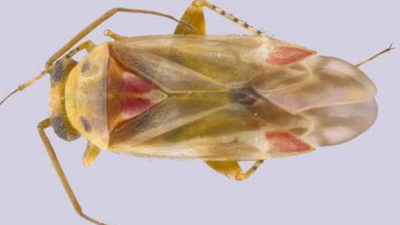
Swiftiephylus taylorae (Image Credit: Sarah Schroeder/UCR)

Taylor Swift has inspired songs, fashion and fan culture around the world, but her latest namesake comes from an unexpected corner of science: a newly described genus of Australian plant-feeding insects. According to the University of California, Riverside (UC Riverside), entomology doctoral student Sarah Schroeder, a lifelong Swift fan, helped describe 12 previously unknown insect species and named one new genus and four species in tribute to the singer and her music. The genus, Swiftiephylus, contains four species whose scientific names draw on Swift’s name and several of her albums. The discovery also highlights how taxonomy can bring attention to insect diversity and conservation.

A new genus inspired by a lifelong Swiftie

The new genus is called Swiftiephylus, combining “Swiftie,” the common term for Taylor Swift’s fans, with “Phylus,” a name frequently used for this group of insects. It belongs to the family Miridae, the largest family of true bugs, which contains more than 11,000 described species worldwide. Schroeder, a doctoral student in entomology at UC Riverside, chose the name as a personal tribute to an artist whose music has accompanied her from childhood through graduate school. She also hoped the connection would draw attention to insects that have remained unknown to science.The genus contains four newly described species with names connected to Swift and her music: Swiftiephylus taylorae, Swiftiephylus amator, Swiftiephylus intrepidus and Swiftiephylus poetorum. Their names are Latinised references to Taylor, “lover,” “fearless,” and “poets,” respectively.

Why Taylor Swift became part of their scientific names

The connection is not based only on Schroeder’s fandom. The insects’ appearance also helped inspire the tribute. The newly described bugs are pale yellow or cream-coloured, with red accents. Schroeder noted that this reminded her of Swift’s recognisable blonde hair and red lips. Their colouring may also have an ecological purpose. The insects are closely associated with Australian she-oaks, whose flowers can contain thin structures ranging from red to orange. Their pale and reddish colouring may therefore help them blend into their surroundings. The insects are associated with she-oaks across environments that include tropical forests, coastal dunes and areas exposed to extreme heat. Many plant bugs spend much of their lives on particular host plants, from hatching through adulthood and egg laying. Despite feeding on the trees, the newly described insects are not known to harm either humans or animals, according to UC Riverside.

Insects that waited decades to be described

Although the insects are new to science, scientists did not necessarily discover them recently. Specimens belonging to these insects were collected between 1995 and 2004 as part of a major biodiversity effort involving researchers from the American Museum of Natural History and Australian collaborators. That project produced more than 50,000 specimens, many of which required years of taxonomic work before they could be formally studied and described.Schroeder and her adviser, UC Riverside entomology professor Christiane Weirauch, examined 593 specimens borrowed from the American Museum of Natural History and the Australian Museum. Their work showed that the insects represented distinct evolutionary groups despite sharing host plants and similar colouring. This long process illustrates why discovering a species and formally describing it are not always the same event. Specimens can remain in museum collections for years while researchers study their physical characteristics, evolutionary relationships and genetic information before determining that they represent species previously unknown to science.

Why naming new insects matters

The study is about more than an unusual celebrity tribute. It also highlights the scale of insect diversity that remains undocumented. UC Riverside notes that there may be as many as 30 million insect species that remain undocumented. For Schroeder, formally naming and describing species is an important part of conservation because scientists cannot effectively study or protect organisms that have not yet been recognised as distinct species. Her research combines traditional taxonomy with genomic data to investigate the evolution of this group of plant bugs. By reconstructing their evolutionary relationships, she aims to understand how the insects spread, developed specialised relationships with plants and diversified. The decision to connect that scientific work with Taylor Swift’s name also reflects a broader idea: popular culture can sometimes help bring unfamiliar scientific subjects into the public eye. In this case, a lifelong fan used a personal connection to a global music star to draw attention to small insects that had spent decades largely unnoticed in museum collections.The result is an unusual intersection of music and taxonomy: 12 new insect species formally entering the scientific record, a new genus called Swiftiephylus, and four species carrying names inspired by Taylor Swift and her music.

Follow on Google News Follow on Flipboard
Share. Facebook Twitter Pinterest LinkedIn Tumblr Email
Previous ArticleHow BJP, Congress turned 80s AI trend turned into an all-out meme war
Next Article A Newport mansion is being restored with a staircase technique dating to the 1500s; instead of modern exposed fasteners, craftsmen lock the wooden steps together with mortises and wedges
editorial
  • Website

Related Posts

A Newport mansion is being restored with a staircase technique dating to the 1500s; instead of modern exposed fasteners, craftsmen lock the wooden steps together with mortises and wedges

September 11, 2026

How BJP, Congress turned 80s AI trend turned into an all-out meme war

September 10, 2026

In 2023, researchers tested human voices, predator calls, dog barks and flashing lights on elk and deer in British Columbia; human shouts scared them most

September 10, 2026

‘Hoping draft ready by Oct’: Ladakh chief secy as UT seeks Article 371 safeguards

September 10, 2026

Pakistan blinks on Houthis, walks back Saudi defence warning within 24 hours

September 10, 2026

In the 1820s, giant reed reached California for erosion control; two centuries later it crowds out native plants and has doubled or tripled wildfire fuel in parts of Southern California

September 10, 2026
Add A Comment
Leave A Reply Cancel Reply

Economy News

A Newport mansion is being restored with a staircase technique dating to the 1500s; instead of modern exposed fasteners, craftsmen lock the wooden steps together with mortises and wedges

By editorialSeptember 11, 2026

The project’s heart is a dramatic helical staircase with laminated curved stringers and mortised-and-wedged treads…

A lifelong Taylor Swift fan helped describe 12 new insect species; she named a new genus and four species after the singer and her albums

September 11, 2026

How BJP, Congress turned 80s AI trend turned into an all-out meme war

September 10, 2026
Top Trending

A Newport mansion is being restored with a staircase technique dating to the 1500s; instead of modern exposed fasteners, craftsmen lock the wooden steps together with mortises and wedges

By editorialSeptember 11, 2026

The project’s heart is a dramatic helical staircase with laminated curved stringers…

A lifelong Taylor Swift fan helped describe 12 new insect species; she named a new genus and four species after the singer and her albums

By editorialSeptember 11, 2026

Swiftiephylus taylorae (Image Credit: Sarah Schroeder/UCR) Taylor Swift has inspired songs, fashion…

How BJP, Congress turned 80s AI trend turned into an all-out meme war

By editorialSeptember 10, 2026

Prime Minister Narendra Modi’s original picture from the 80s. Rahul Gandhi’s (R)…

Subscribe to News

Get the latest sports news from NewsSite about world, sports and politics.

Facebook X (Twitter) Instagram YouTube

News

  • Education
  • Health
  • National News
  • Relationship & Wellness
  • World News
  • Politics

Company

  • Information
  • Advertising
  • Classified Ads
  • Contact Info
  • Do Not Sell Data
  • GDPR Policy
  • Media Kits

Services

  • Subscriptions
  • Customer Support
  • Bulk Packages
  • Newsletters
  • Sponsored News
  • Work With Us

Subscribe to Updates

Get the latest creative news from FooBar about art, design and business.

© Copyright Global News Bulletin.
  • Privacy Policy
  • Terms
  • Accessibility
  • Website Developed by Plenary Media Solution

Type above and press Enter to search. Press Esc to cancel.