

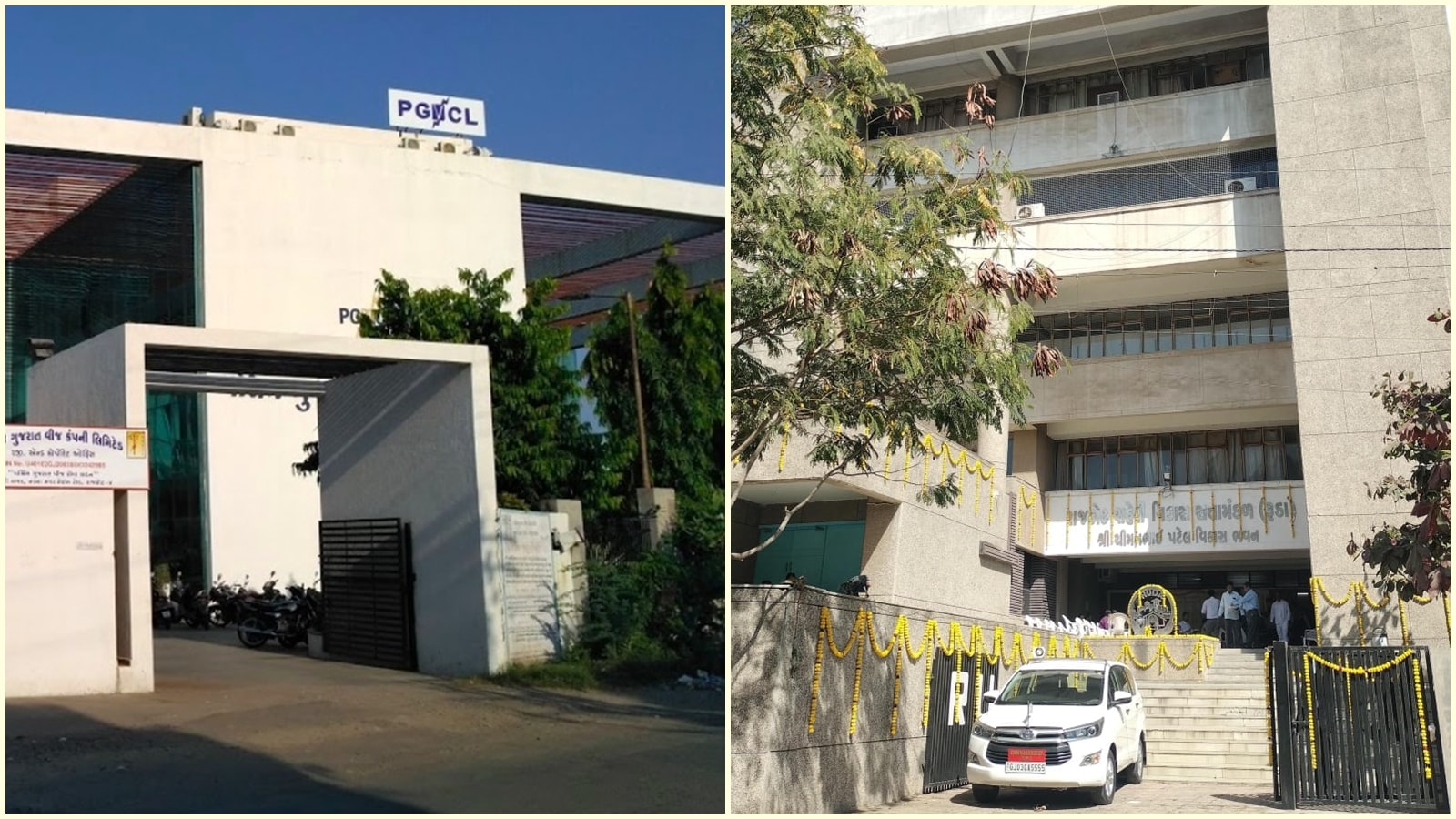
Around 1 pm on May 4, the general manager (finance) of Paschim Gujarat Vij Company Limited (PGVCL), the public-sector power distributor in Western Gujarat, received a WhatsApp message from someone he thought was his boss.
The message instructed the officer, 54-year-old Kintukumar Shashikant Malkan, to transfer Rs 45.6 lakh to an IndusInd Bank account belonging to one Manisha Mandal.
It was an unusual order, delivered unusually. Yet Malkan, sitting in his office on Nana Mava Main Road in Laxminagar, Rajkot, chose to comply.
He did not recognise the number – the sender said it was a “very private number” – but it did have the display picture (DP) of the PGVCL managing director, IAS officer Ketan P Joshi.
The sender assured Malkan that he would “provide the formalities later”.
The message turned out to be fake. Malkan ended up being duped by criminals who police believe were based in Siliguri in West Bengal.
After an alarm was raised, IndusInd Bank acted quickly to freeze Rs 33 lakh of the Rs 45,60,904 that Malkan had deposited. The rest – about Rs 12.5 lakh of public money – had been withdrawn by the scamsters.
Story continues below this ad
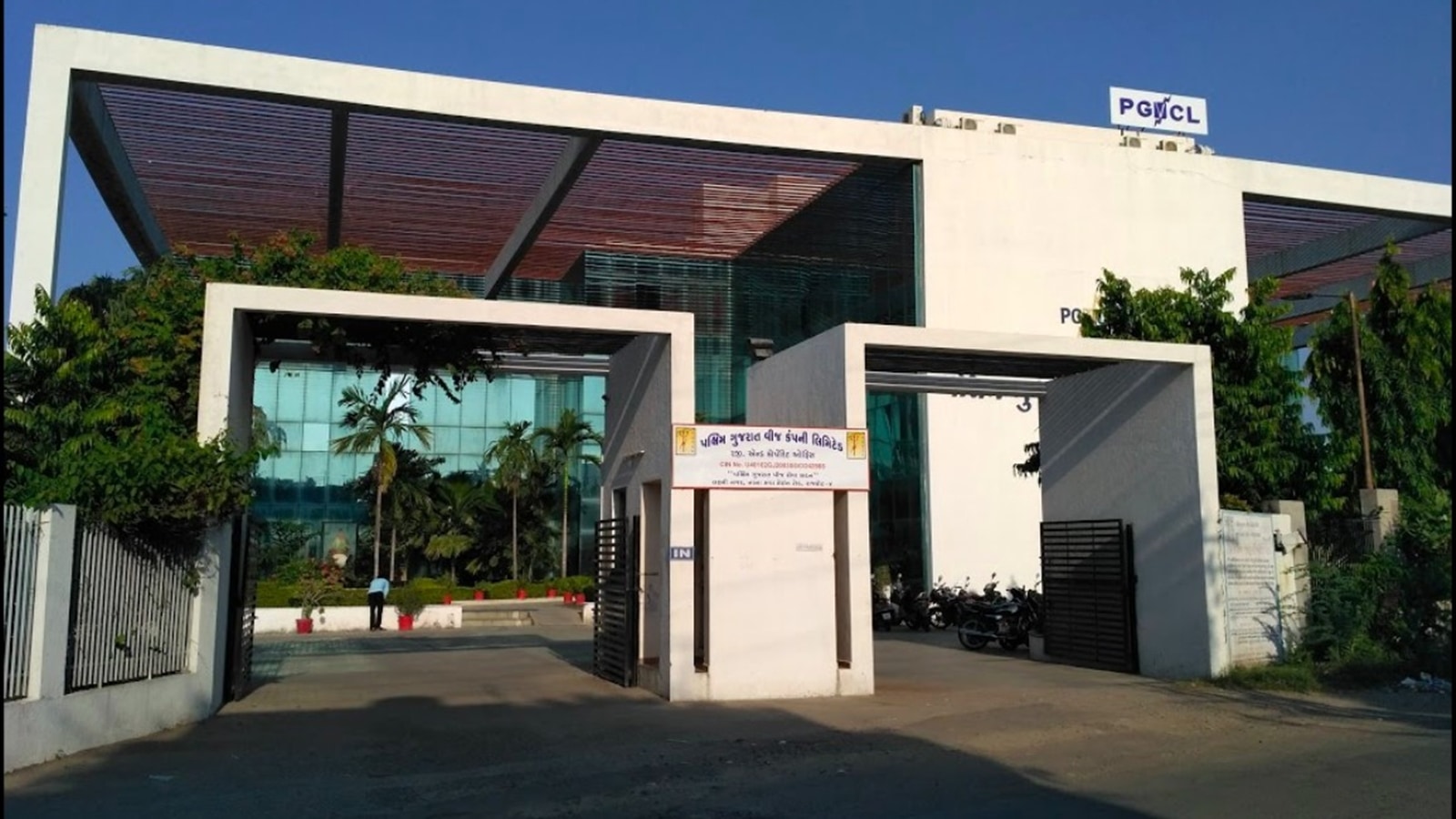 The office of Paschim Gujarat Vij Company Limited. (Express Photo)
All this was earlier this month.
It has now emerged that Malkan wasn’t the only senior government official in Rajkot who was targeted that afternoon.
A second official got similar WhatsApp messages at almost the same time, from probably the same gang. With one crucial difference.
Unlike Malkan, this officer, Ojas Mehta, the accounts officer at Rajkot Urban Development Authority (RUDA), went strictly by the rulebook.
Story continues below this ad
Mehta told the sender of the message – who claimed to be his boss, RUDA CEO Gautam V Miyani – that he would not act without an official order from him in writing.
That afternoon, Mehta received three messages – like Malkan, from a “very private number”. The first came at 1.26 pm, and asked Mehta to transfer Rs 30,60,801 to a Kotak Mahindra Bank account belonging to someone called Nitin.
“Make payment on urgent basis… after my meeting I will provide you all formalities… try to do fast… Waiting for UTR number,” it said. UTR, or Unique Transaction Reference, is an alphanumeric code that is assigned to all online financial transactions in India. It acts as a digital fingerprint for banks and individuals to track transactions.
It was an unusual request. And Mehta, sitting in the RUDA headquarters on Jamnagar Road, a little less than 6 km from the PGVCL office, decided he could not comply.
Story continues below this ad
“Sir, please send office order copy,” he messaged back, according to screenshots of the conversation.
“Ojas send me cheque photo right now… I will manage,” the messager insisted.
Mehta remained firm: “I can’t make payment without office order.”
He got a third message – in the same urgent, somewhat threatening tone. And he refused to comply for the third time. That was at 2.08 pm.
Story continues below this ad
Mehta told The Indian Express that the person who WhatsApped him claiming to be Miyani had the logo of RUDA as his DP. “It was entirely possible that Sir (CEO Miyani) could have a personal number. But the person asked me to transfer Rs 30.6 lakh without cutting TDS (Tax Deducted at Source),” he said.
After the person told him he was in a meeting at the time, Mehta decided to check the claim. “I called the PA to the CEO who confirmed that Miyani Sir was indeed in a meeting at the Rajkot Collectorate. But I still insisted the person send me a copy of the office order to release the funds,” Mehta told The Indian Express.
By then, the messages to Mehta’s phone had stopped. And the landline number at the RUDA office had started to ring.
“The caller said in Hindi that he was the brother of Miyani Sir. But when the PA said he would transfer the call to the CEO, the caller cut the call,” Mehta said.
Story continues below this ad
RUDA CEO Gautam Miyani, an officer of the Gujarat Administrative Services (GAS), later told The Indian Express that he did have a brother, but he had never visited or contacted the RUDA office.
And yes, he did indeed go for a meeting that afternoon – but it appeared that the alleged scamsters had got that right purely by chance.
At 4.15 pm, Mehta, who was by then convinced that something was fishy, decided to message the number on his own. “Send order,” he prodded. There was no reply.
Miyani told The Indian Express, “Criminals target Boards and Corporations and Authorities because these entities can make payments directly and on their own. If they try the same thing with, for example, the Collectorate, the bill would go to the Treasury Department and they would verify the details before making the payment. It would also take a lot of time.”
Story continues below this ad
The alleged criminals had used the RUDA logo and told Mehta that they were using a personal number, but they had not accounted for a crucial procedural safeguard at the Authority, the CEO said.
“At RUDA, no payment is made without an office order signed by my hand,” Miyani said. “That is why Mehta got suspicious. The person impersonating me got annoyed when Mehta asked him for the order. But our staff know that they must not do anything without official orders.”
For the alleged fraudsters though, Mehta’s stonewalling would not be a deterrent. They did not give up.
So they went back to PGVCL, where they had tasted success only some time earlier.
Story continues below this ad
They messaged Malkan again – asking for exactly the same amount that they had tried to get out of Mehta: Rs 30,60,801.
The FIR registered at the Cybercrime Police station of Rajkot city police, based on a complaint by Malkan, says: “At 3.48 pm, I received another message from the selfsame WhatsApp number asking me to transfer another Rs 30,60,801, this time to a Kotak Mahindra Bank account belonging to one Nitin, with the same promise, ‘After my meeting, I will provide you all formalities.’”
This time, Malkan decided to check. He went across to the office of PGVCL MD Joshi.
Joshi told Malkan that he had not contacted him, and the number did not belong to him. Police and IndusInd Bank were informed immediately. And the bank acted swiftly.
“When the complaint was lodged, initial investigation showed that the unknown accused persons had withdrawn Rs 2.5 lakh of government funds, while the rest of the amount was in the process of being transferred through layers of different accounts. But it became clear subsequently that only Rs 33 lakh would be saved,” DCP (Crime) Jagdish Bangarwa told The Indian Express.
Bangarwa also said the police believed the two cons were attempted “side by side”, possibly by members of the same gang. “We are investigating in that direction. We are tracing the account holders involved in this (RUDA) case,” he said.
PGVCL is one of the four regional public-sector power distribution companies that started functioning on April 1, 2005 under the holding company Gujarat Urja Vikas Nigam Limited (GUVNL). PGVCL provides power to the entire Saurashtra-Kutch region of the state.
At the time the con was first reported, Joshi had said he had initiated an inquiry, and asked the chief engineer for a report. He was not available for a comment when The Indian Express reached out to him this week, following the RUDA revelation.

