

5 min readChandigarhUpdated: Jul 30, 2026 07:38 PM IST
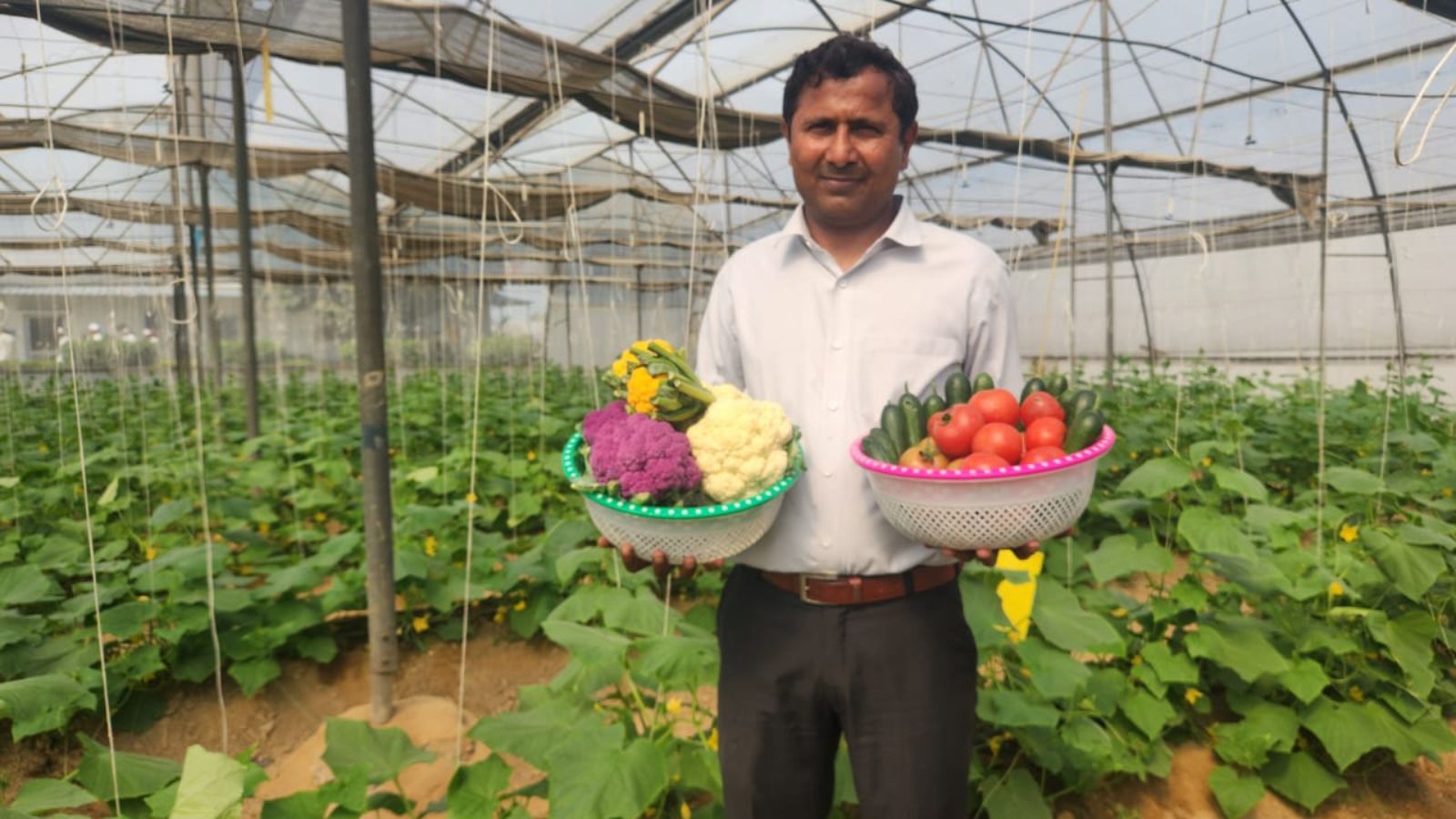
Dr Jaipal Tanwar taught in government colleges in Haryana as an assistant professor for seven years before quitting academia to venture into agribusiness in 2014. More than a decade later, he has established himself as one of the state’s leading polyhouse entrepreneurs.
Tanwar, 45, a resident of Asan Khurd village in Panipat district, says he now earns an annual profit of nearly Rs 1.5 crore by cultivating flowers including lilies, chrysanthemums and tuberose, and vegetables spread across 50 acres of leased land in Panipat. His enterprise also generates employment for 48 people.

Under the Haryana government’s horticulture promotion scheme, farmers receive a subsidy of up to 50 per cent for establishing a polyhouse, with the cost of setting up one acre estimated at around Rs 28 lakh. For farmers belonging to the Scheduled Castes, the subsidy is enhanced to 80 per cent. However, due to inadequate technical knowledge, limited financial resources and marketing challenges, many beneficiaries abandon polyhouse farming within a year or two of establishing the structures.
Recognising this gap, Dr Tanwar began identifying such abandoned polyhouses after leaving his teaching job nearly a decade ago. He initially took over the management of 41 abandoned polyhouses in Karnal district, where he successfully revived the cultivation of vegetables and flowers. As the ventures became profitable, many of the original owners resumed operations and reclaimed their polyhouses.
Turning to a lease model
Learning from this experience, Tanwar changed his strategy in 2017 and began taking abandoned polyhouses on long-term leases of 10 years, enabling him to make sustained investments in infrastructure, planting material and crop management.
According to Tanwar, his enterprise now employs 45 field workers engaged in cultivation, harvesting and post-harvest operations. In addition, he has three managerial staff members overseeing technical and administrative functions. One is a graduate, another holds a polytechnic diploma, while the third has a PhD in agriculture. Depending on their qualifications, skills and responsibilities, their monthly salaries range from Rs 12,000 to Rs 70,000.
“Our annual turnover is nearly Rs 5 crore, with our proximity to the Delhi market giving us a significant marketing advantage. After meeting all operational expenses, including labour costs, input costs and staff salaries, our annual profit ranges between Rs 1.45 crore and Rs 1.5 crore,” Tanwar said. His wife Dr Anita Tanwar works as an assistant professor at Shri Lal Bahadur Shastri National Sanskrit University, New Delhi.
Story continues below this ad
Flower cultivation
Explaining the economics of flower cultivation, Tanwar said lily cultivation is among the most capital-intensive horticultural ventures. “The total cultivation cost is around Rs 80 lakh per acre, of which nearly Rs 70 lakh is spent on imported bulbs alone. Despite such high investment, I am able to earn a net profit of around Rs 20 lakh per acre. At present, lilies are being cultivated on two acres,” he said.
Sharing the economics of chrysanthemum cultivation, Tanwar said he grows the flower on five acres. “The total cultivation cost is around Rs 5 lakh per acre, including more than Rs 3 lakh spent on nearly one lakh saplings. After deducting all expenses, the net profit is around Rs 5 lakh per acre,” he said.
On tuberose cultivation, spread over another five acres, Tanwar said the cultivation cost is approximately Rs 1.25 lakh per acre. “The crop generates revenue of more than Rs 5 lakh per acre, resulting in a net profit of nearly Rs 4 lakh per acre,” he added.
Explaining the financials of his business, Tanwar said he earns a combined annual profit of around Rs 60 lakh from floriculture and vegetable cultivation spread over 20 acres each. He said five acres of polyhouse floriculture fetches an annual profit of nearly Rs 50 lakh, while five acres under polyhouse vegetables generate around Rs 40 lakh annually.
Story continues below this ad
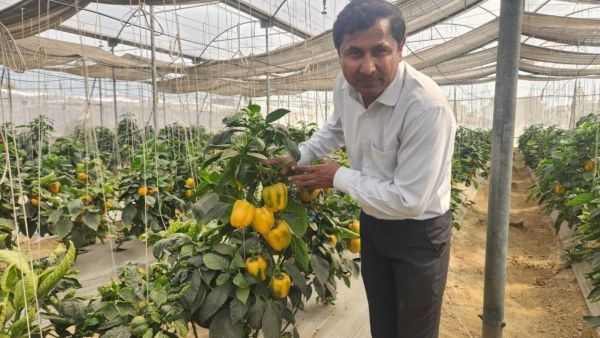 Jaipal Tanwar left his government college teaching job in Haryana to build a successful polyhouse farming enterprise (Express photo/Special arrangement).
Expansion of agriculture business
Dr Arjun Singh Saini, Project Director, Haryana Horticulture Department, who has closely monitored the rise of Tanwar, said a new business model is gradually emerging in the state’s horticulture sector, wherein entrepreneurs lease polyhouses and agricultural land from owners for fixed periods while sharing profits or paying predetermined lease amounts.
“There are clusters, particularly in districts such as Kaithal, where hundreds of polyhouses and net houses are engaged in vegetable and flower cultivation. Not every farmer has the expertise or network required for marketing. Therefore, a few experienced entrepreneurs undertake marketing on behalf of other growers, either on a profit-sharing basis or by charging a service fee,” Saini said.
Highlighting the broader scope of modern farming, Saini added, “Agribusiness is no longer confined to crop production. It encompasses the entire value chain, including production, aggregation, logistics, marketing and supply of fresh fruits, vegetables and flowers. With the adoption of protected cultivation technologies and scientific farming practices, productivity can increase four to eight times, leading to a corresponding rise in farmers’ income.”

