

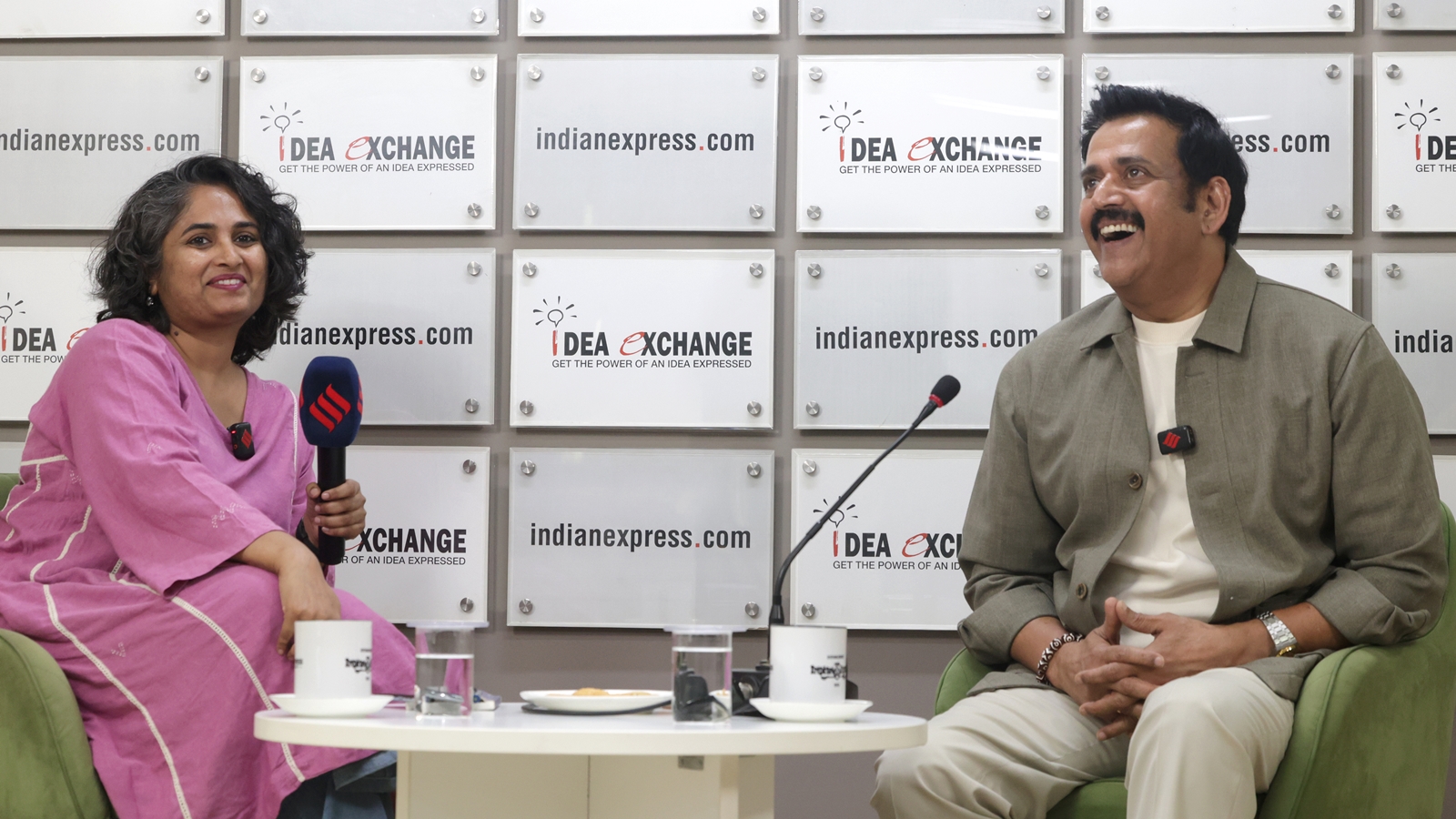
Actor and MP Ravi Kishan on Jantar Mantar protests, censorship, UP elections and his journey as an actor and politician. The conversation was moderated by Pooja Pillai, Senior Assistant Editor, The Indian Express. This session was held on July 24.
Pooja Pillai: You have agreed to talk to us at a very important moment in Indian history. PM Modi in his late night address said that there is going to be a new law to address some of the demands of the protesters. There seems to be a trust deficit between the government and the protesters. Is it enough to propose a new law and have fast-track courts to bridge this gap?

Yes, it is very important. And it is a great decision. I want to thank PM Modi from the bottom of my heart. JP Nadda sir went to Sonam Wangchuk and got him to break his fast. The PM, in his late-night video message, looked very concerned. I have four children and they are all students, so I can understand the pain these students have gone through. The 22 lakh children who gave the exam and those who lost their lives, it is very sad. I stand with the future of these children. I see their pain. The PM is also standing firmly with them.
We recently had a ‘Mangal Meeting’ with the PM on the parliamentary campus. The government wants dialogue with the Opposition. The Leader of the Opposition, Rahul Gandhi, was also there. The conversation could not progress. The PM wants fast-track courts. He said so in Tuesday’s meeting because we, as lawmakers, can create a new law. If the Opposition is ready for dialogue, everyone should make such a strict law that no one dares to leak papers in the future. There should be life imprisonment because you are playing with the lives of many families. Such a law can be made if there is a debate in Parliament. The government is completely ready and has answers to all the Opposition’s questions. No one plays with the future of children. But what is happening is very sad. The PM is quite sad right now. He is also very sensitive. Those 13 people who have been caught will get such severe punishment that no one, for the sake of a few lakh or the greed of crores of rupees, will dare to do this again.
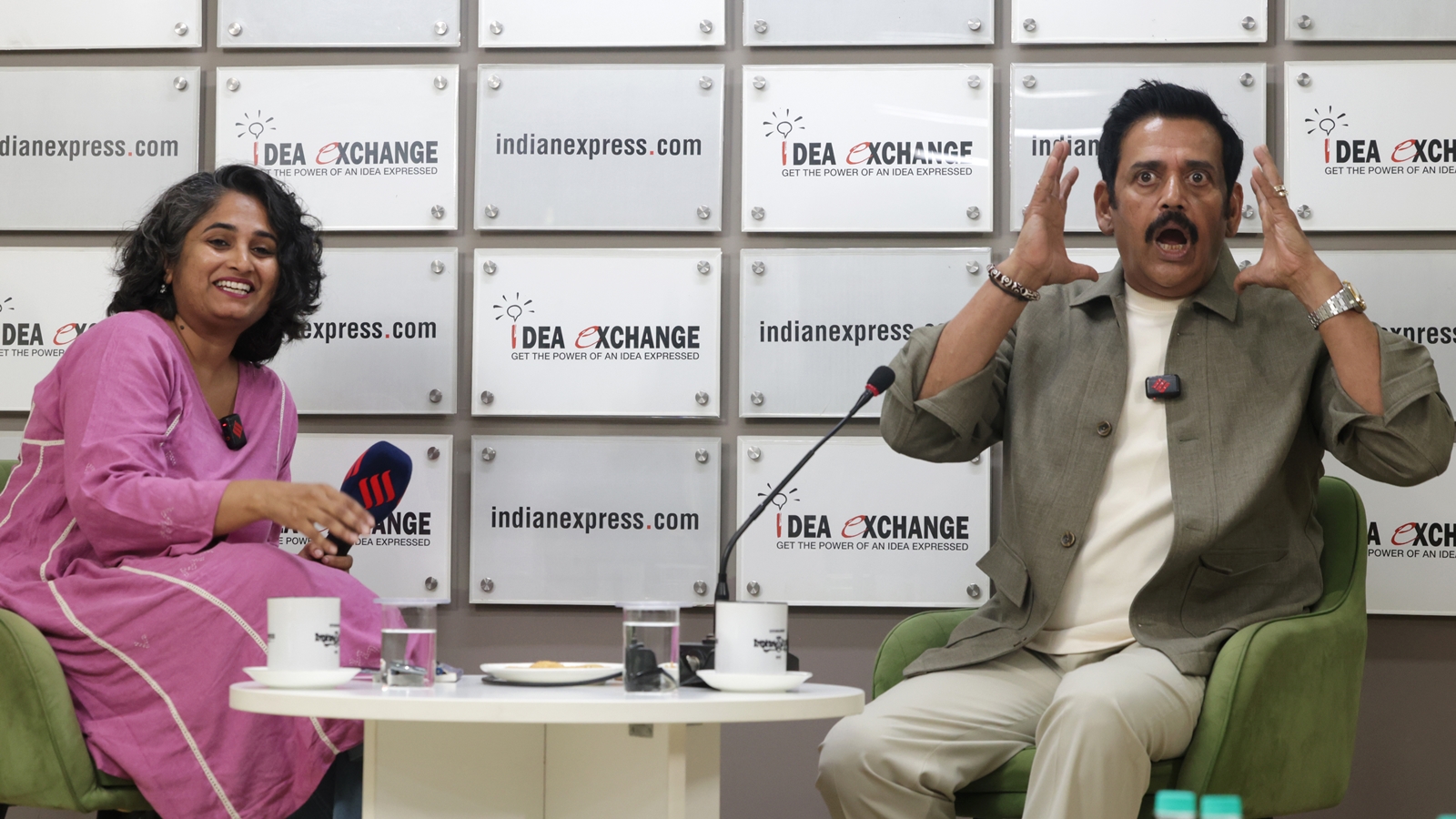 Actor and MP Ravi Kishan (right) in conversation with Pooja Pillai, Senior Assistant Editor, The Indian Express (Photo: Renuka Puri)
Pooja Pillai: What do they feel the government is still not addressing? Clearly, despite the outreach, they believe something is still missing.
If the PM is making a video at midnight, then he is listening. Their voice must have reached him; that’s why he is speaking. He also spoke to us about it. So it’s not as if there isn’t a lot of discussion about this. And why wouldn’t the Prime Minister listen to the 65 per cent of his country? They are the future, the next in line. The children at Jantar Mantar or in colleges are at a sensitive age where anyone can mislead them. But this movement should not go in another direction. It shouldn’t be politically affected; countless other slogans shouldn’t appear there. Children also get troubled, that the movement they came for, only that voice should remain, only that one demand should be raised. And others should not change their course. I can say with conviction that all of the children’s demands will be met.
Pooja Pillai: You are also an actor and have acted in 760 films across languages.
I am the only actor who has worked in all languages. And pan-Indian. I am as popular as I am in Bihar, UP, or Northern India.
On Tougher Anti-Paper Leak Laws | If the Opposition is ready for dialogue, there should be such a strict law that no one dares to leak papers. There should be life imprisonment because you are playing with the lives of many
Pooja Pillai: And you began your career in Bhojpuri cinema.
I began my career first in Hindi cinema. In fact I began with theatre first. My first film came out in 1992; I did a film with Kajol. It was titled Udhaar Ki Zindagi, which was released in 1994. Then with Akshay Kumar (Zakhmi Dil in 1994) and a film with Dharmendra sir (Agnee Morcha in 1997). We (Akshay Kumar and Kajol) were all from the same batch of the ’90s. I am a professionally trained actor: in Urdu, horse riding, jumping, and leaping from buildings… I wanted to (learn) because I am fond of languages. I have a great passion for learning languages.
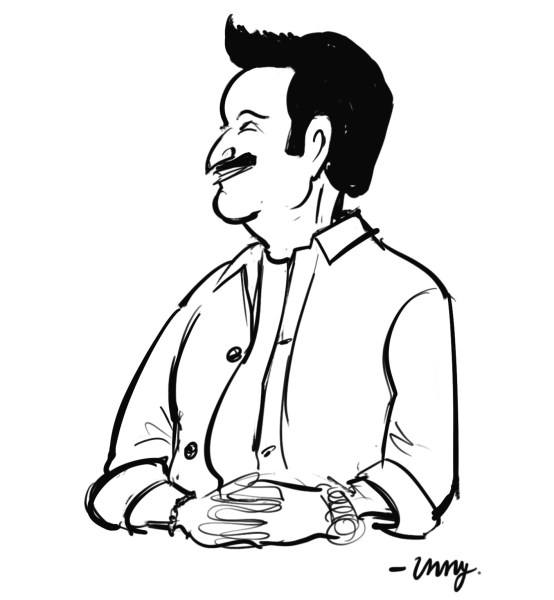
Pooja Pillai: It was Bhojpuri cinema where you got your stardom. But then you have done these very interesting films like Laapataa Ladies and a show like Maamla Legal Hai. Can you talk a little bit about this varied journey and how has your approach changed through these different mediums and languages?
My father is a priest and I come from a very humble background. I had neither a godfather nor money. But I had knowledge, spiritual power and strength. When I came to the city, then known as Bombay, the city of dreams, I found it very expensive. I am a dreamer and believe that through the power of manifestation, you can fulfil your dreams. I wanted to become a superstar, have luxuries and cars, and be known across the country. I always wanted to be number one. For that, I worked very hard and trained myself so I wouldn’t fall short anywhere—voice, language, dance, performance, action, diction or modulation. I didn’t think that because I was six feet tall and had big eyes, I would become an artiste. I prepared and polished myself before starting my journey. For around 15 years, I earned very little. I just asked people for work. They would say, ‘Either take work or take money.’ I chose work because I knew money follows success. Then I got tired. I did Army (1996) with Shah Rukh Khan and Tere Naam (2003) with Salman Khan, but it still felt like a very long journey. That’s when I got an offer for a Bhojpuri film. I called my mother and told her no one watched Bhojpuri films. She said, ‘No problem, just do it; the villagers will see it.’ I did Saiyaan Hamar (2003), and it became a cult classic. I became an overnight superstar in Bihar and UP. Then I decided to build the Bhojpuri industry. Using everything I had learnt in Hindi cinema, I created my own industry, gave employment to one lakh people, and helped build Bhojpuri cinema. One of our films, Kab Hoi Gawna Hamaar (2005), won a National Award.Then I became a parliamentarian, so my time and attention went there. Later, Hindi cinema came back into my life through Kiran Rao’s Laapataa Ladies, which polished me. Recently, Maa Behen (2026) did well. I play a pirate in Ajay Devgn’s Dhamaal 4, and Maamla Legal Hai is also there. Last year, I won the Best Supporting Actor award for Laapataa Ladies and the Best Parliamentarian award. I think I’m the only parliamentarian to have won both. I have raised many questions from Uttar Pradesh in my second term, so I might win the Best Parliamentarian award again.
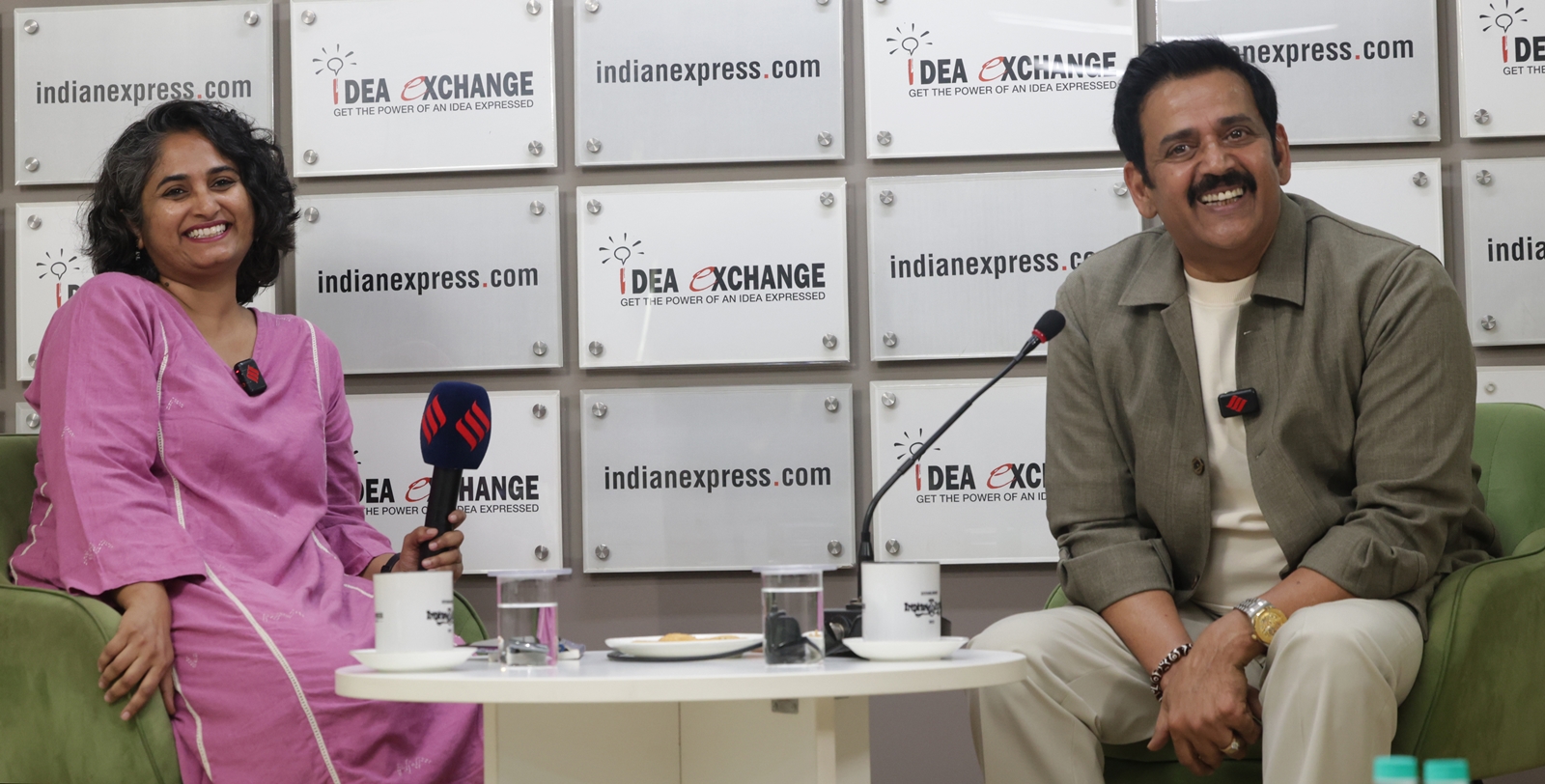 Actor and MP Ravi Kishan (right) in conversation with Pooja Pillai, Senior Assistant Editor, The Indian Express (Photo: Renuka Puri)
Liz Matthew: As a leader, do you feel you can speak to the leadership during a crisis? Many BJP MPs privately feel things are sometimes not right, including over the current student protests. After 12 years in government, how much does the leadership listen to leaders like you who have their ear to the ground?
They listen to me. I can’t speak for others. I stay with the Chief Minister (Yogi Adityanath) a lot. Even yesterday I was with him. I am a mass guy. I am a mass superstar. I have travelled Bihar and UP; there is hardly a village left where I haven’t shot or where I don’t meet people every day. In Gorakhpur, I meet 500 to 1,000 people every day. I have four young children; I have all the ‘Gen Z’ crowd in my house. I have this fusion in my life. So yes, I have no complaints with my leadership. Whatever I had to say, I have always said it. One day, when I was newly elected, I took time to meet the PM. He had a few questions about the industry. He spoke to me about a few names in the industry — how they think, how they look at the government — because artists are a different breed. Artists in India are more woke because they are well-read. People think they aren’t, but they make cinema for the entire country. And they are very sensitive. The PM is a great listener. He received a country in 2014 that was hollowed out, which had to be built. Managing such diversity, such a large population, so many loopholes, and such big scams, is a lot of work. We used to travel abroad earlier too, and now when we travel, it’s different. I am seeing it (the changes) in just 12 years. So for me, the leadership is a very good listener. Whatever I need to say, I just walk in and talk.
On Donation theft and its impact on UP elections | The donation theft will not affect UP elections. Those eight people were caught, an SIT was formed by Yogiji. Lord Ram is our deity and the trust of 100 crore Hindus remains unaffected
Liz Mathew: You are known to be close to the ‘Yogi camp’. Does it give you any special protection in the party?
That is because I am a parliamentarian from Gorakhpur, where Yogiji served as MP for five consecutive terms and he is now the CM. I am a really blessed parliamentarian because I get a budget from both the PM and the CM. And Gorakhpur has seen massive development. Our equation is good. So I am a bridge. There is no pressure. I will talk about party development. I have never had stupid conversations. I have stayed with the world’s creative legends, so my exposure and creativity are very good. I don’t have any vested interests. I am a happy parliamentarian. I want to do films. I do politics selflessly, from my own pocket. So I don’t need anything. I work hard. That is why people call me the ‘most viral man in the country’, a ‘national crush’, ‘Bihar’s Brad Pitt’. What all memes I have!
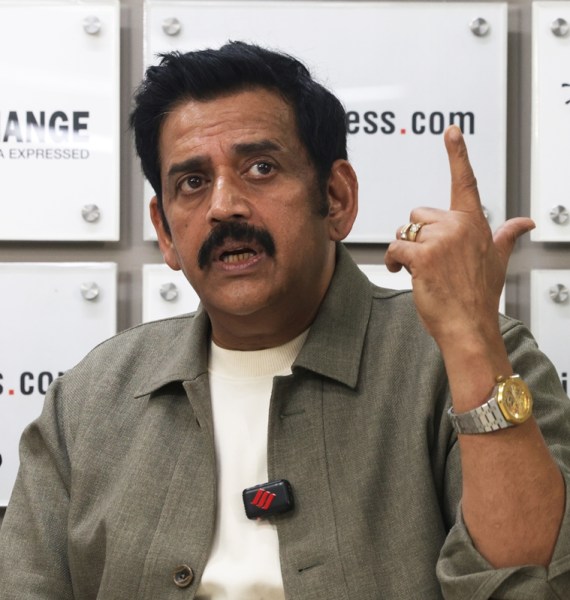 Actor and MP Ravi Kishan. (Express Photo: Renuka Puri)
Sandeep Singh: Indian youth used to be a BJP vote bank. Given this atmosphere in Delhi spreading to the rest of the country, how much concern is there regarding the UP elections?
The children know what the government has done for their families. Those who have come know that roads, electricity, water, and toilets have come to their villages. They are seeing the facilities and the country being upgraded. There are countless contributions for teaching girl children in Uttar Pradesh — from scooties to many other schemes. For girls’ education, their fees, their care, their jobs — we have given more than nine lakh government jobs in Uttar Pradesh. We have recruited 2 to 2.5 lakh personnel in the police. This is on record. So there is a lot of trust among the children in UP. I am sure that in this hour of crisis, the pain the children have faced will find a solution through punishment in fast-track courts. The children also understand that the PM is not at fault. The paper leak has happened. The main issue now is that it shouldn’t happen again. The children demand that in the future, no NEET candidate’s family should be ruined and no child should lose their life. The Prime Minister is fully preparing for that. The children will calm down. I have full faith. There is no such cause for concern. It will not affect the Uttar Pradesh elections.
On censorship | Censor Board should have freedom and filmmakers should have responsibility to make cinema thoughtfully. We should not hurt any specific caste or community. We should not interfere with history or the past
Sandeep Singh: What about the resignation demands?
As a parliamentarian, I will say that it is the decision of the top leadership. It is better if I don’t speak on it. If all parliamentarians — Opposition and the Government — come together, then we can easily give life imprisonment to those 13 people and anyone else who makes such a mistake in the future. We should let them rot in jail.
Shubhra Gupta: With the censorship of Satluj, how do you view censorship in general? As an artist, how do restrictions on your work affect you? And what is your view of the CBFC increasingly shaping what filmmakers can make, rather than simply certifying films?
I don’t know the details of the case and what objection was raised. There were some court orders from Punjab. I have zero knowledge of it. But I did find out the film came and then was taken down. The Censor Board should have freedom and we filmmakers should also have a responsibility to make cinema very thoughtfully while keeping the entertainment aspect in, but at the same time, we should not hurt any specific caste, society, or community. We shouldn’t interfere with spirituality, history or the past. I wanted to watch the movie, but it was taken down. But yes, censorship has affected so many films. It has affected Dhurandhar. We were taught a lot of wrong history. We have the right to show that too. Provided we don’t hurt anyone’s personal feelings. The filmmakers are answerable to society because what we make affects the children and the next generation.
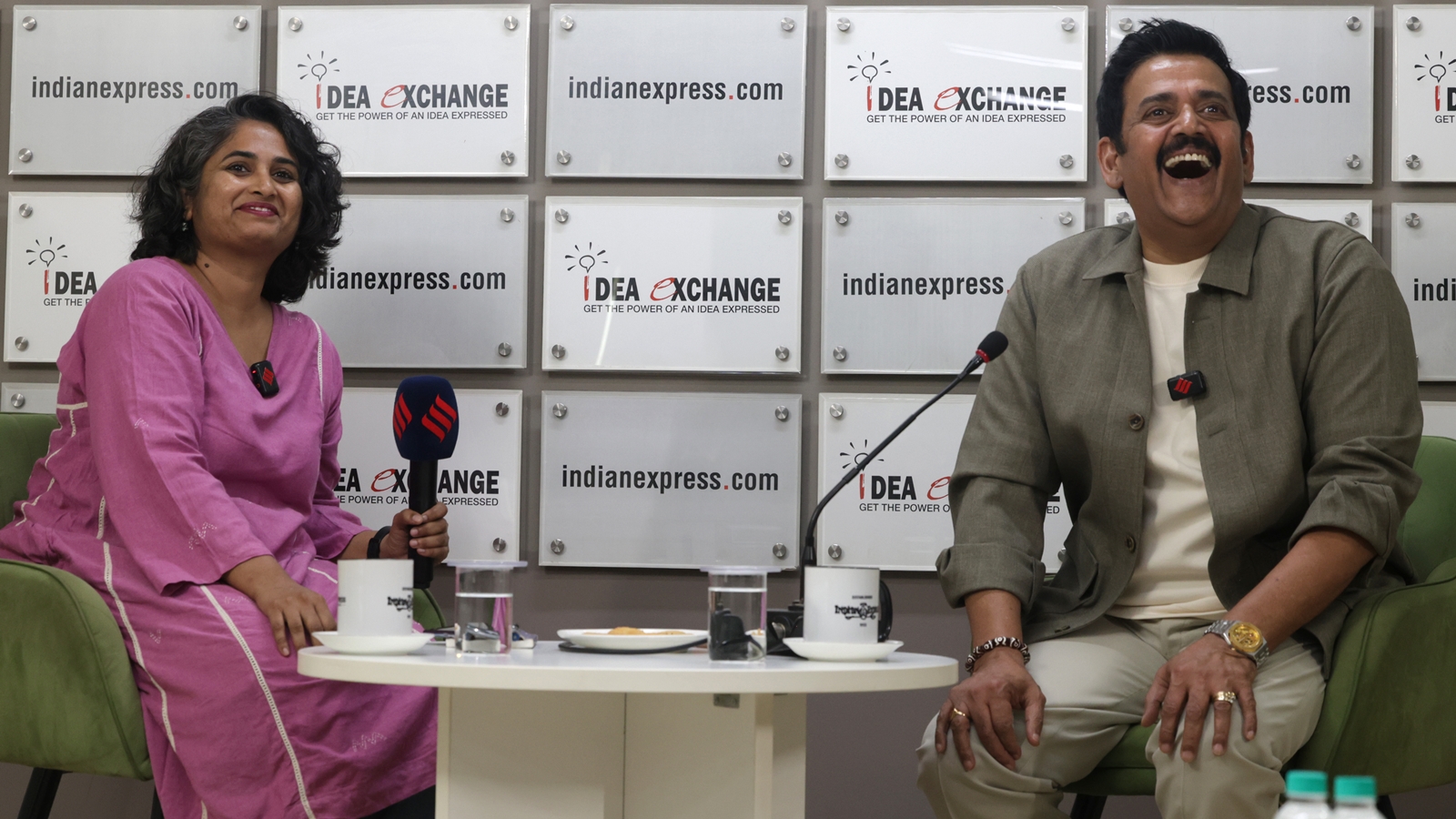 Actor and MP Ravi Kishan (right) in conversation with Pooja Pillai, Senior Assistant Editor, The Indian Express (Photo: Renuka Puri)
Shubhra Gupta: If someone curbs your speech and says you cannot do this, then what will you say about that?
I will first ask, why? I will also ask what is the mistake? What should I cut and remove? What is the problem? See, there is always a solution. During the Congress regime as well, Kishore Kumar was banned on the radio. If I’m hurting a community, if I’m hurting history or I’m trying disrupt things if I’m giving a false narrative, I’m giving false messages just to entertain and run my movie, then I will chop it out on my own, because I want my film to come out because a lot of money has been invested.
Jatin Anand: Do you think the Ram Mandir donation theft case will impact the UP elections?
Those eight people were arrested. Our faith is in Lord Ram. He is our deity and the trust or faith of 100 crore Hindus in this country remains unaffected. An SIT was formed immediately by Yogiji; those people were caught immediately. And now they will get strict punishment. This will not affect the UP elections because people have a lot of faith in Yogiji; people respect him a lot.
And sometimes it happens with us too, in our houses as well. Many people turn out to be nalayak. With the arrival of digital media and social media, ab toh sabki rooh kaanpti hai. Earlier, too, many things kept happening in this country. But now the fire that has risen, social media: it can create and it can also destroy overnight. Social media has emerged as a very big unknown power.
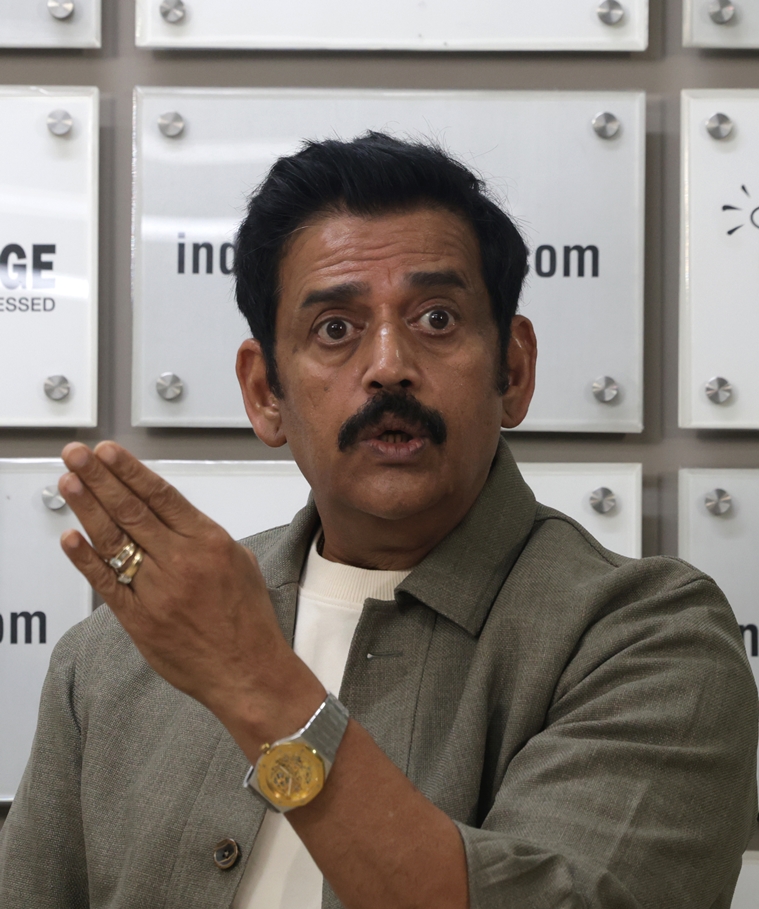 Actor and MP Ravi Kishan. (Express Photo: Renuka Puri)
Jatin Anand: About the ongoing CJP protest, it’s clear that social media influencers have been a major driving force, and much of the reaction online has been critical of the government.
Don’t harm the country. Earn money, let your followers increase.
Shubhra Gupta: Aamir Khan was also a contender for that role in Laapataa Ladies and you were selected. How did you feel?
He wanted to play my character and even got his police uniform stitched .But Kiran Rao, somewhere down the line, made the choice. I had done a film with Anurag Kashyap, Mukkabaaz in which I was a Dalit boxer. She had watched that film and she wanted me only. She came to meet me in Delhi, narrated the story in 45 minutes. The budget of the film was only 5 crore. A very small film, it earned some 100-150 crores. After the film released, Aamir Khan put out his audition. We missed out at the National Awards. There was no entry. I don’t know why.
Niharika Yadav: One of your statements was quite viral on social media where you compare Gorakhpur to Spain. But two days of rain can bring it to a standstill.
Gorakhpur is like a bowl. Earlier, Gorakhpur used to remain completely submerged. There would be outbreaks of encephalitis. Every year, 250 children died from the disease. Murders happened there every day. Kidnappings, rapes happened. Mafia ran that district during SP’s (Samajwadi Party) time. We did the Gudaiya canal for Rs 12,000 crore, so we are taking 17 wards out of the water. Nepal releases water, Gorakhpur gets submerged. We are working on a way out. I say Spain because I see it like Spain. In Spain, there is a water body; we have Ramgarh Lake. But we will fix things that need fixing. We will make Gorakhpur like Spain.
Liz Mathew: What excites you most? An election victory or a film award? When you see a film set or when you get into Parliament?
In eight years, the most development stones have been laid in Gorakhpur. There are two cruises in the water there. 14 aircraft run. Right now we are building an airport of 42 acres. There is a 500 crore railway station now. We have AIIMS. We have a fertiliser plant. 1 lakh crore of work has been done in eight years. We have one Chilhwa Tal. In that, for a 20 megawatt solar plant, we brought 134 croresfrom Coal India’s CSR. The whole of Gorakhpur will get electricity from there. So now, we are using that stagnant water in different ways.

