

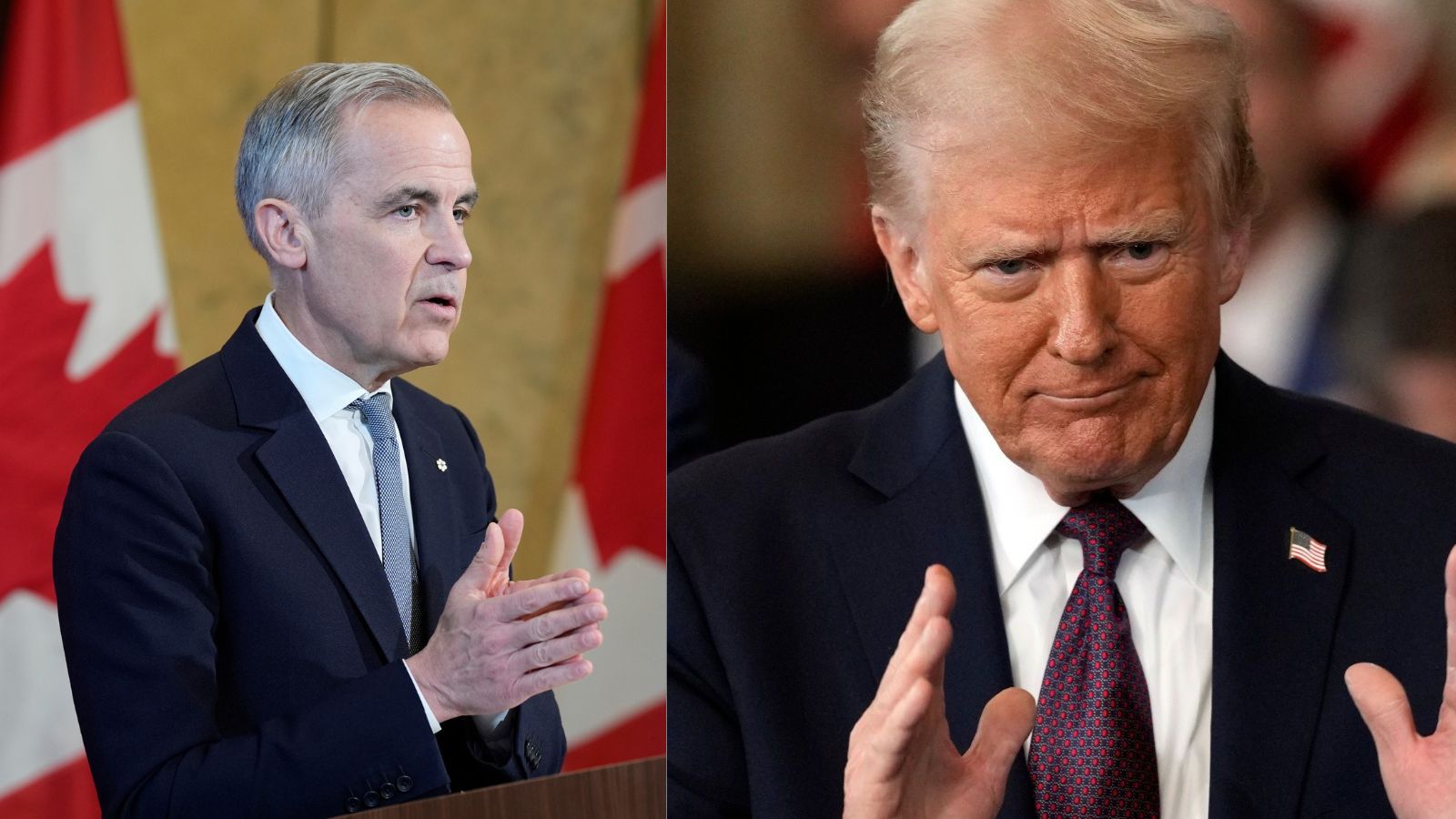
 Canadian Prime Minister Mark Carney said Friday he will visit US President Donald Trump at the White House. (File Photo)
 US President Donald Trump has hit most Canadian goods with a steep 50 percent tariff, accusing Ottawa of unfair trade practices against American automakers, alcohol producers and dairy farmers a move that threatens to reignite economic turmoil between the two longtime allies, according to the Associated Press (AP)
An administration official briefing reporters said Trump signed three separate proclamations invoking Section 338 of the 1930 Trade Act a provision so rarely used that some Democratic lawmakers had pushed last year to repeal it, fearing Trump could wield it to destabilize the economy. The official, speaking anonymously, argued Canada was one of only a handful of countries, alongside China, to retaliate against Trump’s earlier tariffs, and said it needed to face consequences.

After the Supreme Court struck down Trump’s earlier global tariffs in February for exceeding his emergency powers, the White House said it would find other legal routes to keep import taxes in place. Section 338, unlike the emergency-powers law used before, is built around claims of trade discrimination rather than a declared crisis.
What goods are actually affected?
The new duties spare energy products, potash, fish and critical minerals. Everyday items like wine and hockey sticks are caught up alongside industrial products such as commercial cement, and notably the tariffs apply to covered goods whether or not they were previously protected under the US-Mexico-Canada Agreement (USMCA). That 2020 pact was never renewed, leaving fresh negotiations that could stretch out to 2036.
Monday’s move also stacks on top of tariffs already in place: Washington has separately been charging 15% to 50% on Canadian steel, aluminum and copper, 35% on softwood lumber, and 25% on non-US car parts, while Canada has kept its own 25% counter-tariffs on select American steel, aluminum and vehicle imports.
Story continues below this ad
The new tariffs won’t take effect for 30 days, leaving a window for talks, especially given Trump’s track record of not always following through on threatened import taxes.
Despite Trump previously threatening tariffs over Canadian wildfire smoke drifting into American cities, the proclamations he signed make no mention of wildfires at all. Instead, they lay out longstanding US grievances over cars, dairy and alcohol grievances Canada was already well aware of, suggesting talks between the two governments had broken down. Trump has asked aides to look into wildfire-related tariffs as a possible next step.
Why is Trump targeting cars, dairy and alcohol specifically?
On autos, Trump argues Canada unfairly taxes US vehicles and parts not covered by USMCA while not applying similar levies to other countries a practice he’s calling “unreasonable.” The two countries’ auto industries are deeply intertwined, and Commerce Secretary Howard Lutnick has previously suggested Canada should take a back seat to US interests in that relationship.
The real friction point is Canada’s supply management system, which caps foreign imports and slaps tariffs exceeding 300% on anything above that limit.
Story continues below this ad
On alcohol, the sticking point is the boycott of American booze that most Canadian provinces imposed last year, Canadian premiers have said they’d lift if the US drops its own tariffs on Canadian metals and autos talks Canadian negotiators have reportedly been pursuing to ease at least some existing duties.
How is Canada responding
Canada’s federal government had not issued a formal response as of either outlet’s reporting, though the BBC says it has reached out to both the White House and Canadian officials for comment. Ontario Premier Doug Ford signaled the province was ready to fight back, calling for Canada to match the US “tariff for tariff, dollar for dollar,.”
Candace Laing, head of the Canadian Chamber of Commerce, described the move as a disappointing development, telling the BBC it was a “regrettable decision,” while separately urging both governments to use the coming month to push serious trade talks forward.
Economists broadly agree tariffs function as a tax on imports that businesses often pass on to consumers even as Trump continues to argue the pressure will drive manufacturing back to American soil, a claim the AP notes isn’t strongly borne out by the data so far. Inflation, meanwhile, has climbed since Trump took office, driven in part by tariffs and rising oil prices tied to the conflict in Iran.

