

“).attr(n.scriptAttrs||{}).prop({charset:n.scriptCharset,src:n.url}).on(“load error”,i=function(e){r.remove(),i=null,e&&t(“error”===e.type?404:200,e.type)}),C.head.appendChild(r[0])},abort:function(){i&&i()}}});var Jt,Kt=[],Zt=/(=)?(?=&|$)|??/;ce.ajaxSetup({jsonp:”callback”,jsonpCallback:function(){var e=Kt.pop()||ce.expando+”_”+jt.guid++;return this[e]=!0,e}}),ce.ajaxPrefilter(“json jsonp”,function(e,t,n){var r,i,o,a=!1!==e.jsonp&&(Zt.test(e.url)?”url”:”string”==typeof e.data&&0===(e.contentType||””).indexOf(“application/x-www-form-urlencoded”)&&Zt.test(e.data)&&”data”);if(a||”jsonp”===e.dataTypes[0])return r=e.jsonpCallback=v(e.jsonpCallback)?e.jsonpCallback():e.jsonpCallback,a?e[a]=e[a].replace(Zt,”$1″+r):!1!==e.jsonp&&(e.url+=(At.test(e.url)?”&”:”?”)+e.jsonp+”=”+r),e.converters[“script json”]=function(){return o||ce.error(r+” was not called”),o[0]},e.dataTypes[0]=”json”,i=ie[r],ie[r]=function(){o=arguments},n.always(function(){void 0===i?ce(ie).removeProp(r):ie[r]=i,e[r]&&(e.jsonpCallback=t.jsonpCallback,Kt.push(r)),o&&v(i)&&i(o[0]),o=i=void 0}),”script”}),le.createHTMLDocument=((Jt=C.implementation.createHTMLDocument(“”).body).innerHTML=”
“,2===Jt.childNodes.length),ce.parseHTML=function(e,t,n){return”string”!=typeof e?[]:(“boolean”==typeof t&&(n=t,t=!1),t||(le.createHTMLDocument?((r=(t=C.implementation.createHTMLDocument(“”)).createElement(“base”)).href=C.location.href,t.head.appendChild(r)):t=C),o=!n&&[],(i=w.exec(e))?[t.createElement(i[1])]:(i=Ae([e],t,o),o&&o.length&&ce(o).remove(),ce.merge([],i.childNodes)));var r,i,o},ce.fn.load=function(e,t,n){var r,i,o,a=this,s=e.indexOf(” “);return-1“).append(ce.parseHTML(e)).find(r):e)}).always(n&&function(e,t){a.each(function(){n.apply(this,o||[e.responseText,t,e])})}),this},ce.expr.pseudos.animated=function(t){return ce.grep(ce.timers,function(e){return t===e.elem}).length},ce.offset={setOffset:function(e,t,n){var r,i,o,a,s,u,l=ce.css(e,”position”),c=ce(e),f={};”static”===l&&(e.style.position=”relative”),s=c.offset(),o=ce.css(e,”top”),u=ce.css(e,”left”),(“absolute”===l||”fixed”===l)&&-1<(o+u).indexOf(“auto”)?(a=(r=c.position()).top,i=r.left):(a=parseFloat(o)||0,i=parseFloat(u)||0),v(t)&&(t=t.call(e,n,ce.extend({},s))),null!=t.top&&(f.top=t.top-s.top+a),null!=t.left&&(f.left=t.left-s.left+i),”using”in t?t.using.call(e,f):c.css(f)}},ce.fn.extend({offset:function(t){if(arguments.length)return void 0===t?this:this.each(function(e){ce.offset.setOffset(this,t,e)});var e,n,r=this[0];return r?r.getClientRects().length?(e=r.getBoundingClientRect(),n=r.ownerDocument.defaultView,{top:e.top+n.pageYOffset,left:e.left+n.pageXOffset}):{top:0,left:0}:void 0},position:function(){if(this[0]){var e,t,n,r=this[0],i={top:0,left:0};if(“fixed”===ce.css(r,”position”))t=r.getBoundingClientRect();else{t=this.offset(),n=r.ownerDocument,e=r.offsetParent||n.documentElement;while(e&&(e===n.body||e===n.documentElement)&&”static”===ce.css(e,”position”))e=e.parentNode;e&&e!==r&&1===e.nodeType&&((i=ce(e).offset()).top+=ce.css(e,”borderTopWidth”,!0),i.left+=ce.css(e,”borderLeftWidth”,!0))}return{top:t.top-i.top-ce.css(r,”marginTop”,!0),left:t.left-i.left-ce.css(r,”marginLeft”,!0)}}},offsetParent:function(){return this.map(function(){var e=this.offsetParent;while(e&&”static”===ce.css(e,”position”))e=e.offsetParent;return e||J})}}),ce.each({scrollLeft:”pageXOffset”,scrollTop:”pageYOffset”},function(t,i){var o=”pageYOffset”===i;ce.fn[t]=function(e){return M(this,function(e,t,n){var r;if(y(e)?r=e:9===e.nodeType&&(r=e.defaultView),void 0===n)return r?r[i]:e[t];r?r.scrollTo(o?r.pageXOffset:n,o?n:r.pageYOffset):e[t]=n},t,e,arguments.length)}}),ce.each([“top”,”left”],function(e,n){ce.cssHooks[n]=Ye(le.pixelPosition,function(e,t){if(t)return t=Ge(e,n),_e.test(t)?ce(e).position()[n]+”px”:t})}),ce.each({Height:”height”,Width:”width”},function(a,s){ce.each({padding:”inner”+a,content:s,””:”outer”+a},function(r,o){ce.fn[o]=function(e,t){var n=arguments.length&&(r||”boolean”!=typeof e),i=r||(!0===e||!0===t?”margin”:”border”);return M(this,function(e,t,n){var r;return y(e)?0===o.indexOf(“outer”)?e[“inner”+a]:e.document.documentElement[“client”+a]:9===e.nodeType?(r=e.documentElement,Math.max(e.body[“scroll”+a],r[“scroll”+a],e.body[“offset”+a],r[“offset”+a],r[“client”+a])):void 0===n?ce.css(e,t,i):ce.style(e,t,n,i)},s,n?e:void 0,n)}})}),ce.each([“ajaxStart”,”ajaxStop”,”ajaxComplete”,”ajaxError”,”ajaxSuccess”,”ajaxSend”],function(e,t){ce.fn[t]=function(e){return this.on(t,e)}}),ce.fn.extend({bind:function(e,t,n){return this.on(e,null,t,n)},unbind:function(e,t){return this.off(e,null,t)},delegate:function(e,t,n,r){return this.on(t,e,n,r)},undelegate:function(e,t,n){return 1===arguments.length?this.off(e,”**”):this.off(t,e||”**”,n)},hover:function(e,t){return this.on(“mouseenter”,e).on(“mouseleave”,t||e)}}),ce.each(“blur focus focusin focusout resize scroll click dblclick mousedown mouseup mousemove mouseover mouseout mouseenter mouseleave change select submit keydown keypress keyup contextmenu”.split(” “),function(e,n){ce.fn[n]=function(e,t){return 0
</li><li><img src=” https:=”” src=”https://indianexpress.com/wp-content/themes/indianexpress/images/facebook-icon.svg” width=”20″>

Journalism of Courage
The Indian Express investigated every one of the 104 candidates who cleared Civil Services 2025 under the EWS quota — examining coaching records, school fees, family income and assets. Here is what the data shows about who the quota is reaching, and who it was meant for.
Written by: Express Web Desk
2 min readUpdated: Jun 19, 2026 11:33 AM IST
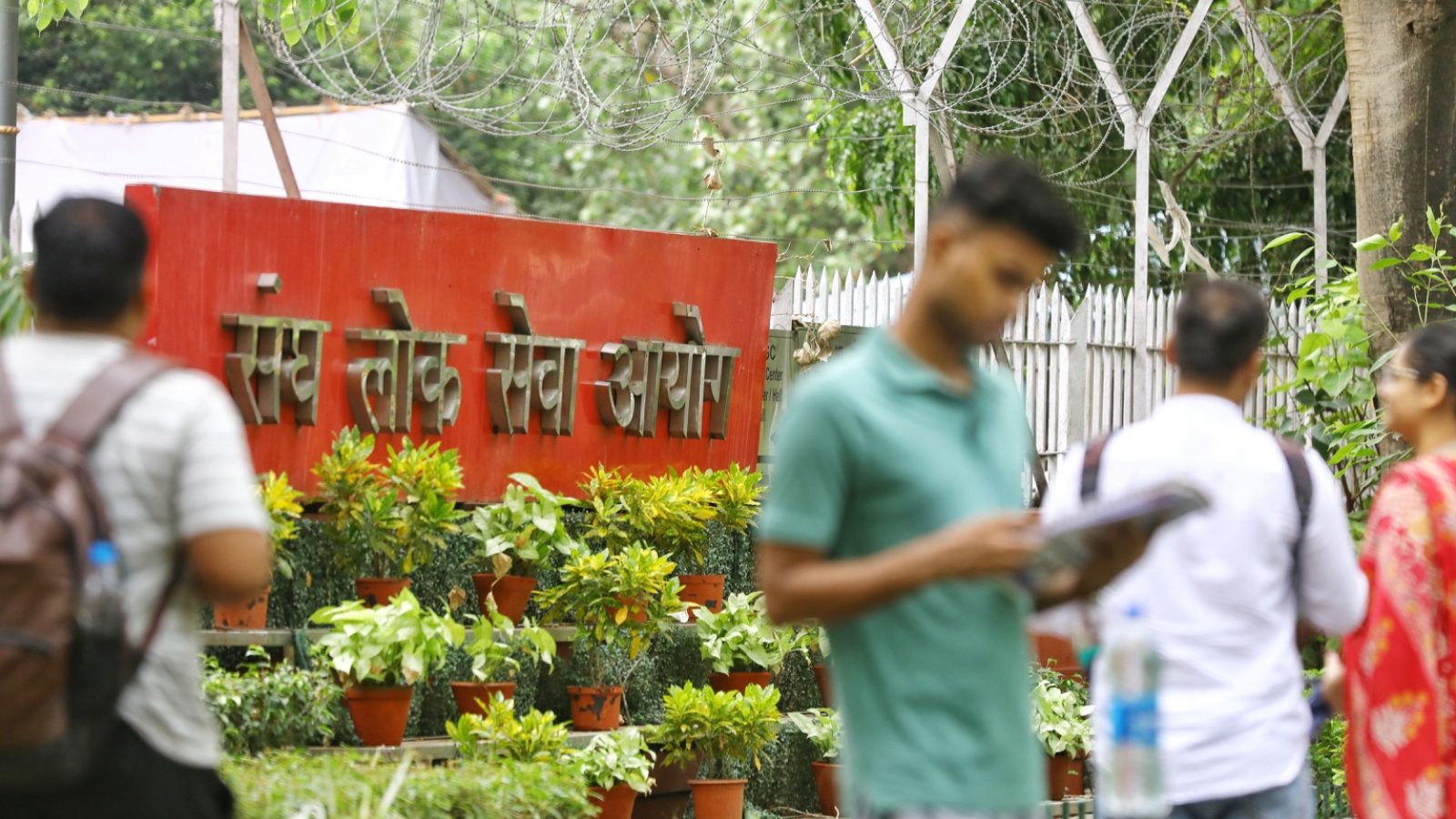
 Civil Services Exam 2025 candidates outside the UPSC office in New Delhi, as an Indian Express investigation reveals questions over EWS quota eligibility among select aspirants. | Express Photo
An investigation by The Indian Express into the 104 candidates selected under the EWS (Economically Weaker Sections) quota in the 2025 UPSC Civil Services Examination raises important questions about how India defines economic disadvantage.
A quick primer: What is EWS?
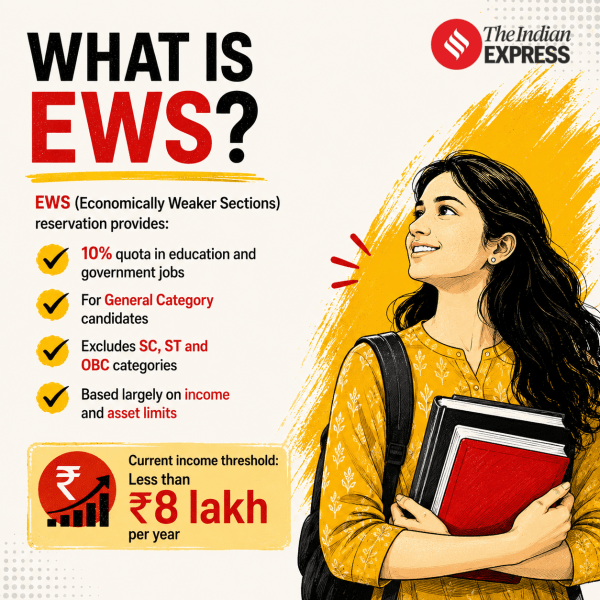
The EWS quota was introduced in 2019 through the 103rd Constitutional Amendment. It provides 10% reservation in education and government jobs for candidates from the “General Category” who are not eligible for reservations under SC, ST, or OBC categories and who meet prescribed income and asset criteria.
Today, a family with an annual income below ₹8 lakh, and within specified asset limits, can qualify for EWS benefits.
Why does this matter in UPSC?
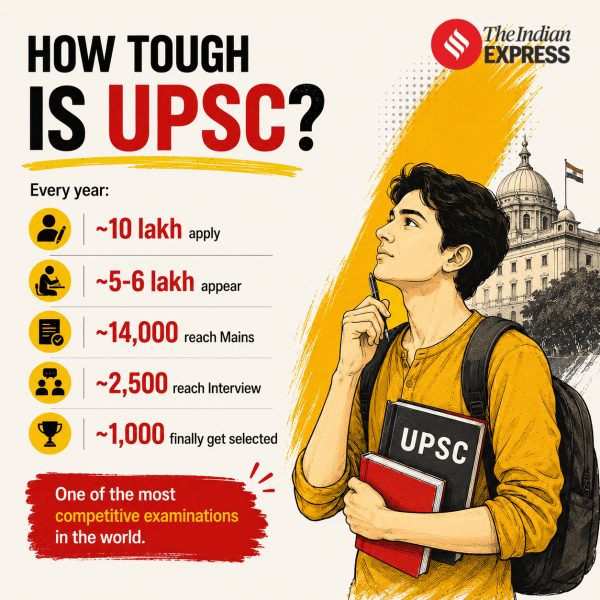
The UPSC Civil Services Examination is among the most competitive exams in the world.
-
Nearly 10 lakh candidates apply each year.
-
Around 5-6 lakh actually appear for the Preliminary Examination.
-
Roughly 14,000-15,000 reach the Mains stage.
-
Around 2,500-3,000 are interviewed.
-
Just 1,000-1,100 candidates are finally selected for the IAS, IPS, IFS and other central services.
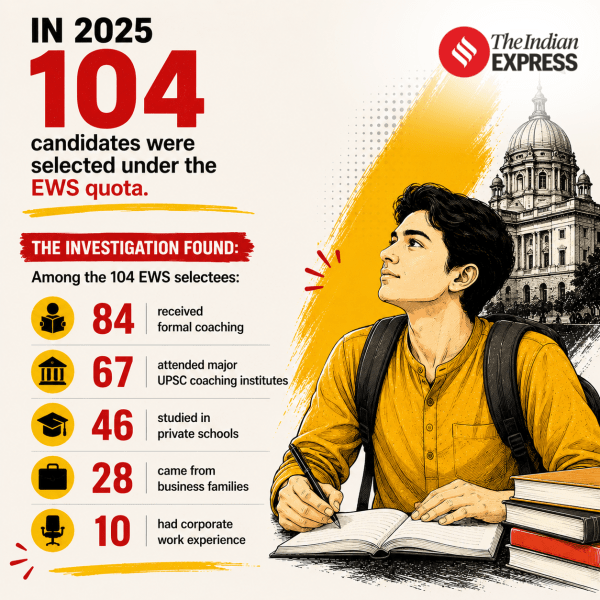
In 2025, 104 candidates were selected under the EWS quota.
The challenge is that UPSC does not publicly disclose how many EWS candidates appear at each stage, making it difficult to calculate precise success rates for the category.
What did the investigation find?
Among the 104 EWS candidates selected:
-
At least 84 had received formal UPSC coaching.
Story continues below this ad
-
At least 67 attended some of India’s most prominent coaching institutes, where fees can run into lakhs of rupees.
-
At least 46 studied in private schools.
-
At least 28 came from business families.
-
At least 10 had prior corporate-sector experience.
-
At least 14 were IIT graduates, with others coming from NITs, Delhi University and JNU.
At the same time, the investigation also found many candidates who clearly fit the intended spirit of the quota — children of farmers, labourers, security guards, bus conductors and other economically vulnerable families.
© IE Online Media Services Pvt Ltd
Loading Recommendations…
Post Comment
Read Comments

