


Won’t allow our territory to be used against India’s interests: Myanmar
Syllabus:
Preliminary Examination:Current events of national and international importance.
Mains Examination:General Studies II: India and its neighbourhood- relations
What’s the ongoing story: Myanmar President U Min Aung Hlaing assured Prime Minister Narendra Modi on Monday that Myanmar’s territory “would not be permitted to be used against India’s security interests”.
Key Points to Ponder:
• Map Work– Myanmar, Tiau River, Kaladan River, Champhai district (Mizoram) and Chin State
• Insurgents in Myanmar affect India-How?
• Know India-Myanmar bilateral relations in detail
• Why is Myanmar important for India?
• Know the Myanmar’s political trajectory since the 2021 coup.
• What are the challenges and opportunities in India-Myanmar bilateral relations.
• What are the security challenges posed by the India-Myanmar border?
• How does instability in Myanmar affect India’s internal security, particularly in the Northeast?
• Know the role of cross-border insurgent groups like ULFA and NSCN in shaping India-Myanmar security cooperation.
• Do you know about Operation Hot Pursuit?
• How Operation Hot Pursuit created temporary diplomatic friction with Myanmar?
• How can India strengthen intelligence-sharing and security cooperation with Myanmar?
• Who is in charge of Myanmar now?
Key Takeaways:
• In the past, India has repeatedly expressed concern over Northeast insurgent groups operating from within Myanmar.
• Briefing reporters after the bilateral meeting, Foreign Secretary Vikram Misri underlined that “stability and peace in Myanmar is a major interest for India”.
• Min Aung Hlaing is visiting India from May 30 to June 3 — his first visit since taking over as President. The former chief of the military junta government was elected President on April 3, five years after he grabbed power in a coup, ousting an elected government.
• Misri said the leaders discussed cooperation on defence and security, critical minerals and rare earth, and connectivity projects. Modi also raised the issue of Nobel laureate Aung San Suu Kyi, who is in detention in Myanmar since the military coup in 2021.
Do You Know:
• Newly elected Myanmar President U Min Aung Hlaing, who is in India for an official visit, was seen offering prayers at Maha Bodhi Temple in Bihar on Saturday. The Mahabodhi Temple in Bodh Gaya, known as the site where Siddhartha Gautama (Gautama Buddha) attained enlightenment, is one of the holiest pilgrimage sites in Buddhism. Hlaing is in Bodh Gaya for the weekend.
• Hlaing visited India in 2019, then as the Commander-in-Chief of Myanmar’s Defence Services. This official trip is his first since being elected President through a parliamentary vote on April 3. In February 2021, Hlaing took control over state power, leading a coup. He later became the Prime Minister of the provisional government.
• He is currently in India to strengthen bilateral ties between New Delhi and Naypyidaw. He will also participate in a business forum, the MEA spokesperson Randhir Jaiswal said.
• The two countries have had a long-standing security cooperation to counter the Ethnic Armed Organizations operating along the Indo-Myanmar border. Jaiswal said that “Myanmar lies at the confluence of India’s Neighborhood First, Act East and MAHASAGAR policies.”
• The word junta originates from Spanish, meaning “meeting” or “committee”. The term was widely used in 16th-Century Spain to refer to various government advisory committees as a junta. In 1808, national and local juntas were organised as part of Spain’s resistance against Napoleon’s invasion. In the following years, the word junta was used to describe governing bodies that emerged during political instability in Spain, Greece, and Latin America.
Other Important Articles Covering the same topic:
📍India cannot take a black-and-white approach to Myanmar
Previous year UPSC Prelims Question Covering similar theme:
1) In the Mekong-Ganga Cooperation, an initiative of six countries, which of the following is/are not a participant/ participants? (UPSC CSE, 2015)
1. Bangladesh
2. Cambodia
3. China
4. Myanmar
5. Thailand
Select the correct answer using the code given below:
(a) 1 only
(b) 2, 3 and 4
(c) 1 and 3
(d) 1, 2 and 5
Previous year UPSC main Question Covering similar theme:
📍 Analyze internal security threats and transborder crimes along Myanmar, Bangladesh and Pakistan borders including Line of Control (LoC). Also, discuss the role played by various security forces in this regard. (UPSC, GS3, 2020)
India seeks edge over Asian peers in US talks
Syllabus:
Preliminary Examination: Current events of national and international importance.
Main Examination:General Studies II: Bilateral, regional and global groupings and agreements involving India and/or affecting India’s interests.
What’s the ongoing story: As negotiators from India and the US begin what seems like the final round of talks before formally signing a bilateral trade agreement, Commerce and Industry Ministry officials Monday said New Delhi is seeking an edge over Asian competitors under the new set of Section 301 tariffs Washington is expected to announce before July end.
Key Points to Ponder:
• What is Section 301 of the of the U.S. Trade Act of 1974 ?
• What is the difference between Section 301 and 232 tariffs?
• The United States has implemented final punitive tariffs on India under Section 301-True or False?
• What is meant by import duty?
• What is the role of import duties in managing trade relations?
• India–US economic and trade relations-know in detail
• Know the significance of the United States as a trade and investment partner for India.
• What are the key areas of convergence and divergence in India–US trade negotiations?
Key Takeaways:
• The US had earlier said it would use Section 301, which gives it powers to slap higher import duty on countries hurting its industry, after the President Donald Trump administration lost the case on reciprocal tariffs in the US Supreme Court. Immediately after this loss, the US had imposed 10% global tariffs under Section 122. This lapses on July 24, which creates the urgency for New Delhi to sign a trade deal within the next 5-7 weeks.
• The framework for the US-India bilateral trade agreement was agreed upon in February when the US said it would bring down tariffs to 18% from an effective tariff of 50% (25% reciprocal and 25% penalty for buying Russian oil).
• “We are not willing to lower duties unless our goods get preferential market access in the US compared with our competitors in Southeast Asian countries. The duty imposed by the US on the European Union or other developed countries does not affect us because our goods are not competing with them,” the official said.
• At a media conference on Monday to announce the operationalisation of the FTA with Oman, Commerce Minister Piyush Goyal said the negotiations are more or less complete and that India and the US have already agreed upon the first tranche of the framework agreement. “Talks will continue for a broader bilateral trade agreement,” he said, adding he expected to meet USTR Jamieson Greer later this month.
• However, experts pointed out that Section 301 tariffs could be worse than IEEPA (International Emergency Economic Powers Act) tariffs that the Trump administration used to pressurise trade partners into accepting steep demands under trade deals. India was on the receiving end of the steepest 50% tariffs last year after trade talks broke down in the face of demands made by the US that were perceived as unreasonable by New Delhi.
• After the Trump administration lost the authority to impose tariffs under IEEPA in February following a legal challenge, the administration in Washington DC opened a new Section 301 investigation within a month over excess manufacturing capacity against 16 countries, including India, China, the European Union, Singapore, Indonesia, Malaysia, Cambodia, Thailand, Korea, Vietnam, Taiwan, and Bangladesh, among others. Just a day after, the USTR initiated a second investigation on forced labour, probing 60 countries, including India.
Do You Know:
• India was one of the worst hit by tariffs that resulted in a flight of foreign investment and resulted in steep depreciation of the domestic currency. The rupee has fallen almost 12% in the last one year. A formal trade deal remained aloof for months as the US demanded that India wind down imports of Russian oil and accept genetically-modified American agricultural products.
• The India-US joint statement of February said India will eliminate or reduce tariffs on all US industrial goods and a wide range of US food and agricultural products, including dried distillers’ grains (DDGs), red sorghum for animal feed, tree nuts, fresh and processed fruit, soybean oil, wine and spirits, and additional products.
• Indicating signs of disagreement, the US later revised a factsheet softening its claims about the gains it had secured from New Delhi and entirely dropping a section on digital services taxes. The earlier version of the factsheet said India had “committed to” buying more American products and purchasing “over $500 billion of U.S. energy, information and communication technology, coal, and other products”. The updated factsheet, as well as the joint statement, tempered the wording from “committed” to “intends”.
Other Important Articles Covering the same topic:
📍India-US: From estranged to engaged to restrained democracies
Previous year UPSC main Question Covering similar theme:
📍‘What introduces friction into the ties between India and the United States is that Washington is still unable to find for India a position in its global strategy, which would satisfy India’s National self-esteem and ambitions’. Explain with suitable examples.(UPSC, GS2, 2019)
POLITICS
Missing from NFHS: Key indicators linked to sex ratio, cancer screening
Syllabus:
Preliminary Examination: Economic and Social Development
Main Examination:General Studies II: Issues relating to development and management of Social Sector/Services relating to Health, Education, Human Resources.
What’s the ongoing story: Several data points from the fifthNational Family Health Survey(NFHS) have been omitted from the NFHS-6 factsheet released on May 29, despite questions corresponding to these having been asked during the survey conducted between 2023 and 2024.
Key Points to Ponder:
• The Sixth National Family Health Survey (NFHS) factsheet-what are the key takeaways?
• What NFHS-6 said about child health and nutrition?
• What are the concerns highlighted by NFHS-6?
• What are the issues highlighted with the data in NFHS-6 factsheet?
• The NFHS-5 (2019-21) factsheet and the NFHS-6 factsheet-Compare and Contrast
• ‘The data removed from the NFHS factsheets is an attempt at data harmonisation between reports’-What is Data harmonization?
• What is National Family Health Survey (NFHS)?
• Know he significance of the National Family Health Survey (NFHS) in public policy formulation and governance.
• How does reliable demographic and health data contribute to evidence-based policymaking?
• What is the role of large-scale surveys such as NFHS in monitoring social development outcomes?
• What issues and the challenges can came with the data omissions and data gaps in national health surveys?
Key Takeaways:
• The omitted data points include several population-level statistics, indicators related to women’s and children’s health, family planning, and data on central government schemes such as the Swachch Bharat Abhiyan (sanitation) and the Ujjwala Yojana (cooking fuel).
• Sources in the Union Ministry of Health and Family Welfare explained that several data points in the NFHS were being reported by other surveys, and the omissions were an attempt at “data harmonisation”.
• Omissions include indicators of the population sex ratio, the sex ratio at birth, mortality rates, and the percentages of births and deaths recorded in the civil registration system. The latest factsheet also lacks indicators on access to sanitation facilities, such as toilets, and to clean cooking fuels. Several indicators for women’s health were also removed, such as adolescent fertility rate, type of contraceptives being used, whether health workers had counselled women on family planning, and whether they were informed about the side effects of their chosen contraceptive method.
• The fact sheet also removed an indicator of women’s access to healthcare services — the out-of-pocket expenditure for each delivery.
• Data on the reach of several health programmes were also removed, including data on children with diarrhoea who received ORS or zinc, HIV awareness and service delivery, and the waist-to-hip ratio, an indicator of abdominal obesity linked to increased risk of diseases such as diabetes and hypertension.
• The data points on screening for the three most common types of cancers — cervical, breast, and oral — were also removed. More than 1.5 lakh Ayushman Arogya Mandirs or primary health centres have been upgraded since 2018 to provide screening and care for non-communicable diseases, including the three cancers. However, the uptake of cancer screening services has been poor. NFHS-5 data showed that only 0.9% of people were screened for breast and oral cancers, and 1.9% for cervical cancer.
Do You Know:
• The NFHS is a large-scale household survey conducted across India to track vital data on health, family welfare, and nutrition. Indicators help policymakers evaluate and design effective public health programmes. The first such survey took place in 1992-93. It is conducted by the International Institute of Population Sciences (IIPS), under the supervision of the Ministry of Health and Family Welfare.
• The NFHS-5 (2019-21) factsheet had 131 key indicators or data points at the national level, while the NFHS-6 factsheet has 101.
Other Important Articles Covering the same topic:
📍Health survey calls for a nutrition rethink
Previous year UPSC Prelims Question Covering similar theme:
2) Consider the following statements: (UPSC CSE, 2023)
Statement-I: India’s public sector health care system largely focuses on curative care with limited preventive, promotive and rehabilitative care.
Statement-II: Under India’s decentralized approach to health care delivery, the States are primarily responsible for organising health services.
Which one of the following is correct in respect of the above statements?
(a) Both Statement-I and Statement-II are correct and Statement-II is the correct explanation for Statement-I
(b) Both Statement-I and Statement-II are correct and Statement-II is not the correct explanation for Statement-I
(c) Statement-I is correct but Statement-II is incorrect
(d) Statement-I is incorrect but Statement-II is correct
Previous year UPSC main Question Covering similar theme:
📍In order to enhance the prospects of social development, sound and adequate health care policies are needed particularly in the fields of geriatric and maternal health care. Discuss. (UPSC GS2, 2020)
NATION
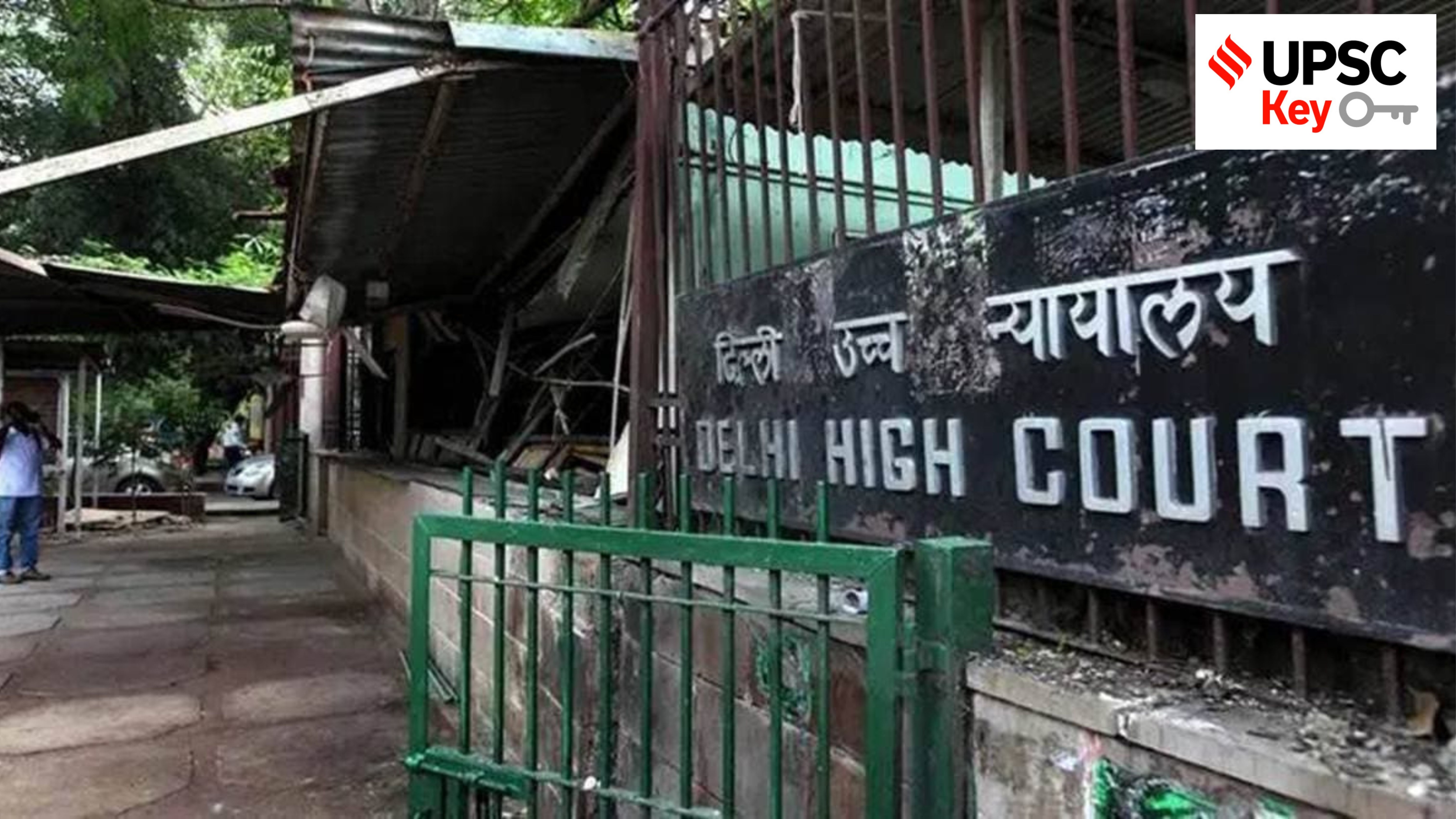
Do not index legal records online using names, rules Delhi High Court
Syllabus:
Preliminary Examination: Indian Polity and Governance
Main Examination:General Studies II: Indian Constitution—historical underpinnings, evolution, features, amendments, significant provisions and basic structure.
What’s the ongoing story: The Delhi High Court held last week that individuals who have been acquitted or discharged or whose cases have been quashed are entitled to have their names de-indexed from name-based internet search results. In doing so, the court stated that the right to informational privacy under Article 21 (right to protection of life and liberty) extends to the digital domain.
Key Points to Ponder:
• What is case?
• What is the right to be forgotten?
• What exactly Supreme Court of India said in R. Rajagopal v. State of Tamil Nadu (1994)?
• How, Google, Indian Kanoon (which hosts legal judgments), X Corp, and other intermediaries countered?
• What makes K.S. Puttaswamy v. Union of India (2017) a watershed moment in the realm of fundamental rights?
• What the Delhi HC held?
• When information can be removed?
Key Takeaways:
• The bench comprising Justice Sachin Datta laid down a framework governing when search engines and legal databases can be directed to de-index judicial records, while also identifying cases where relief would be available.
• It held, “In a society where digital records are virtually indelible, the ability to seek erasure ensures that informational self-determination remains effective. It protects individuals from perpetual exposure to past events that may no longer bear relevance, while preserving their dignity and autonomy.”
• The petitioners, ranging from persons acquitted in criminal cases to parties in matrimonial disputes, argued that the internet search engine gives information a form of permanence. Allowing old allegations to remain accessible can continue to affect employment, reputation and personal dignity, they said.
• Google, Indian Kanoon (which hosts legal judgments), X Corp, and other intermediaries countered that they merely facilitate access to information already available in the public domain. Google described itself as functioning “analogous to a library index”.
Media organisations argued that the removal of selective information would undermine transparency and “distort public memory”.
• The respondents’ central argument was that judicial records are public documents, and that making them easily searchable is part of the principle of open justice. Once information comprises public records, they contended, the right to privacy no longer subsists. The court rejected that argument. It drew on the SC’s Sahara India Real Estate Corp v SEBI (2012), which held that open justice is “the cornerstone of our judicial system” and that “the right to open justice is not absolute.”
• Distinguishing judicial records and name-based digital searchability, the court held that “‘Open justice’ requires that judicial records exist, they be maintained; and they be accessible to those with a legitimate purpose.” What it cannot be extended to “is that a private individual’s name functions as a permanent and unlimited retrieval key, through a commercial search engine.”
Section 79 of the Information Technology Act states that intermediaries are shielded from liability for third-party content so long as they exercise due diligence and act on court orders.
Do You Know:
• The right to be forgotten is not a standalone statutory right but understood as a facet of the broader right to privacy under Article 21.
• The principle is that an individual should be able to control the use of their personal data, including demanding its removal when it no longer serves a legitimate purpose or causes disproportionate harm.
Indian courts first engaged with privacy and public records in R. Rajagopal v. State of Tamil Nadu (1994), where the Supreme Court held that information forming part of public records could legitimately be reported by the press.
• The doctrine came up in the landmark case of K.S. Puttaswamy v. Union of India (2017), where a nine-judge bench held privacy as a fundamental right. Justice Sanjay Kishan Kaul, in his concurring opinion, said that “an individual who is no longer desirous of his personal data to be processed or stored, should be able to remove it from the system where the personal data/ information is no longer necessary.”
• The SC is already examining related questions. In February, it stayed a Delhi HC order directing Indian Kanoon and The Indian Express digital to remove reports concerning a person discharged in an AgustaWestland-linked money-laundering case.
The dispute stemmed from a defamation suit filed by a banker seeking removal and de-indexing of three news reports after he was discharged in a money laundering investigation. The reports were based on his comments, press releases of the Enforcement Directorate and court proceedings.
A bench of Justices B V Nagarathna and Ujjal Bhuyan, however, clarified that the HC order “would not operate as a precedent”.
Other Important Articles Covering the same topic:
📍Explained: Issues of press freedom, ‘right to be forgotten’ in challenge to Sandesara gag order
Previous year UPSC Prelims Question Covering similar theme:
3) Under which of the following Articles of the Constitution of India, has the Supreme Court of India placed the Right to Privacy? (UPSC CSE, 2024)
(a) Article 15
(b) Article 16
(c) Article 19
(d) Article 21
India, Australia agree to advance maritime awareness activities
Syllabus:
Preliminary Examination:Current events of national and international importance.
Mains Examination:General Studies II: Bilateral, regional and global groupings and agreements involving India and/or affecting India’s interests.
What’s the ongoing story: DEFENCE MINISTER Rajnath Singh and his Australian counterpart Richard Marles have agreed to advance collaborative maritime domain awareness activities using maritime patrol aircraft and to explore opportunities to enhance undersea domain awareness. The two leaders on Monday co-chaired the second edition of the India-Australia Defence Ministers’ Dialogue in New Delhi.
Key Points to Ponder:
• India-Australia Bilateral Relations-Background
• Map Work-Australia, Important Cities, Physiography
• India & Australia-What are the areas of cooperation?
• What are the contentious issues between India and Australia?
• Strategic ties between India-Australia-How they have evolved?
• India, Australia and China-Examine
• Know the significance of maritime cooperation in strengthening India-Australia strategic relations.
• Know the role of defence and security cooperation in deepening India-Australia ties.
Key Takeaways:
• According to a joint statement issued by the two countries, the ministers welcomed the significant progress in bilateral relationship and reflected on the enhanced consultation and cooperation since the inaugural edition of the dialogue on October 9 last year.
• The joint statement noted that the two sides discussed efforts to finalise the Joint Maritime Security Collaboration Roadmap.
• The statement further said India and Australia, as co-leads of the Indian Ocean Rim Association Working Group on Maritime Safety and Security, look forward to jointly host a Search & Rescue and tabletop exercise at Maritime Rescue Coordination Centre, Chennai this month to strengthen maritime safety and security cooperation in the Indian Ocean Region.
• The Ministers welcomed increased information sharing between operational headquarters and said they are looking forward to the inaugural Joint Staff Talks later this year, the statement said. The two leaders encouraged their officials to finalise arrangements for the deployment of an Indian visiting instructor at the Australian Defence College in 2028-2029 to strengthen professional military engagement, knowledge exchange, and strategic alignment.
Do You Know:
• India-Australia relations gained significant momentum following PM Narendra Modi’s visit to Australia in 2014. The relationship has since produced several key security agreements, including the Comprehensive Strategic Partnership and the Mutual Logistics Support Agreement (MLSA).
Other Important Articles Covering the same topic:
📍The India-Australia relationship: Strategic and trade ties; the China factor
Previous year UPSC Prelims Question Covering similar theme:
4) Which of the following adopted a law on data protection and privacy for its citizens known as General Data Protection Regulation’ in April 2016 and started implementation of it from 25th May, 2018? (UPSC CSE, 2019)
(a) Australia
(b) Canada
(c) The European Union
(d) The United States of America
EXPLAINED
‘Cheap’ global money flow into India drying up
Syllabus:
Preliminary Examination:Economic and Social Development-Sustainable Development, Poverty, Inclusion, Demographics, Social Sector Initiatives, etc.
Mains Examination:General Studies III: Indian Economy and issues relating to planning, mobilization, of resources, growth, development and employment.
What’s the ongoing story: The Reserve Bank of India’s annual report for 2025-26 has expressed concern over “elevated” sovereign bond yields and possible “reversal” of monetary easing (read interest rate hikes) by global central banks, in response to the West Asia crisis-induced inflationary pressures.
Key Points to Ponder:
• The Reserve Bank of India’s annual report for 2025-26-what are the key takeaways?
• What is government bond yield?
• Why do governments borrow money?
• How do governments borrow money?
• What is the impact of higher yields on government bonds?
• What is the impact of lower yields on government bonds?
• What do you understand by Government Securities (G-Secs)?
• Which securities are also known as G SEC?
• What are the types of Government Securities (G-Secs)?
• What are Treasury Bills (T-bills), Cash Management Bills (CMBs), Dated G-Secs, and State Development Loans (SDLs)?
• How Treasury Bills (T-bills), Cash Management Bills (CMBs), Dated G-Secs, and State Development Loans (SDLs) are different from each other?
• How are they issued?
• What Are Open Market Operations (OMOs)?
• Why RBI has expressed concern over “elevated” sovereign bond yields and possible “reversal” of monetary easing?
• What is quantitative easing?
• How yields have moved over the last ten years?
• What explains the changed situation – the end of cheap global money?
• Why does this matter for India?
• How have inflationary pressures altered the monetary policy stance of major central banks across the world?
Key Takeaways:
• That concern has also been articulated by the government’s chief economic advisor V. Anantha Nageswaran. In a recent opinion piece for The Indian Express, he has pointed to the “end of the era of quantitative easing and near-zero interest rates”, while calling it “perhaps the single most consequential development in global capital markets” in recent times.
• To understand what is being said, one must look at yields on 10-year government bonds. A government bond is basically a debt instrument issued by a sovereign authority to borrow money for a specific, predetermined period. In
return, the issuer promises to pay a fixed annual interest over the life of the bond and also return the original borrowed amount on its maturity date.
Do You Know:
• A government bond is basically a debt instrument issued by a sovereign authority to borrow money for a specific, predetermined period. In return, the issuer promises to pay a fixed annual interest over the life of the bond and also return the original borrowed amount on its maturity date.
Government bonds are considered to be the safest or close to “risk-free” assets, as their payments are backed by the sovereign’s power to tax or even print money. Government bond yields, in turn, serve as a benchmark for setting interest rates across other fixed-income securities – by establishing the “minimum” return investors would expect for their money over a comparable period.
• Negative yields are possible in scenarios of deflation (falling prices of goods and services) or the issuing country’s currency appreciating (like the Japanese yen was prone to). The investor will make money if the inflation rate is even more negative or converts the same Japanese yens into more of his own currency (say, dollar). Negative yields are also common in times of extreme economic uncertainty, when investors choose safety over returns; a minus 1% bond yield would be less of a loss than a double-digit fall in stock market values.
• When global money was cheap, India was a beneficiary of capital flooding emerging markets in search of higher yields.
—Net capital flows into India surged from $8.3 billion in 1998-99 to a record $107.9 billion in 2007-08. It collapsed to $7.8 billion in the 2008-09 financial crisis year, but averaged $67.3 billion annually between 2009-10 and 2023-24. The tide turned in 2024-25, with net inflows of just $18 billion. The first nine months of 2025-26 saw net capital outflows of $580 million.
—Foreign capital may still return to India. But it would probably require India offering a more compelling “pull” story (higher GDP and earnings growth prospects) than a “push” from cheap global money that is now history.
Other Important Articles Covering the same topic:
📍We need to speed up economic reform, but pessimism doesn’t help
Previous year UPSC Prelims Question Covering similar theme:
5) Which of the following are the sources of income for the Reserve Bank of India? (UPSC CSE, 2025)
I. Buying and selling Government bonds
II. Buying and selling foreign currency
III. Pension fund management
IV. Lending to private companies
V. Printing and distributing currency notes
Select the correct answer using the code given below.
(a) I and II only
(b) II, III and IV
(c) I, III, IV and V
(d), II and V
Codeine crisis: In dry Bihar, why cough syrup addiction is rising
Syllabus:
Preliminary Examination: Current events of national and international importance.
Main Examination:General Studies II: Issues relating to development and management of Social Sector/Services relating to Health, Education, Human Resources.
What’s the ongoing story: As Bihar approaches a decade of alcohol prohibition, codeine cough syrups have surged as a cheap substitute, with seizures and addiction cases rising, especially among youngsters and in rural areas.
Key Points to Ponder:
• What is codeine?
• Why Bihar have alcohol prohibition?
• How the Indian constitution views alcohol?
• Why do all states not have prohibition?
• What are some of the places which currently have prohibition?
• Does prohibition work?
• Know the successes and limitations of the prohibition policy in Bihar.
Key Takeaways:
• The Directorate of Revenue Intelligence (DRI) this week seized 7,500 bottles of codeine-based cough syrup from outside the Rajendranagar Terminal Railway Station in Patna.
The alcohol ban reduced overt alcohol harm but fuelled an underground market for opioid alternatives, straining police, hospitals, and de-addiction centres.
Do You Know:
• Since Bihar enforced alcohol prohibition in 2016, codeine cough syrups have emerged as an increasingly popular alternative to alcoholic beverages. The ban, intended to reduce violence, road accidents, and social harm, has not eradicated substance abuse but has instead fostered new forms of addiction.
• Codeine is a naturally occurring opioid derived from morphine, a compound found in the opium poppy. Used primarily as a cough suppressant, it is found in various medicines, particularly cough syrups, where it works by suppressing the brain’s cough centre. It is commonly prescribed for upper respiratory infections or chronic conditions like bronchitis, which cause persistent dry coughs. However, it is not the first-line treatment for the common cold.
• In therapeutic doses, codeine helps manage severe, persistent coughs that don’t respond to common treatments like antihistamines. The recommended dosage for adults is typically from 10–20 mg every 4–6 hours, up to a maximum of 120 mg daily. Children under the age of 12 are generally advised to avoid it, as it can be rapidly converted into morphine in their bodies, causing potentially dangerous respiratory complications.
• Even within the prescribed limits, codeine can cause side effects including drowsiness, constipation, nausea, and dizziness. Misuse can lead to respiratory depression — where breathing becomes dangerously slow — as well as tolerance, addiction, and withdrawal symptoms such as anxiety, sweating, and irritability.
• Codeine can also be intoxicating, especially when combined with depressants like alcohol. Overuse can damage the liver, kidneys, and mental health, leading to psychiatric disorders. Hospitals in Bihar are reporting more young people suffering these long-term effects.
Other Important Articles Covering the same topic:
📍Bihar prohibition: Four-fold jump in drug cases since 2016 alcohol ban
Gir lion deaths not alarming but flag need for multiple populations
Syllabus:
Preliminary Examination: General issues on Environmental ecology, Bio-diversity and Climate Change – that do not require subject specialization.
Main Examination:General Studies III: Conservation, environmental pollution and degradation, environmental impact assessment.
What’s the ongoing story: In Gujarat’s Gir region,eight lions, including cubs, have died due to a suspected Babesiosis infection caused by theBabesiaparasite, the state’s Forest and Environment Minister Arjun Modhwadia said Friday (May 29). The state Forest Departmenthas isolatedlions residing within a 10-km radius of affected areas in Gir Somnath and Amreli districts as a preventive measure, while lions suspected to be affected were being treated, Modhwadia added.
Key Points to Ponder:
• Map Work-Gir region
• How does the Babesiosis infection get transmitted to lions, or other wildlife?
• What are the typical symptoms and in what conditions does it cause fatality in lions?
• What is the emergency response required when there are suspected Babesia-linked deaths in lions?
• Do these kinds of episodes need intervention by authorities?
• Know the significance of the Gir landscape in the conservation of Asiatic lions in India.
• What are the strengths and limitations of the single-population conservation model for endangered species?
• Discuss the role of infectious diseases as a threat to wildlife conservation.
• How do disease outbreaks affect the conservation prospects of endangered species?
Key Takeaways:
• Gujarat Forest and Environment Minister Arjun Modhwadia said that eight lion cubs have died of suspected Babesia parasitic infection in the Gir region and that reports of their samples, sent to Gujarat Biotechnology Research Center, are expected in three-four days.
• Modhwadia added that there has been no such suspected death of lions in the last two days.
Modhwadia said, “Deaths of eight lion cubs have come to light. And whether the deaths have occurred owing to Babesia or for some other reason, its confirmation can be done only after getting the medical report.”
• Babesia, a parasitic disease, spreads through ticks and can cause weakness, coughing and nasal discharge in affected animals.
• The deaths of the big cat cubs due to suspected Babesia infection have been reported in the revenue areas outside the Gir sanctuary, particularly in Gir Gadhada of Gir Somnath and Babra Kot of Amreli districts, he said.
Do You Know:
• Babesia (the parasite) is endemic and prevalent at low levels in livestock, wild ungulates (refers to large mammals with hooves), and even in lions, without causing mortality and without causing symptoms in most cases. Babesiosis is a tick-borne parasitic infection that lions and other wildlife can get from the bite of ticks infected with the Babesia parasite.
In nature, there is a host-parasite equilibrium, so that both co-exist, and this rarely needs an intervention. Domestic livestock along with wild ungulates such as chital, nilgai act as asymptomatic reservoirs of Babesia. Under nutritional or physiological stress, or with other infections, it (Babesiosis) can cause mortality.
• Babesia acts much like malaria. It is a protozoan, like Plasmodium, and it infects and ruptures red blood cells. The symptoms include lethargy, anaemia, enlarged spleen, and high fever. In conditions of stress, co-infections, or genetic predisposition, the infection can cause organ failures and mortality.
• Natural processes are best left unmanaged in wild populations. As mentioned, wild animals are also reservoirs of several pathogens including Babesia. In nature, disease and hosts reach an equilibrium so that both coexist and rarely do need intervention.
Other Important Articles Covering the same topic:
📍Two lion cubs died of suspected parasitic infection, says Gujarat govt
Previous year UPSC Prelims Question Covering similar theme:
6) Consider the following statements: (UPSC CSE, 2019)
1. Asiatic lion is naturally found in India only.
2. Double-humped camel is naturally found in India only.
3. One-horned rhinoceros is naturally found in India only.
Which of the statements given above is/are correct?
(a) 1 only
(b) 2 only
(c) 1 and 3 only
(d) 1, 2 and 3
The overlooked conflict: Civil war and humanitarian disaster in South Sudan
Syllabus:
Preliminary Examination:Current events of national and international importance.
Main Examination:General Studies II: Important International institutions, agencies and fora- their structure, mandate.
What’s the ongoing story: Among the United Nations Peacekeepers to be honoured with the Dag Hammarskjöld Medal this year, given to those who lost their lives on UN peacekeeping missions, is Indian national Naib Subedar Sujit Kumar Pradhan, killed in South Sudan last year.
Key Points to Ponder:
• Map Work-South Sudan
• What are the historical factors that led to the creation of South Sudan as an independent nation in 2011?
• What is the role of ethnic identity in shaping political conflicts in Africa?
• What is the concept of the “resource curse” with reference to South Sudan?
• Know the humanitarian consequences of prolonged civil wars.
• What is United Nations Peacekeeping?
• Know the role of the United Nations Mission in South Sudan in maintaining peace and stability.
• What are the challenges faced by UN peacekeeping missions in South Sudan?
• What is India’s contribution to peacekeeping missions?
Key Takeaways:
• India is the second-largest troops contributor to United Nations Mission in South Sudan (UNMISS), with 4,268 personnel as of March 31.
• South Sudan is the youngest country in the world, created only 15 years ago. UNMISS was created almost along with the country. The nation’s short history is marked with such conflict that today, more than half its population faces acute food shortage. The latest round of fighting has been raging since March last year, in which hundreds are estimated dead while thousands have been displaced, though exact figures are hard to come by.
• The humanitarian organisation Médecins Sans Frontières (MSF), also called Doctors Without Borders, has been operating in South Sudan almost since the country’s inception. Its Head of Mission, Yashovardhan, told The Indian Express, “I was in South Sudan in 2014, in Unity State, when the civil war first broke out in December 2013. Hundreds of thousands of people were displaced and put up in the UN peacekeeping mission compound. This time, I went to Jonglei. After 12 years and in two regions, the situation is the same.
Do You Know:
• South Sudan was created after a long struggle for independence from the Republic of Sudan, itself created in 1956 after British and Egyptian colonial rule ended. The southern region of this nation felt sidelined and unfairly treated, leading to the birth of South Sudan in 2011.
• Two leaders of the independence struggle, the Sudan People’s Liberation Movement, were Salva Kiir, the current President of South Sudan, and Riek Machar, who served as his Vice President when the country gained independence. Kiir soon accused Machar of plotting to overthrow him, and the leadership tussle between them flared up into a civil war in 2013, fuelled by local-level tensions and grievances.
• Kiir belongs to the Dinka community, while Machar is from the Nuer group. Their supporters rallied behind them, and the two sides fought brutally.
• After five years of fighting, a peace agreement, ‘Revitalised Agreement on the Resolution of the Conflict in the Republic of South Sudan’, was signed in 2018. Machar came back as Vice President.
• Then in March 2025, the White Army, a militia that supports Machar, had a skirmish with the Army. Within weeks, Machar was placed under house arrest and over the next few months, charged with various crimes, including murder and treason. Fighting has been raging ever since.
• People have possessed arms, and the knowledge to use them, since the days of the independence struggle, when the rebels were looting government armouries and the government was arming those loyal to it. Also, the largely pastoral society has had a culture of cattle raids.
• A UN report from April says, “Hunger is pushing 56 per cent of South Sudan’s population into high levels of acute food insecurity between April and July 2026… Through July this year, 700,000 children are projected to face severe acute malnutrition, the deadliest form.”
Other Important Articles Covering the same topic:
📍Conflicts in Africa | Why Sudan remains trapped in prolonged civil war
Previous year UPSC Prelims Question Covering similar theme:
7) In recent years Chad, Guinea, Mali and Sudan caught international attention for which one of the following reasons common to all of them? (UPSC CSE, 2023)
(a) Discovery of rich deposits of rare earth elements
(b) Establishment of Chinese military bases
(c) Southward expansion of Sahara Desert
(d) Successful coups
8) Consider the following statements: (UPSC CSE, 2022)
1. Bidibidi is a large refugee settlement in north-western Kenya.
2. Some people who fled from South Sudan civil war live in Bidibidi.
3. Some people who fled from civil war in Somalia live in Dadaab refugee complex in Kenya.
Which of the statements given above is/are correct?
(a) 1 and 2
(b) 2 only
(c) 2 and 3
(d) 3 only
9) ‘Doctors Without Borders (Medecins Sans Frontieres)’, often in the news, is (UPSC CSE, 2016)
a) a division of World Health Organization
b) a non-governmental international organization
c) an inter-governmental agency sponsored by European Union
d) a specialized agency of the United Nations
|
PRELIMS ANSWER KEY |
| 1.(c) 2.(d) 3.(d) 4.(c) 5.(a) 6.(a) 7.(d) 8.(c) 9.(b) |
For any queries and feedback, contact priya.shukla@indianexpress.com
Subscribe to our UPSC newsletter. Stay updated with the latest UPSC articles by joining our Telegram channel – IndianExpress UPSC Hub, and follow us on Instagram and X.

