

Rishabh Tomar had been holding his Circoloco ticket since October. The Delhi-based DJ had flown into Mumbai two days before the show, booked his hotel, and absorbed the full cost of the trip, roughly Rs 50,000. He had heard rumours. The Calvin Harris concert just a night earlier had been stripped of its alcohol licence at the last minute, and there was an inkling the same fate might await Circoloco. He pushed the thought aside. The organisers would find a way. They always did.
They didn’t. On the night of May 19, hours before internationally acclaimed DJs Michael Bibi, Marco Carola and MAU P were scheduled to take the stage at the Jio World Garden in BKC, Circoloco’s debut India show was cancelled. Over 4,000 tickets had been sold. Attendees had flown in from across the country and from the UK, Costa Rica, Dubai and Sri Lanka. A couple from Britain, who had followed Circoloco editions across the world, made the trip specifically for this. The production was in place. The artists were already in the country. It had been in the making for over a year.

“If it had to be cancelled, it should at least happen a week in advance so people can save some cost,” Tomar said. Then, after a pause: “But who to blame?”
That question is now hanging over Mumbai’s live entertainment industry.
A market everyone was betting on
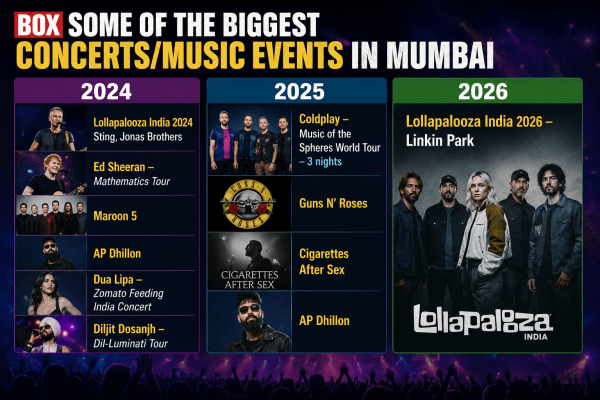
Eighteen months ago, the phrase “concert economy” entered mainstream vocabulary when Prime Minister Narendra Modi invoked it at a public address in Bhubaneswar in January 2025. He wasn’t wrong to. India’s live music market had been on a sustained upward curve. Coldplay, Dua Lipa, Linkin Park, Maroon 5, AP Dhillon and Diljit Dosanjh had all drawn massive crowds. International agencies were queuing up. Shakira and Kanye West had been announced for India dates. The momentum felt structural, not seasonal.
The numbers backed it up. The organised live events market was valued at Rs 20,861 crore in 2024, registering 15 per cent growth, according to a whitepaper presented at Waves 2025.
Then, on April 11, two students died following a reported drug overdose at a concert by Italian techno duo 999999999, aka 9×9, at NESCO, Goregaon East. The crackdown that followed was swift and, for the industry, devastating.
Story continues below this ad
Circoloco was cancelled the following fortnight. The inaugural Musicland India festival, headlined by Badshah, with tickets worth Rs 2 crore already sold, was called off after promoters received no response from police despite multiple attempts at clearance. Sound Simplify, the promoter behind Circoloco, also rescheduled a four-city tour by Brazilian DJ Mochakk. The Kanye West show in Delhi fell through. So did Shakira’s India dates. She dropped out of headlining District’s Feeding India Concert 2026. In the space of a few weeks, the concert economy that everyone had been betting on developed a visible crack.
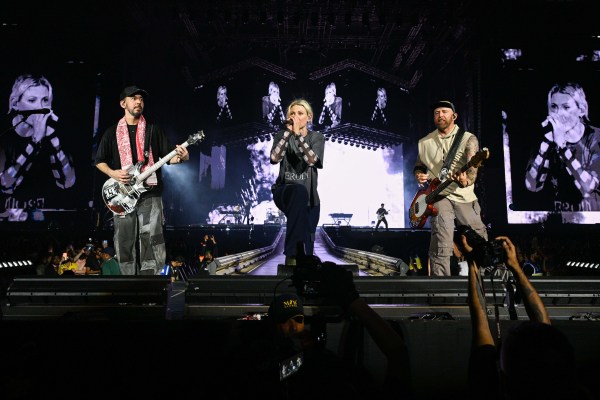 Lollapalooza India 2026 – Linkin Park. (Express Photo by Sankhadeep Banerjee)
Mumbai at the centre
The crackdown, industry insiders say, is most acutely targeted at outdoor events involving alcohol and electronic music. “Outdoor events are a no-go right now,” said Roydon Bangera, Chief Business Officer at Skillbox, a live events company. “Any outdoor event at the Jio Garden or Mahalaxmi has a lot of uncertainty. NESCO is essentially sealed.”
Senior Mumbai police officers confirm the logic. Concerts featuring EDM genres like techno and trance will face stricter scrutiny before receiving permissions, they told The Indian Express, because officers have found a higher probability of drug use at such events. “If there is a singer, like if it is a Mohammad Rafi night or the Calvin Harris concert, the permission will be given more easily,” a senior officer said.
The alcohol dimension has compounded the damage. Many large-scale events in India are fronted by alcohol brands, and losing those permissions doesn’t just affect the atmosphere, it hollows out the financial model. “No alcohol permissions means lost F&B revenue, which is a major line in the P&L,” Bangera noted.
Story continues below this ad
Ticketing platform BookMyShow, which also produces and promotes leading live concerts,received permission to go ahead with Calvin Harris but without alcohol.“When no-alcohol conditions are introduced late in the planning cycle, the impact goes far beyond consumer experience, affecting sponsor integrations and other commercial commitments locked in months in advance,” a spokesperson said. “Such uncertainty risks weakening long-term confidence in India’s live entertainment market, especially for global artists assessing India as a touring destination.”
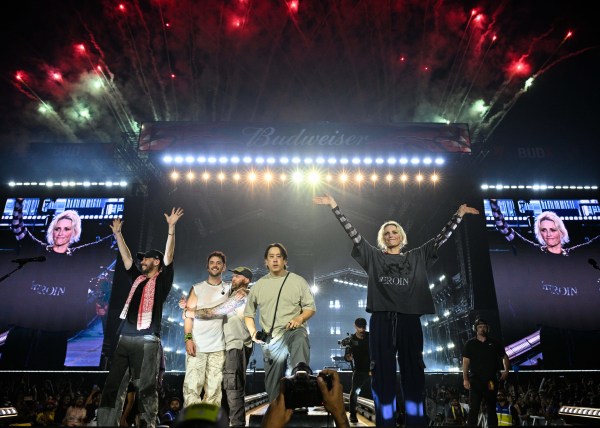 Lollapalooza India 2026 – Linkin Park. (Express Photo by Sankhadeep Banerjee)
The uncertainty is also coming from a second direction. Geopolitical tension has driven up fuel and logistics costs, making the economics of flying in international artists with large production setups increasingly fragile. “These artists travel with their own teams, often on chartered flights, carrying massive production setups. The costs have become so high that staging these shows is increasingly unaffordable,” said Bachitter Singh, technical advance manager at Event Network Entertainment, which was involved in the Shakira concerts. “It is better to pause or cancel than absorb massive losses or put up a compromised production.”
The result is a city that was, until recently, one of the fastest-growing live music markets in Asia, now watching shows migrate, postpone or quietly disappear.
What the industry is doing about it
Promoters are not folding. But they are recalibrating.
Story continues below this ad
Sound Simplify is pushing shows to late 2026 or into 2027. More significantly, the company is restructuring how it approaches permissions. Venues will now be expected to confirm their standing with authorities in writing before any artist booking is confirmed. “When locking a show, we will have a joint discussion with the venue about what they can confirm before any artist or IP confirmation goes out,” said Arjun Nair, Head of Strategic Partnerships at Sound Simplify. The company is also planning to engage local police, traffic authorities and, for key events, the tourism ministry and the Chief Minister’s office months in advance.
Contractual frameworks are also being revisited. Standard cancellation clauses typically protect the artist. Fees are not refunded, and the promoter absorbs the loss. Promoters are now pushing for a new clause: if cancellation is caused by a geopolitical situation and no viable rescheduled date exists, the advance paid to the artist should be returned. “This is not standard yet,” said Bangera, “but the conversations have started.”
The target for recovery is Q4, October through December, historically the peak season for live events in India.
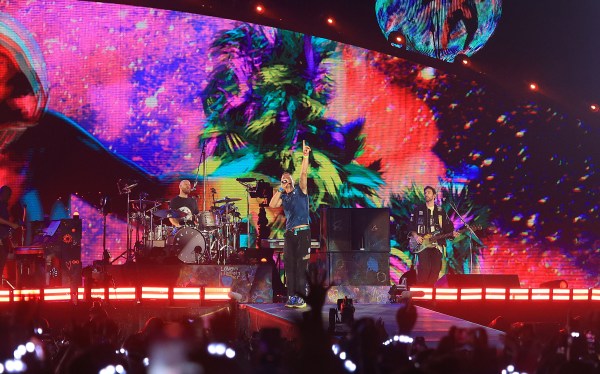 2025 ColdPlay concert in Navi Mumbai. (Express Photo by Amit Chakravarty)
The deeper problem
The current disruption has also exposed a structural deficit that precedes the NESCO incident and will outlast it.
Story continues below this ad
Mumbai has almost no mid-size venue for events in the 2,000-5,000 capacity range. “Promoters are routinely forced into mall spaces or outdoor grounds with no permanent infrastructure. A single-window licensing body has been announced but, as of now, no operational clarity has reached the people who actually run shows. The government talks about concert economy at the top level,” said Bangera, “but without building the grassroots infrastructure that would make the economy sustainable.”
The cost of that gap falls hardest on the smallest operators. “When a show is cancelled last-minute, the promoter absorbs not just the artist fee but every vendor, technician, production agency and stage manager attached to the event. For smaller promoters, one bad cancellation can mean shutting down entirely,” he said.
The numbers bear this out. Shijin San, founder of Blue Turtle Entertainment, which was curating the debut edition of Musicland, a Rs 5.5 crore project, estimates losses from rescheduling at around Rs 2 crore. “That applies to barely 10 per cent of companies who also run artist management and can secure alternative dates. The rest are left exposed,” he said. For a last-minute cancellation involving international artists, as happened with Circoloco, San puts losses at 75-80 per cent of project cost. “For international artists, all payments are cleared 30 days before the show. Anywhere between 50 and 75 per cent of production cost has already been incurred. So it’s a 75-80 per cent loss if you don’t get another date.”
Ali Safdar Zaidi, Director and COO of Event Network, estimates losses at Rs 5-7 crore per cancelled show. “Refunds to customers have to be issued immediately, but payments to vendors, venues and international IP owners have already been made. In many cases, there’s no liquidity left,” he said. Sponsors, he added, expect at least 60 per cent of their money back, leaving organisers to pay out of pocket.
Story continues below this ad
International partners are beginning to ask questions. “They’re asking whether India dates are safe to give away,” said Nair. “Trust with existing partners is intact as it’s built over years. But the skepticism is real.” BookMyShow echoed this, saying the industry “needs stronger infrastructure alignment, longer-term touring frameworks and greater operational predictability” to help India evolve into a more reliable global touring market.
Tomar got a refund for his ticket, but absorbed around Rs 50,000 in flights and hotels himself. The mood on forums like Reddit is bleak. “I’m glad the live concert scene had its moment,” one user wrote. “But clearly it’s not going to pick up for a while.”
Singh is certain Mumbai won’t lose its standing. “The people, the excitement and the energy of the Mumbai crowd make it one of the strongest concert markets in the country. Even if the city takes a temporary step back, it won’t take long for it to bounce back. It is, ultimately, a one-season game.”
Singh also sees the pause as corrective. More organisers are investing in certifications and formal safety measures, dedicated health and safety officers are coming on board, and structural engineers are being consulted more actively. “These processes existed earlier too, but now they are being implemented much more seriously, because the scale of events has become so large that nobody can afford to take them lightly anymore.
Story continues below this ad
‘Need proactive safety infrastructure, not reactive cancellation’
Such last-minute cancellations will make international IPs and music festivals far more apprehensive about entering India, said Parampreet Singh Dhanoa, an event producer and health and safety expert with 25 years in the industry.
“Many may choose to put plans on hold. We could see a ripple effect over the next two years, with people considering alternative geographies like Thailand,” he said. No country in the world can claim to be drug-free, he added. “Rather than reactive cancellations, we need a proactive safety infrastructure, a medical-first harm reduction model with certified medical teams and psychological support on-site, trained to identify and treat health crises in real time. Safety isn’t just about policing. It’s about creating a controlled environment where professional oversight prevents a health issue from becoming a tragedy.”
Where has Maharashtra’s single-window clearance system reached?
The central government has set up a Live Event Development Cell under the Ministry of Information and Broadcasting and prepared model SOPs shared with state governments. In Maharashtra, the Directorate General of Information and Public Relations (DGIPR) has been appointed the nodal agency, with Principal Secretary Brijesh Singh as nodal officer, heading a panel of officials from 25 departments including police, BMC and fire services. Its mandate is to customise the Centre’s SOPs and create a single-window clearance system for live events.
No deadline has been set, but officials say the process has been fast-tracked. An online portal is being created through which all permissions will be granted within 7-10 days, down from the current 45, and the number of approvals required will be cut from 56 across 20 authorities to around 20. “The idea is to align with the Prime Minister’s vision of the concert economy. Maharashtra is already a leading state for live events, and through this portal we want to boost the industry and reduce red tape,” the official said.

