


Samarth Jurel’s recently purchased Mumbai home, featured in a lively home tour with Farah Khan and her cook Dilip, is filled with striking visual details, playful energy, and highly personalised interiors.
From the moment Farah entered and exclaimed, “Look at the view, Dilip. Look at the view. And look at the horses he has put up,” the house revealed itself as more than just a luxury apartment. The actor’s space blends scenic balconies, entertainment corners, music-inspired decor, symbolic objects like horses and “Nagmani,” warm golden tones, and walls dedicated to favourite songs, films, and even Michael Jackson.

Throughout the tour, Samarth repeatedly connected his interiors to his personality, calling the horses “good luck” and “prosperity,” while joking, “They call me a horse in the show.” Farah also pointed out, “Horses are good luck,” adding that she too keeps a photo of seven horses at home.
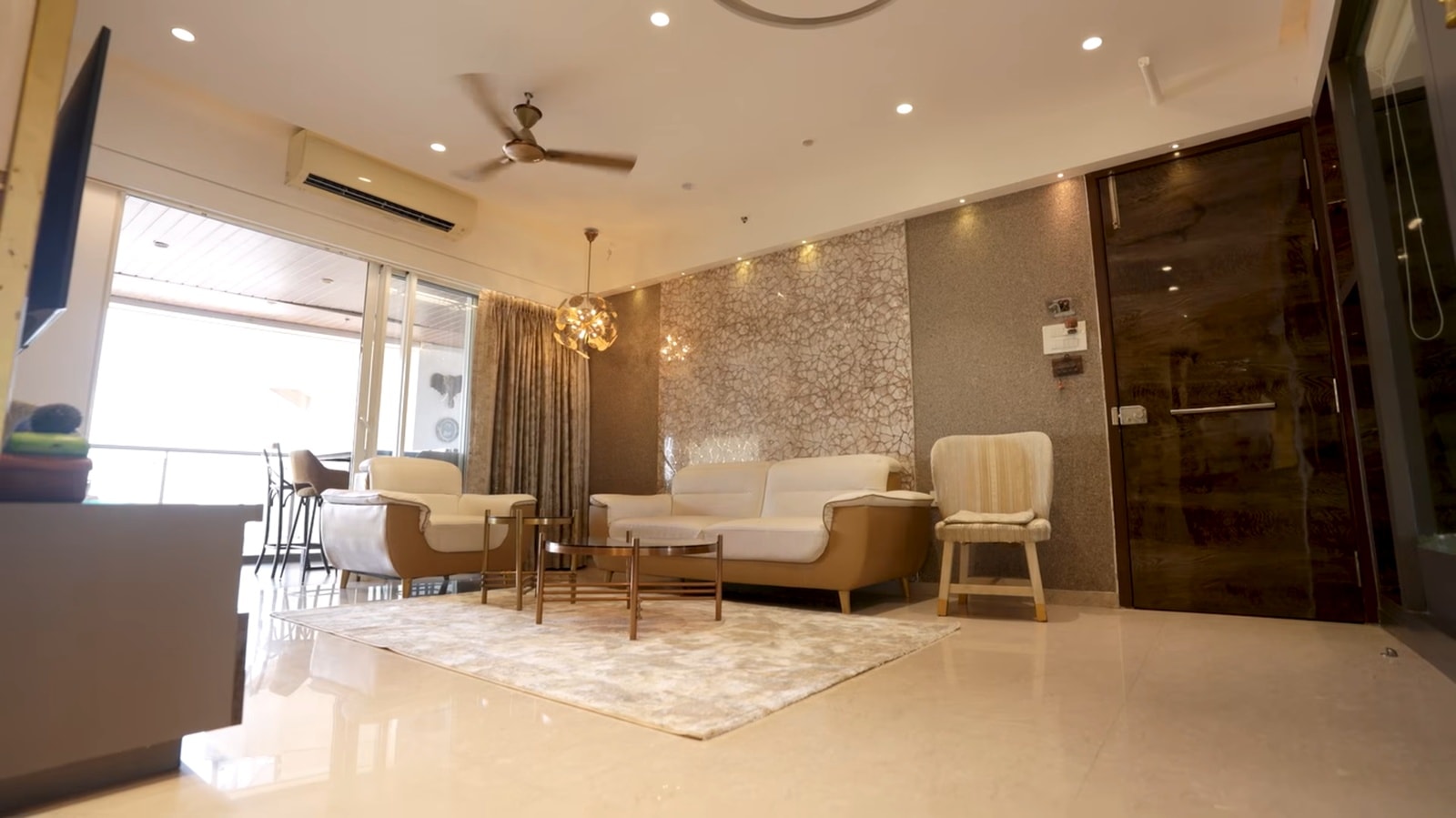 The living area (Source: YouTube/Farah Khan)
The home appears carefully designed around comfort, identity, and mood. The living room combines beige, white, gold, and grey tones with chandeliers and cove lighting, while the balcony doubles as a cosy party zone with a coffee corner and pool table.
Samarth’s bedroom and studio spaces reveal another side of him: music walls, playlists turned into art, gym equipment opening into open-air spaces, and a quieter, more minimal aesthetic. During the tour, Samarth explained, “A lot of people told me not to put it here,” referring to the Michael Jackson-inspired section of his home, but he insisted, “Performer. Everything. I thought there should be horses.”
His interiors seem deeply tied to aspiration, nostalgia, motivation, and self-expression.
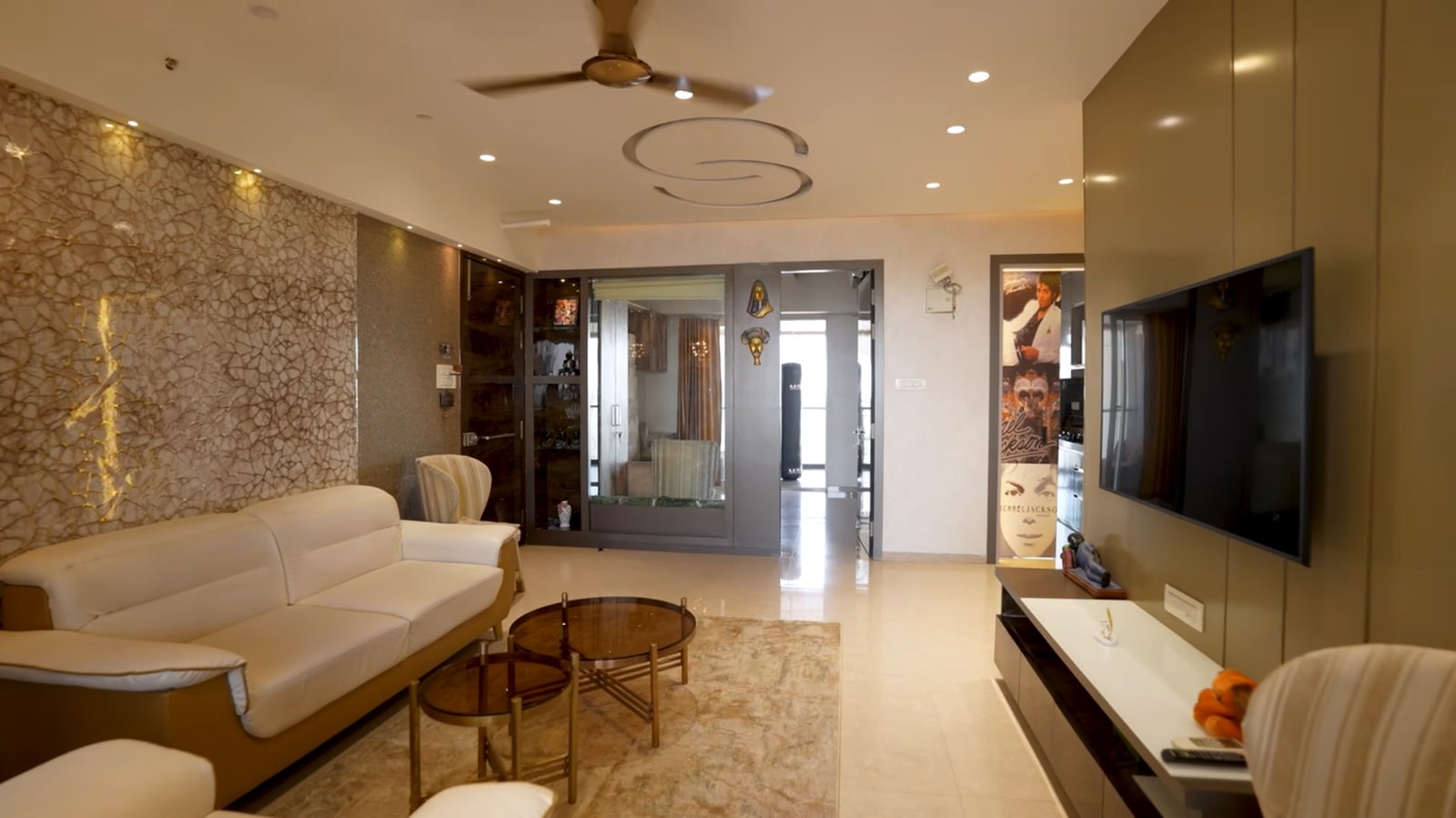 The actor’s space blends scenic balconies, entertainment corners, music-inspired decor, symbolic objects (Source: YouTube/Farah Khan)
The house also reflects how modern homes are increasingly becoming emotional extensions of personality rather than purely functional spaces. Whether it was Samarth talking about growing up in Indore, his journey from cricket to television, or creating what he called a “Healthy Ram Kitchen,” the interiors constantly mirrored his interests, memories, humour, and ambitions.
Story continues below this ad
At one point, Farah described him as “a nice, serious, good boy,” while also recalling how different his personality seemed on Bigg Boss. That contrast between public image and private comfort is visible in the home too: glamorous entertaining areas sit alongside intimate corners built around music, health, routines, and familiarity.
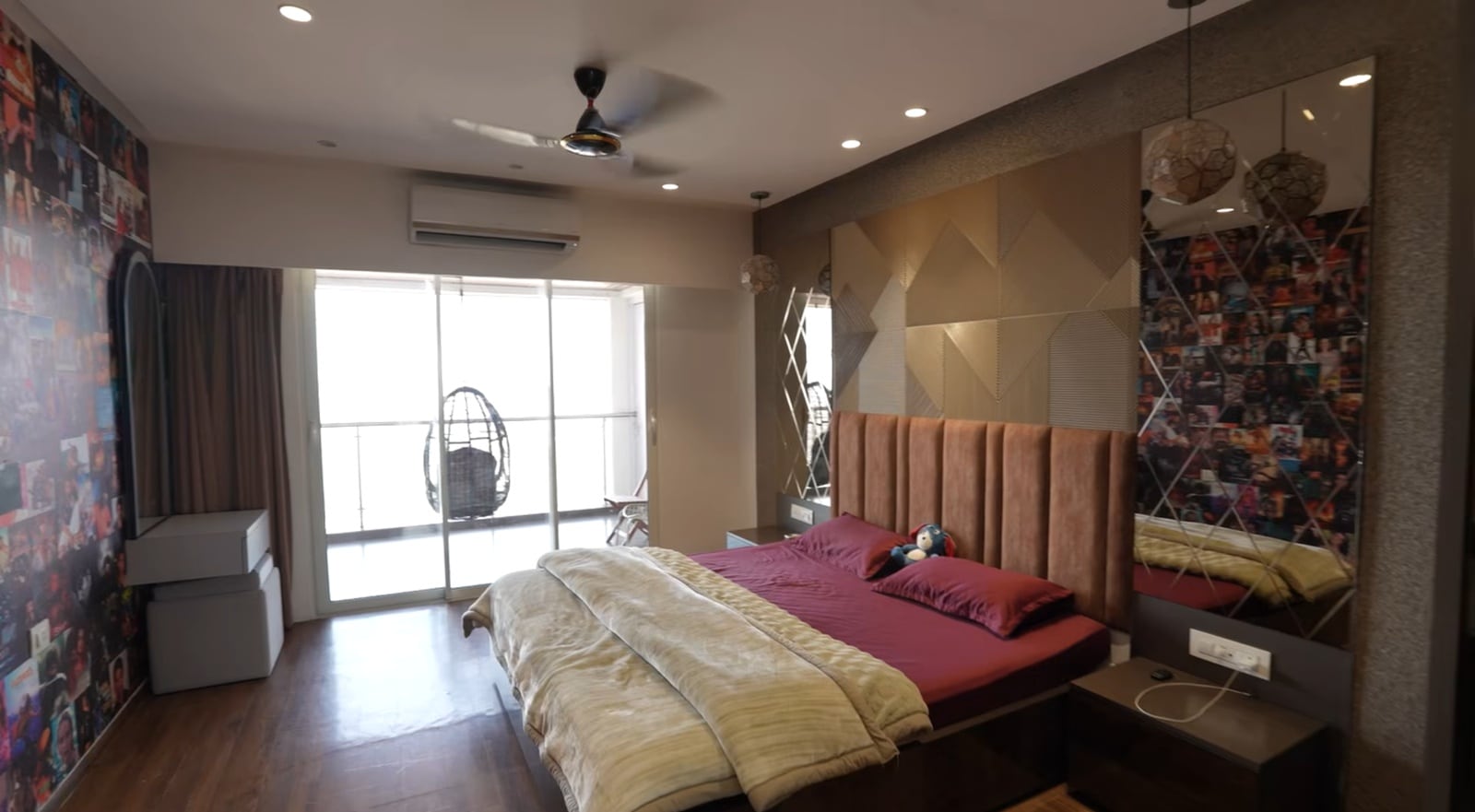 The bedroom (Source: YouTube/Farah Khan)
How personalised interiors help a person psychologically
Sonal Khangarot, licensed rehabilitation counsellor and psychotherapist, The Answer Room, tells indianexpress.com, “As a psychologist, I often see that personalised interiors do much more than beautify a home — they shape emotional safety, identity, and regulation. Spaces filled with meaningful objects such as music corners, travel souvenirs, family photographs, spiritual symbols, favourite books, or film references create what we call emotional anchors. They remind people of memories, achievements, relationships, and parts of themselves that may otherwise get lost in the pressure of daily life.”
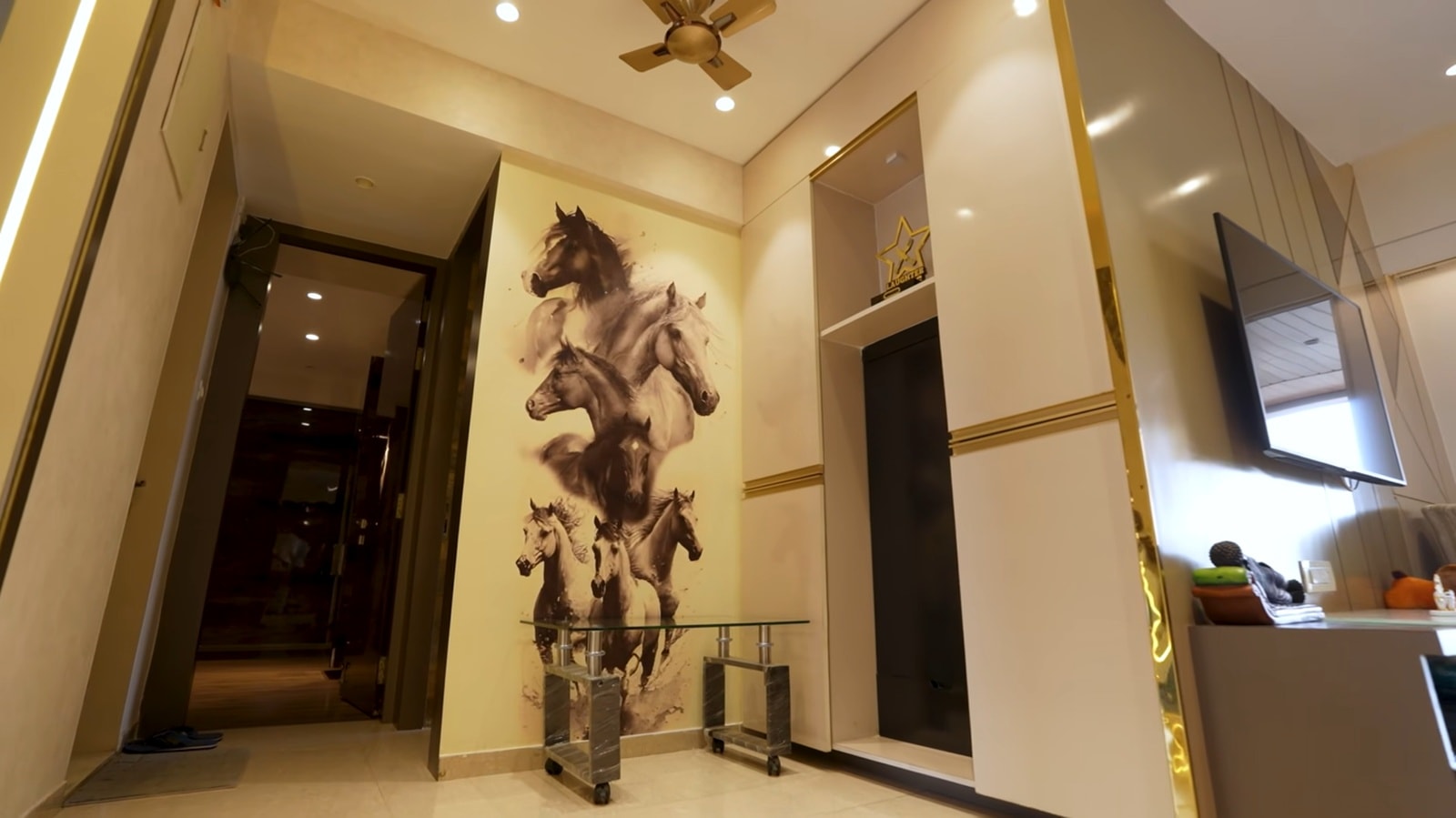 Throughout the tour, Samarth repeatedly connected his interiors to his personality, calling the horses “good luck” and “prosperity,” while joking, “They call me a horse in the show.” (Source: YouTube/Farah Khan)
She adds that a person who surrounds themselves with comforting colours, nostalgic objects, or symbols of aspiration often experiences greater emotional grounding and familiarity. Personalised interiors can also reduce stress because the environment feels psychologically “owned” and emotionally predictable.
Interior design choices that can genuinely support mental well-being
“I believe emotionally restorative homes are those that help the mind and nervous system slow down rather than remain in a constant state of stimulation,” states Khangarot, adding that in today’s fast-paced lifestyles and public-facing careers, many people spend large parts of the day emotionally “switched on,” which makes the home environment psychologically important for recovery and regulation.
Story continues below this ad
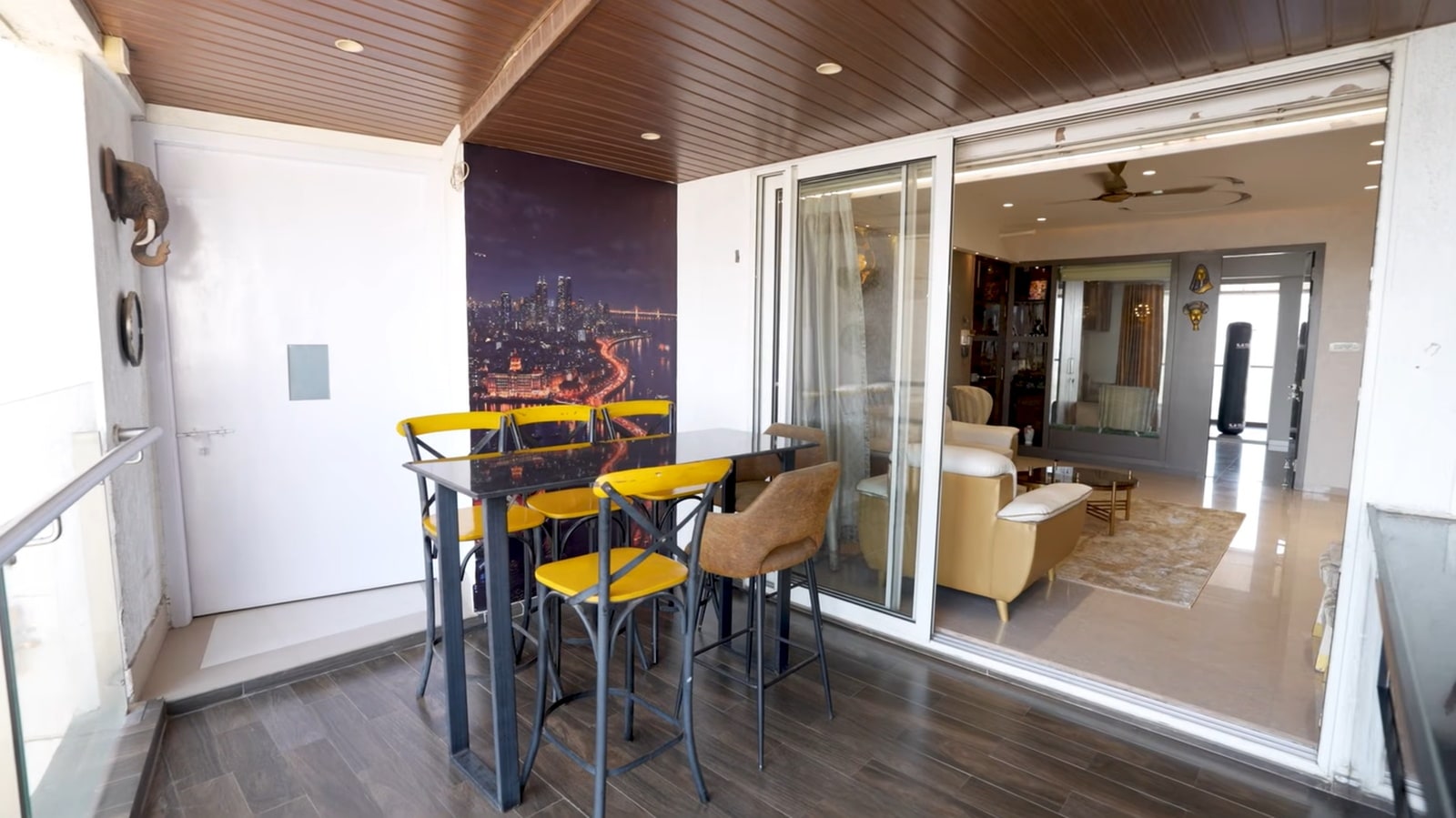 The balcony (Source: YouTube/Farah Khan)
Interior choices such as warm lighting, natural ventilation, soft textures, calming colours, indoor plants, comfortable seating, and clutter-free spaces can create a sense of grounding and emotional safety. “At the same time, reducing excessive noise, harsh lighting, overcrowded décor, or constant digital stimulation can help lower nervous system overload. Homes that balance beauty with comfort often encourage better rest, emotional regulation, deeper conversations, and a stronger sense of calm, belonging, and psychological recovery,” says the expert.

