

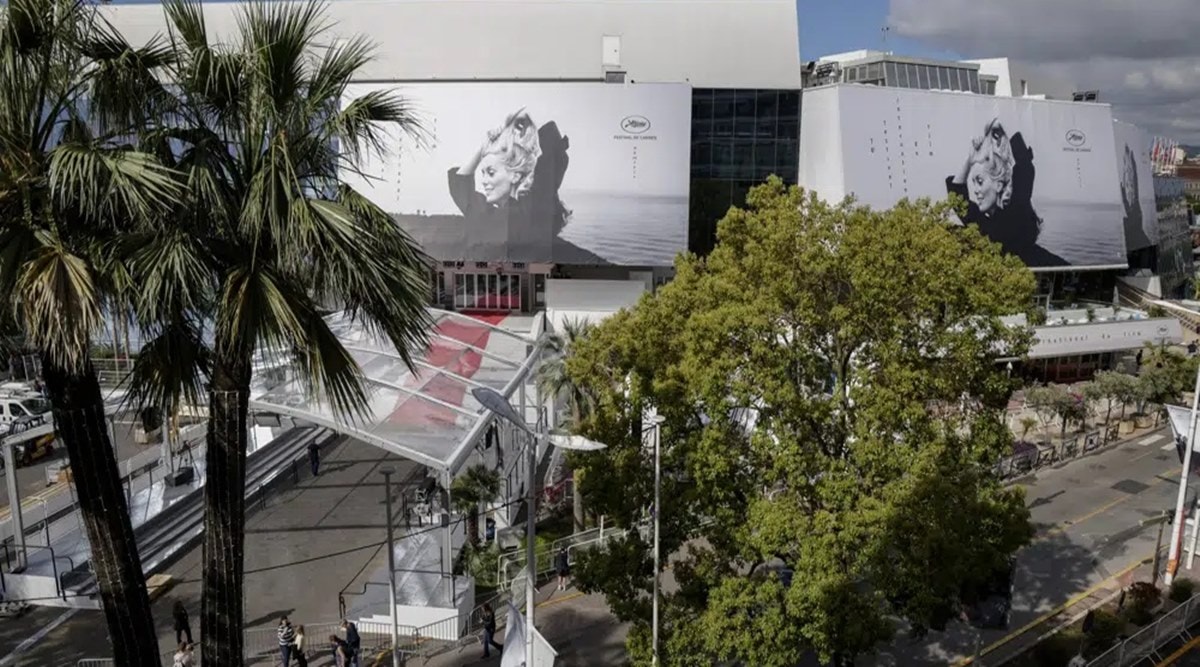
The photographs have been published. The jury decisions have been debated. The stars have flown home. And now, quietly, the real work of Cannes begins.
At every corner of Cannes, there is an opportunity waiting to unfold. Inside the meeting hubs and beyond them, a single conversation with the right person can alter the course of a film’s journey. From the Marché du Film to the Riviera cafés and the length of the Croisette, Cannes operates as much on chance encounters as it does on official premieres.

This is the side of the festival that cameras rarely capture: The conversations that shape which films move forward, which stories find audiences across borders, and which filmmakers secure not just another opportunity, but sometimes their very first one. Having returned to Cannes year after year, I have come to believe that its most defining moments rarely happen in front of photographers. They happen in packed meeting rooms at the Marché du Film, in hotel lobbies between appointments, or over coffees that turn into collaborations months later.
The market beneath the festival
I see the same truth play out in Cannes year after year: While the festival commands the headlines, the Marché du Film is where the future of cinema is often negotiated.
According to Marché du Film, in 2024 alone, the market brought together nearly 14,000 film professionals from over 140 countries, producers, distributors, sales agents, streamers, and festival programmers all looking to discover films and build partnerships. A screening may create visibility, but it is often the meeting that follows that shapes a film’s journey ahead.
The festival is the showcase, while the market is the engine behind it.
Why Cannes matters specifically for Indian films
India makes more films than almost any other country on earth, and yet our presence at markets like Cannes remains disproportionately small relative to that output. The reason for this is structural.
Cannes operates on relationships built over years, on a shared vocabulary of global cinema, and on institutional support that many of our filmmakers simply do not have access to. A French filmmaker arrives with the backing of the CNC, a co-production treaty framework, and decades of cultural diplomacy behind them. A Korean filmmaker arrives backed by KOFIC’s aggressive international strategy and a wave of critical credibility that took 20 years to build.
When an Indian independent filmmaker arrives, they often arrive alone. This is not a criticism of individual ambition — there is extraordinary ambition in Indian independent cinema. This is an observation about infrastructure, about what we have and what we still need to build.
What happens in those rooms
This is what Cannes looks like beyond the screenings. The Producers Network brings together emerging producers from around the world for structured meetings, introductions, and conversations about how to build internationally viable careers. The Cinéfondation residency supports filmmakers in development. The co-production market connects projects seeking international partners with producers who can bring financing, expertise, and distribution access from their home territories. These are not peripheral events. For many of the world’s most interesting filmmakers, these are the primary reasons to be at Cannes at all.
For Indian producers and directors, the opportunity here is significant, and significantly underutilised. Co-productions unlock financing from multiple territories. They open doors to public funds in France, Germany, Scandinavia, and Canada that are simply not available to purely domestic productions. They create relationships with sales agents and distributors who can actually get a film seen internationally.
The paperwork is complicated and the conversations take time. But this is where the invisible economy lives. And it is one that India needs to participate in far more intentionally.
The circuit beyond Cannes
Cannes is the most visible stop on a circuit that also includes Venice, Toronto, Busan, Berlin, and Sundance. Each festival has its own character, market, and relationships. A film that premieres at Venice carries a particular kind of prestige into the awards conversation. Toronto is where North American distribution deals are made. Busan has become the most important gateway for Asian cinema to find global audiences.
India has a presence at all of these festivals. What we lack is a strategy.
KOFIC does not just fund Korean films. It actively markets them internationally, maintains relationships with programmers, and treats the festival circuit as an export industry. The CNC does not just support French cinema. It negotiates bilateral co-production treaties that make French partnerships attractive to producers worldwide.
India’s institutional support for its independent cinema’s international ambitions remains fragmented. There is no single body with the mandate, the budget, and the relationships to do for Indian cinema what KOFIC did for Korean cinema over two decades. Building that is the
work that needs to happen, not just in the years when an Indian film is in the Palme d’Or race, but every year, in the markets and meeting rooms, the cameras never film.
What coming to Cannes is actually for
When people ask whether Cannes is worth it, the expense, the logistics, the exhaustion, I always say the same thing. It depends entirely on what you come for. If you come for the red carpet, the return is a photograph.
If you come for the market, the meetings, the relationships, the conversations that start in a lobby and find their way into a co-production agreement months later, the return can be a career.
Indian cinema has extraordinary stories to tell. We have filmmakers of remarkable vision and courage. What we need now is the infrastructure, the institutional will, and the strategic clarity to ensure those stories find the global audiences they deserve.
Cannes is not the answer to that. But for those willing to look past the red carpet, it is one of the best places to begin.
The writer is an Academy Award-winning producer and founder, Sikhya Entertainment

