

5 min readNew DelhiMay 3, 2026 10:53 PM IST
First published on: May 3, 2026 at 03:55 PM IST
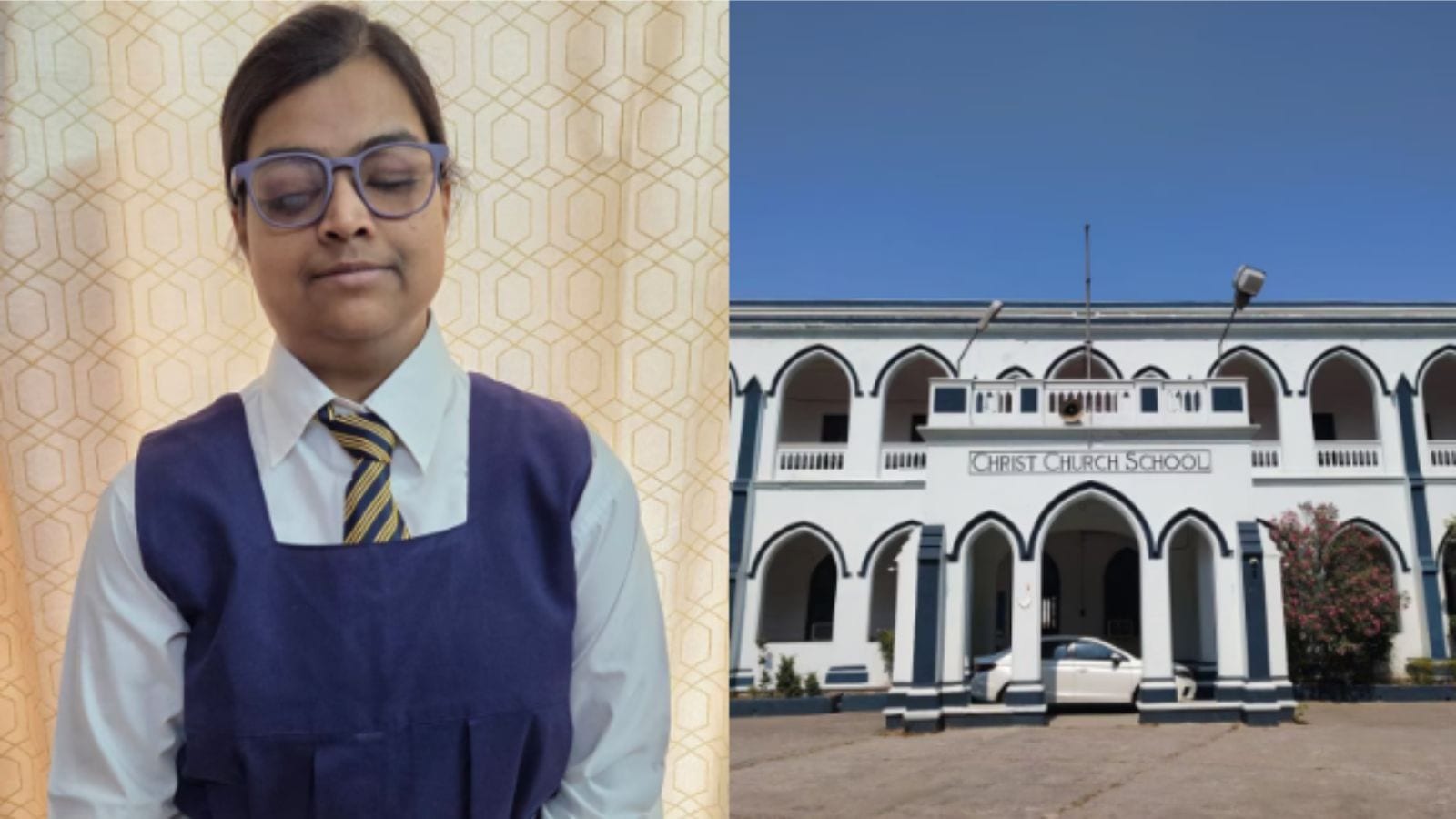
The declaration of school passing-out results often brings to light accounts of remarkable grit and quiet fortitude — of young people taking important steps in their aspirational journey despite formidable odds. Among this year’s exceptional graduates is Sarah Moin, who scored more than 98 per cent — the highest among 258 students at Lucknow’s Christ Church College. But her achievement is much more than academic excellence in conventional terms. It is a testament to the 19-year-old’s resolve in the face of layered challenges, one that was nurtured by an ecosystem that responded with empathy and imagination.
As reported by this newspaper, Sarah’s life took a difficult turn early. Diagnosed at the age of four with a rare condition that gradually dimmed her vision, she would, within a few years, lose her hearing as well, followed by the onset of speech difficulties. The youngster’s parents formed the first circle of resilience around her. They chose a school that gave wings to her dreams. Christ Church College arranged individualised classes, ensured that textbooks were scanned and converted into accessible digital formats, and enabled her to engage with them through a Braille-based device. Question papers were adapted so she could read them through touch, and her responses were later transcribed into standard text for evaluation.

In recent years, students’ enrolment has increased appreciably in most parts of the country. Yet, survey after survey — from the Annual Status of Education Report to various governmental assessments — has shown that this achievement remains incomplete in the face of rigid pedagogies that are not sensitive to varied learning experiences. Sarah’s journey exemplifies that inclusion is not just about bringing the child to the classroom but a result of creative efforts to transform institutional culture to respond to diverse needs and break barriers.
Therein also lies an irony. Sarah’s story is compelling because it directs attention to a larger, more uncomfortable question. Is India’s educational ecosystem, as a whole, equipped — or even willing—to become an enabler in the way her school did?
Over the past two decades, flagship programmes and legislative frameworks, such as the Sarva Shiksha Abhiyan and the Right to Education Act, have sought to institutionalise the idea that education is a right, not a privilege. At the level of policy intent, the government acknowledges that education must respond to diversity — of ability, of gender, of caste, of language, and of socio-economic background. The National Education Policy 2020 has foregrounded inclusion, flexibility, and multidisciplinary learning as guiding principles. It has spoken of teachers’ autonomy. Yet, teachers like Salman Ali Qazi, who stood by Sarah, enabling her to use the assistive technologies and build bridges between curriculum and cognition, are rare in the country’s educational landscape.
The scattered, but significant, instances of schools and educators rising to the challenge of diverse learners also underline the flip side – overworked, disempowered and undertrained teachers and curricula that often privilege rote learning over conceptual understanding. For every student who gets adaptive support, there are several who struggle to navigate structures which do not recognise their needs. For a large number of children at intersections of disadvantage — from marginalised castes, minorities, girls, or those with disabilities — the kind of education Sarah received might seem fanciful. For children with disabilities, a lack of trained special educators, inadequate infrastructure, and limited access to assistive technologies often render the promise of inclusion hollow. Reports, including in this newspaper, have underlined that caste-based discrimination continues to shape classroom interactions in overt as well as subtle ways, affecting the students’ participation and ultimately, learning outcomes.
India stands at a demographic crossroads, with one of the youngest populations in the world. This demographic dividend can only be earned if the education system equips young people — not a privileged subset, but all of them — with the confidence and capabilities required to participate meaningfully in the economy.
There is, of course, no template to address diversity and inequality. And, it may not be correct to replicate Christ Church College’s programmes in another context. However, Sarah’s story is illustrative of what an inclusive system can achieve. The question, then, is whether the choices she had can be scaled — whether the sensitivity and creativity demonstrated by the Lucknow school can become the norm rather than a rarity. Can classrooms across the country be reoriented to accommodate diverse learning needs? Can teacher training programmes equip educators to engage with difference not as a challenge to be managed, but as an opportunity to enrich the learning environment?
These are not easy questions, and they do not admit quick answers.
Today, as Sarah stands at the threshold of a major transition, let’s all wish the youngster the best. And, hope her story becomes the catalyst for expanding the horizons of many others.
Till next time
Stay well
Kaushik Das Gupta

