

4 min readPuneUpdated: Apr 25, 2026 09:50 AM IST
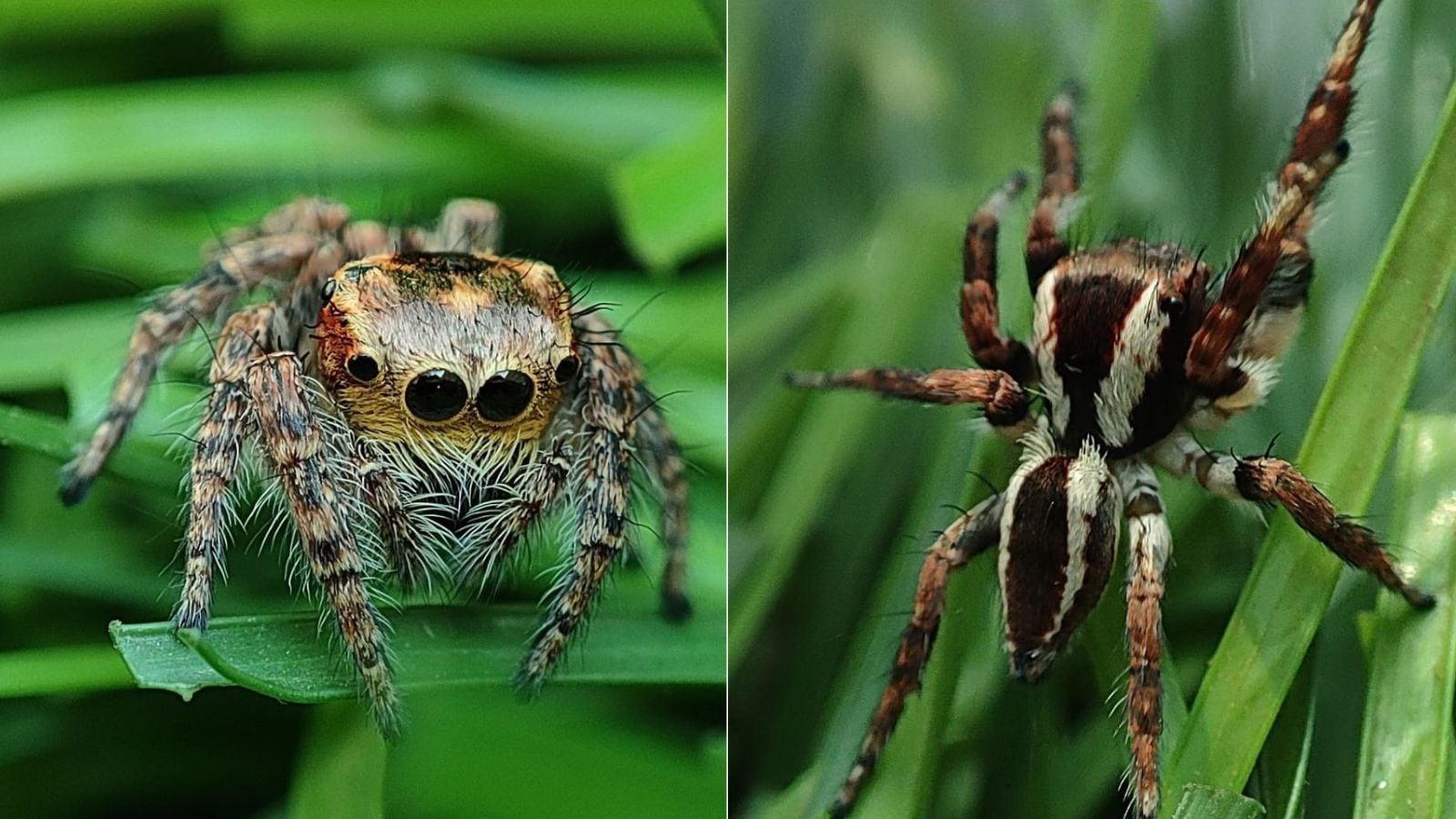
A scientist from the city has discovered a species of jumping spider and named it Mogrus Pune.
On May 31, 2024, Atharva Kulkarni, who has an MSc in Environmental Science from MIT World Peace University, was at the Alfa Laval Biodiversity Park in Pimpri Chinchwad conducting a biodiversity survey for Eco Connect Environmental Consultancy, operated by Monali Shah, a landscape ecologist and botanist.

The Alfa Laval Biodiversity Park is home to thorny trees, such as Acacia and the native Apta tree, which are the habitat of the Mogrus Pune. Kulkarni spotted the jumping spider resting on tree branches of the thorny trees.
“I came to the conclusion that it’s a new species. Literature of the Mogrus genus is very poor; there is very little information when it comes to the habitat, ecology or predatory behavior of this genus. When I found this spider, I immediately knew that it was either a very poorly known species or an absolutely new description,” says Kulkarni.
He collected data on the species and spent six months studying it. The discovery was published last week in the European Journal of Taxonomy (EJT), which is an international peer-reviewed journal in descriptive taxonomy. Three years ago, Kulkarni discovered another species of jumping spider, this time from the Baner hills, and named it Okinawicius tekdi.
With the Mogrus Pune, he noticed that the pattern and the basic morphology of the spider was very vibrant and distinct. “You can recognise it very easily. A spider in a thorny tree is itself unusual. I was excited,” he says.
In a terrarium in his home, Kulkarni started to observe the predatory behaviour of the newly-discovered spiders. He started giving the spiders small Drosophila flies, among other insects. “As I expected, the Mogrus pune has a predatory nature towards herbivorous insects that are usually found on thorny trees. The only predators in these trees can be spiders and some other insects, as birds or reptiles cannot reach the insects through the thorns. Spiders are the main biological pest controllers but there is not a single spider that is known to harm a plant,” he says.
Story continues below this ad
Rishikesh Tripathi and Gautam Kadam, who are prominent scientists, started describing the species and ascertaining if this was a new species at all. Finally, the finding was published in the (EJT).
Kulkarni would like to spread awareness about his findings. “The majority of the public is not aware of how and why these small creatures are important to us. Discovering a new species is very, very, very rare; it’s like a 1 per cent chance. You can’t really just go outside and come across a new species. But, the fact that an urbanised, extremely heavy industrialised area, like Pimpri-Chinchwad, which has a biodiversity park of mere 20 acre, with a grassland patch that is even smaller, has a new species, shows the importance of urban refuge for all other creatures that cannot be displaced from the heavily industrialised or urbanised environment. It is very important for us to know that Pune is still alive when it comes to biodiversity,” says Kulkarni. “The hope is that we can save or spread awareness about the existing ecosystem that still thrives today,” he adds.
According to Tripathi, the genus Mogrus is found in the arid or semi-arid landscape with a grassland. The spider has two brown stripes on the head and two on the abdomen. This is a way of identifying the spider. “It will be found in a grassland on the tree,” says Tripathi.

Click here to join Express Pune WhatsApp channel and get a curated list of our stories
© The Indian Express Pvt Ltd

