

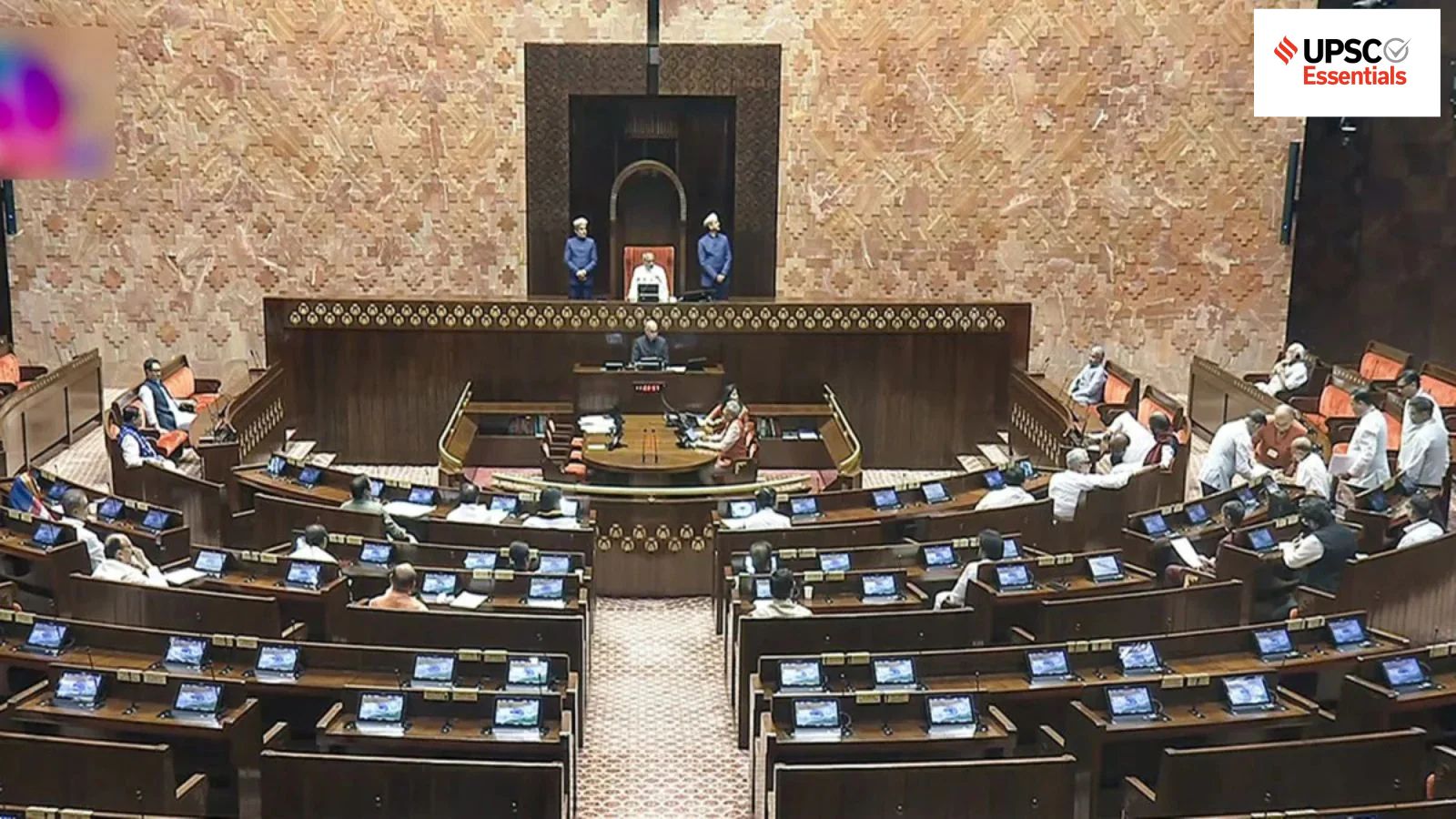
UPSC Essentialsbrings to you its initiative for the practice ofMains answer writing.It covers essential topics of static and dynamic parts of the UPSC Civil Services syllabus covered under various GS papers. This answer-writing practice is designed to help you as a value addition to your UPSC CSE Mains. Attempt today’s answer writing on questions related to topics ofGS-2to check your progress.
Gear up forUPSC Prelims 2026—Practice smarter, revise faster, and succeed with ourSpecial Quiz Magazine. (Click Here)
Discuss the significance of the 73rd and 74th Constitutional Amendments in laying the foundation for promoting women’s political participation in India.
QUESTION 2
A sustained reset in India–Turkey relations requires balancing bilateral engagement with regional realities. Discuss.
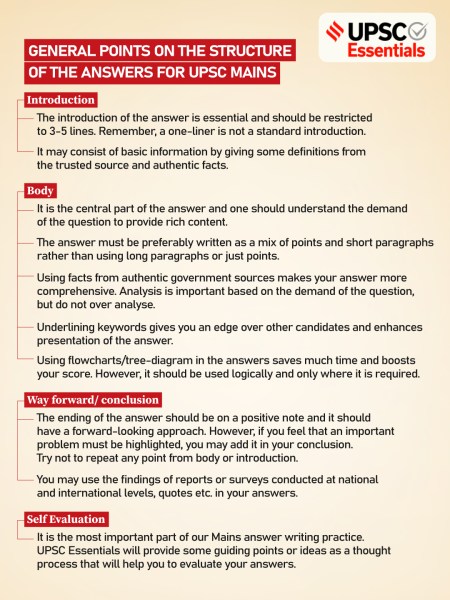
QUESTION 1: Discuss the significance of the 73rd and 74th Constitutional Amendments in laying the foundation for promoting women’s political participation in India.
Relevance: This question is relevant for GS Paper 2 as it directly links to the 73rd Constitutional Amendment Act and 74th Constitutional Amendment Act, which are part of the UPSC syllabus. It reflects ongoing debates on women’s political empowerment, grassroots democracy, and effectiveness of reservation policies.
Note: This is not a model UPSC answer. It only provides you with a thought process which you may incorporate into the answers.
Introduction:
Story continues below this ad
— The Constitution (Seventy-third Amendment) Act, 1992 and The Constitution (Seventy-fourth Amendment) Act, 1992 took effect in 1993. They reserved 33% of the seats for women in Panchayati Raj institutions and urban local bodies, respectively.
— Back in 2023, parties across the political spectrum had lent their support to women’s reservation in the legislature with the passage of The Constitution (One Hundred and Twenty-Eighth Amendment) Bill. But the first nationwide quotas to ensure greater political participation of women came into effect in the 1990s.
Body:
You may incorporate some of the following points in your answer:
— First, it is important to understand the significance of the 73rd and 74th Constitutional amendments. Before these Acts, India’s Constitution mentioned only a two-tier form of government, and local institutions were found only in the Directive Principles of State Policy, which are not enforceable by courts but only meant to guide governments.
Story continues below this ad
— The two Acts accorded constitutional status to the third tier of governance. Among other things, they mandated regular elections to local bodies, devolved some power and authorised state governments to provide grants-in-aid to the Panchayats from the Consolidated Fund of the State.
— They also mandated one-third women’s representation. Several states later extended this to 50%, and today, women constitute about 46% of the nearly three million panchayat and gram sabha representatives. In comparison, women’s representation in the current Lok Sabha is less than 14%.
— Deepening grassroots democracy: The Amendments strengthened democratic participation by bringing governance closer to the people, ensuring regular elections and greater accountability at the local level.
— Inclusive and participatory governance: By reserving seats for women (and SC/STs), they widened the social base of political participation and made decision-making more representative and diverse.
Story continues below this ad
— Before the Acts, several committees had suggested reforms in local governance, including the Balwantrai Mehta Committee (1957) and the Ashok Mehta Committee (1977). A few states had instituted some quotas, like Karnataka, which introduced 25% reservation for women in its Panchayat Raj Institutions under a 1983 Act.
— In the recent debates, the issue of delimitation and federalism was at the forefront, as parties had already largely agreed on the need for women’s reservation since 2023. (Women’s Reservation Act 2023)
Conclusion:
— Coming to the women’s quota, the late MP Sushma Swaraj said provisions like reservation for SC/ST women within the 33% share were “genuinely welcome.” She said that in the past, political parties announced a certain share of women candidates in their manifestoes, say about 10%, but then claimed that they did not have “qualified candidates”. “So, this will mark a beginning. These panchayats will be the nurseries of the democratic system… municipal bodies and panchayats will be training grounds for governance,” Swaraj said.
Story continues below this ad
Points to Ponder
How far have the 73rd Constitutional Amendment Act and 74th Constitutional Amendment Act ensured substantive empowerment?
Can local bodies act as a pipeline for leadership in state and national politics?
Related Previous Year Questions
Analyse the role of local bodies in providing good governance at local level and bring out the pros and cons of merging the rural local bodies with the urban local bodies. (2024)
Story continues below this ad
“The states in India seem reluctant to empower urban local bodies both functionally as well as financially.” Comment. (2023)
QUESTION 2: A sustained reset in India–Turkey relations requires balancing bilateral engagement with regional realities. Discuss.
Relevance: This question is relevant for GS Paper 2 as it captures evolving geopolitical dynamics involving India, Turkey, and third-party influences like Pakistan. The topic reflects contemporary issues such as West Asia geopolitics, strategic balancing, and multi-alignment.
Note: This is not a model UPSC answer. It only provides you with a thought process which you may incorporate into the answers.
Introduction:
Story continues below this ad
— Recently, India and Turkey held the 12th round of foreign office consultations, four years after the mechanism was put on hold. The June 2022 consultation in Ankara was supposed to secure a breakthrough, following years of strained bilateral relations over Turkey’s support for Pakistan on the Kashmir issue.
— Much of India-Turkey relations has been unpredictable and prone to disruptions owing to even minor disagreements between India and Pakistan. This makes it a unique bilateral relationship that has never emerged from the shadow of third-party problems.
Body:
You may incorporate some of the following points in your answer:
— The bilateral merits and advantages are under-appreciated, and confidence-building measures are tried only occasionally and reluctantly, which matters given the potential for deeper ties.
— India-Turkey relations saw a breakthrough, marked by frequent high-level visits, exchange of business and cultural delegations, increasing bilateral trade volume, and people-to-people interactions. Bilateral trade grew from $700 million in 2002 to $13.82 billion in 2022.
— There are also reasons for the two countries to engage. In 2023, the India-Middle East Economic Corridor (IMEC) was announced as an ambitious counter to China’s Belt and Road Initiative (BRI) for infrastructure investment. It does not include Turkey, which has, of late, worked to create a new Development Corridor connecting the UAE, Iraq, and Turkey via train, road, and sea links. Following the recent conflicts in the Middle East, the IMEC has yet to progress as planned, and the Development Corridor could offer alternative routes for Indian businesses to reach European markets via Turkish ports.
— Under the ongoing Iran-Israel war, Turkey, Saudi Arabia, and Egypt have emerged as key players to mediate between the US and Iran. Part of this has to do with Turkey gradually shifting away from its previous ideological pursuits by normalising relations with its key regional rivals, including Saudi Arabia, Egypt, and the UAE. This is of interest to India, which has deep ties with West Asis and a large diaspora residing there.
— Indian and Turkish interests in the Gulf, Central Asia, and Africa are gradually converging. A prolonged isolation is neither possible nor helpful to their security, trade, and strategic interests.
Conclusion:
— India’s policy perspectives on Turkey should also appreciate its bilateral and regional merits. Turkey has effectively changed its strategic profile — from being a NATO-centric country to a state of multiple alignments, including a direct security role in West Asia and Eurasia.
— The current West Asian crisis might have provided India and Turkey a small window of opportunity to reset their relations. However, given the past hiccups, a reset devoid of regional considerations towards evolving an inclusive or de-hyphenated policy may not be sustainable.
(Source: What plagues India-Turkey relations, and why a reset may be of common interest)
Points to Ponder
Can India pursue a de-hyphenated policy towards Turkey despite regional compulsions?
How do initiatives like connectivity corridors and shifting alliances reshape engagement opportunities?
Related Previous Year Questions
Discuss the geopolitical and geostrategic importance of Maldives for India with a focus on global trade and energy flows. Further also discuss how this relationship affects India’s maritime security and regional stability amidst international competition? (2024)
India is an age-old friend of Sri Lanka.’ Discuss India’s role in the recent crisis in Sri Lanka in the light of the preceding statement. (2022)
🚨Click Hereto read the UPSC Essentials magazine forApril 2026.Share your views and suggestions in the comment box or at manas.srivastava@indianexpress.com🚨
Previous Mains Answer Practice
UPSC Essentials: Mains answer practice — GS 3 (Week 150)
UPSC Essentials: Mains answer practice — GS 3 (Week 151)
UPSC Essentials: Mains answer practice — GS 2 (Week 150)
UPSC Essentials: Mains answer practice — GS 2 (Week 149)
UPSC Essentials: Mains answer practice — GS 1 (Week 150)
UPSC Essentials: Mains answer practice — GS 1 (Week 149)
Subscribeto ourUPSC newsletterand stay updated with the news cues from the past week.
Stay updatedwith the latestUPSC articlesby joining ourTelegram channel–IndianExpressUPSC Hub, and follow us onInstagramandX.

