

4 min readPuneFeb 25, 2026 10:34 PM IST
“Meri kahani bahut badiya hain (I have a very interesting story). I have experienced many sorrows and joys. My life is dedicated to singing the songs of the Mother, Yellamma. I have taught myself to write songs, sing and play the musical instrument choudki,” says Laxmanji, a member of one of India’s little-known transgender communities, the Jogappas.
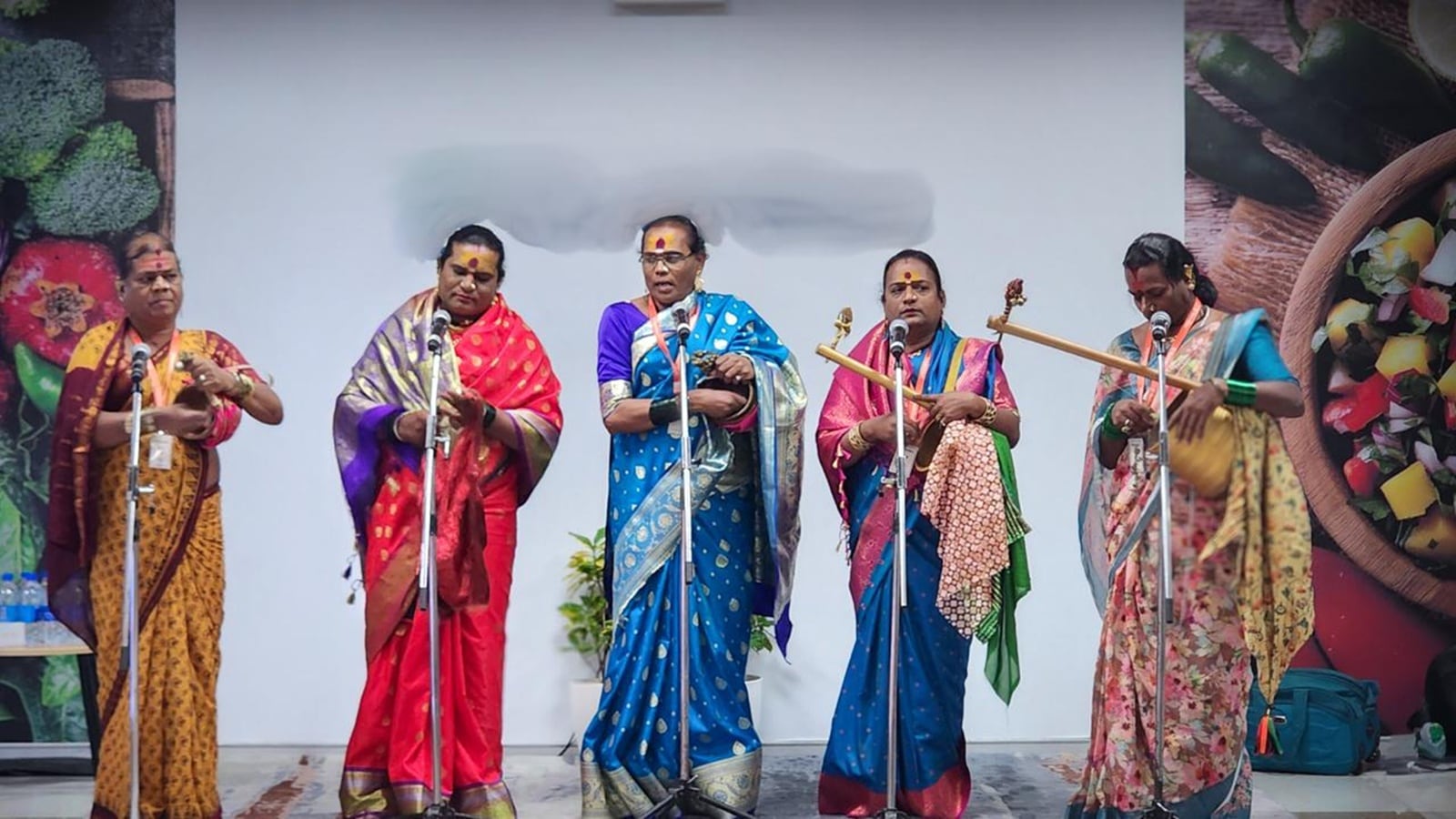
Laxmanji is among the musicians who will take centrestage on February 28 as the Pune International Centre (PIC) celebrates Palash, a confluence of classical and folk traditions through dialogues on art, identity and inclusion. The Jogappas are not new to Pune, but this will be their first major show in the city. They will be performing with the eminent musician and author TM Krishna.

“There will be five singers from Karnataka. The songs will be devotional but also humorous. There will be songs that will make you feel electrified. We are travelling with all kinds of songs,” says Siddhama, a prominent member of the Jogappa group.
The Jogappas are custodians of a musical tradition that is intensely devotional and powerful. The community is spread along the borders shared by Karnataka, Maharashtra and Telangana, marginalised by geography and society. “Many of the Jogappas identify as trans women but their identity is not limited to their gender. That’s one of the features that makes the Jogappa community unique — their identity is closely connected to their art and performance. They have a strong spiritual connection with their music,” says B Shreya from the Bengaluru-based Solidarity Foundation, which supports marginalised LGBTIAQ+ communities.
Siddhama traces their origins to the myth of the Ramayana, when Rama, Sita and Lakshman left the kingdom of Ayodhya to spend 14 years in vanvas. “As they travelled, they were met by thousands of men and women. Our community, who are both men and women, also went to see them. It so happened that Rama, Sita and Lakshman asked the men and the women to return home after their meeting. They did not say anything to the transgender community, so we stood and waited for Rama, Sita and Lakshman to return. For 14 years, we waited,” recounts Siddhama, with a storyteller’s flair. She adds that Rama, Sita and Lakshman granted the transgender community a boon that they could bless children and people with prosperity on auspicious occasions.
Siddhama says that she has many stories and can regale a listener from morning till the moon comes out. If only mainstream society heard the stories of the Jogappas, they would think differently about the transgender community. “People have started understanding us a little. Hum bhi zindagi mein aaye hain toh hum bhi insaan hain. Hamari bhi pahchan karo. (If we are living, we are also humans. You need to recognise that),” she says.
She was born with a boy’s body but was really a girl. She learned music, as is traditional among the Jogappas, from her guru. She, now, has disciples learning from her. A typical trait of Jogappa singers is that they create their own instruments, the choudki, a wooden percussion instrument, the sutti, a string instrument, and taal or cymbals.
Story continues below this ad
Siddhama is a familiar face and widely respected in her village in Karnataka. The cities, though, have yet to catch up. “TM Krishna, whom we consider our guru, has given us the opportunity to perform in concerts in big cities. This has helped us to break some barriers with audiences,” says Siddhama.

Click here to join Express Pune WhatsApp channel and get a curated list of our stories
© The Indian Express Pvt Ltd

